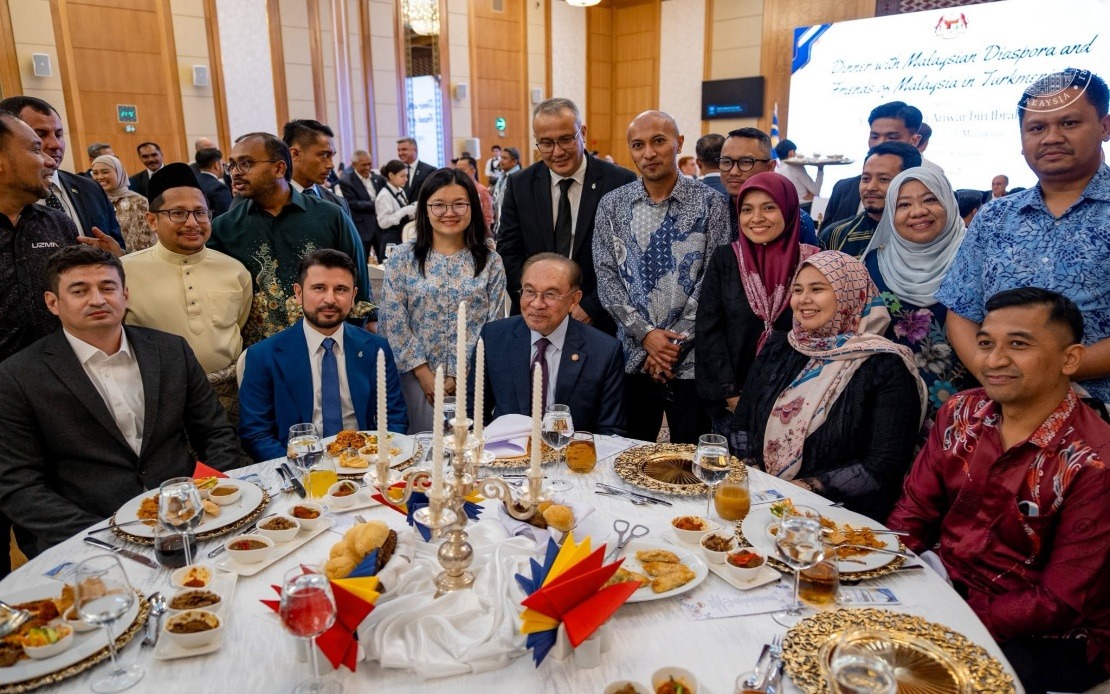
Prime Minister Datuk Seri Anwar Ibrahim seized the occasion of his official visit to Turkmenistan to connect with members of the Malaysian community based in Ashgabat, underscoring the MADANI Government's dedication to nurturing relationships with citizens residing beyond Malaysia's borders. The engagement reflects a deliberate diplomatic strategy that extends beyond conventional bilateral meetings between government representatives, recognising the significant role played by Malaysians scattered across the globe in projecting the nation's values and interests.
During his interactions with the diaspora, Anwar communicated the importance of maintaining strong bonds with the homeland despite geographical distances. He encouraged the community to remain engaged with developments unfolding in Malaysia and to sustain their emotional and practical connections to the country. The Prime Minister's remarks underscore a broader recognition that diaspora communities function as living ambassadors, wielding considerable influence in shaping perceptions of Malaysia across their adopted nations and professional networks.
In a social media reflection on the gathering, Anwar expressed his appreciation for the warmth and enthusiasm displayed by the Malaysian expatriates, describing the encounter as having transcended the physical separation between Ashgabat and Kuala Lumpur. He characterised these individuals as conscious contributors to Malaysia's international standing, actively engaged in expanding the country's networks, elevating its profile, and advancing its strategic interests in ways that complement formal diplomatic channels. This framing acknowledges that soft power and cultural influence often flow through informal channels populated by skilled professionals and entrepreneurs operating in distant markets.
The Prime Minister elaborated on the multifaceted nature of his Turkmenistan mission, moving beyond the conventional emphasis on commerce and investment. While trade and economic cooperation remain important pillars, Anwar highlighted that the visit's primary objectives encompassed deepening bilateral friendship, fostering mutual comprehension between Malaysia and Turkmenistan, and identifying novel domains where both nations could collaborate advantageously. This holistic approach to international engagement reflects a maturation in how Malaysia conducts its foreign relations, recognising that sustainable partnerships require foundations built on cultural understanding and shared strategic vision.
Anwar's two-day sojourn in Ashgabat represents his inaugural official visit to the Central Asian nation, arriving at an invitation extended by Turkmenistan President Serdar Berdimuhamedov. This inaugural visit follows Berdimuhamedov's tour of Malaysia in December 2024, demonstrating a pattern of reciprocal high-level engagement that signals both countries' commitment to strengthening bilateral ties. The exchange of official visits between heads of government typically precedes deeper institutional cooperation and economic integration, suggesting that Malaysia is strategically positioning itself within Central Asia's emerging corridors of influence and commerce.
For Malaysian readers, this engagement highlights the government's attentiveness to the diaspora as a strategic asset rather than merely a collection of citizens living abroad. As Malaysia seeks to expand its footprint in underexplored regions like Central Asia, the presence of capable Malaysians within these markets provides invaluable intelligence, business connections, and cultural bridges that formal diplomacy alone cannot establish. The Ashgabat community represents just one node in a global network of Malaysian professionals whose experiences and networks contribute to the nation's broader geopolitical and economic objectives.
The visit to Turkmenistan also reflects Malaysia's efforts to diversify its international partnerships beyond traditional Indo-Pacific relationships. Central Asia has increasingly become a focus for countries seeking to tap into emerging trade routes, energy resources, and technological innovation hubs. By prioritising engagement with Turkmenistan and simultaneously nurturing relationships with Malaysian expatriates in the region, Anwar signals that Malaysia intends to play a more active role in Central Asian affairs, potentially opening new avenues for investment, cultural exchange, and strategic cooperation.
The emphasis on maintaining diaspora connections carries particular significance for Malaysia, a nation with substantial overseas populations in countries ranging from the United Kingdom to Australia, Singapore to the United States, and now increasingly Central Asia. These communities often retain strong cultural and familial ties to Malaysia whilst building lives and careers in their adopted homes. By acknowledging their contributions and encouraging their continued engagement, the government strengthens the soft power infrastructure that underpins long-term national interests in an increasingly interconnected world.
Anwar's remarks about the diaspora functioning as unofficial ambassadors resonate with contemporary understandings of public diplomacy, wherein nation-states recognise that governmental messaging carries less weight than endorsements from trusted private citizens and professionals. When successful Malaysians operating in international settings speak positively about their homeland, their observations carry credibility that official communications cannot match. This dynamic proves especially valuable in regions like Central Asia, where Malaysia's brand recognition remains relatively limited compared to larger Asian neighbours.
Looking ahead, the trajectory of Malaysia-Turkmenistan relations will likely depend substantially on whether the momentum generated by reciprocal presidential visits translates into concrete institutional partnerships, trade agreements, and people-to-people exchanges. The Malaysian diaspora in Ashgabat, fortified by renewed governmental attention and encouraged to serve as cultural ambassadors, may become instrumental in facilitating such developments. Their role extends beyond symbolic representation to encompassing practical functions such as identifying business opportunities, mentoring younger entrepreneurs, and fostering educational partnerships between institutions in both nations.
The broader message embedded within Anwar's Ashgabat engagement reflects a recalibration of how Malaysia conceptualises national interests in an era of complex globalisation. Rather than viewing overseas Malaysians primarily through the lens of remittances or brain drain, the government increasingly recognises them as strategic partners in advancing the nation's multifaceted objectives. This reorientation promises to yield dividends as Malaysia navigates an increasingly competitive international landscape where soft power, cultural influence, and human capital networks prove as consequential as traditional measures of national power.
As Malaysia continues charting its course through shifting regional dynamics, cultivating robust relationships with diaspora communities whilst simultaneously expanding diplomatic and economic partnerships in previously marginal regions reflects a governance approach that embraces both continuity and innovation. The Ashgabat gathering exemplifies this balanced philosophy, honouring existing connections with overseas Malaysians whilst simultaneously building fresh bridges to emerging partners whose importance to regional stability and prosperity continues growing.