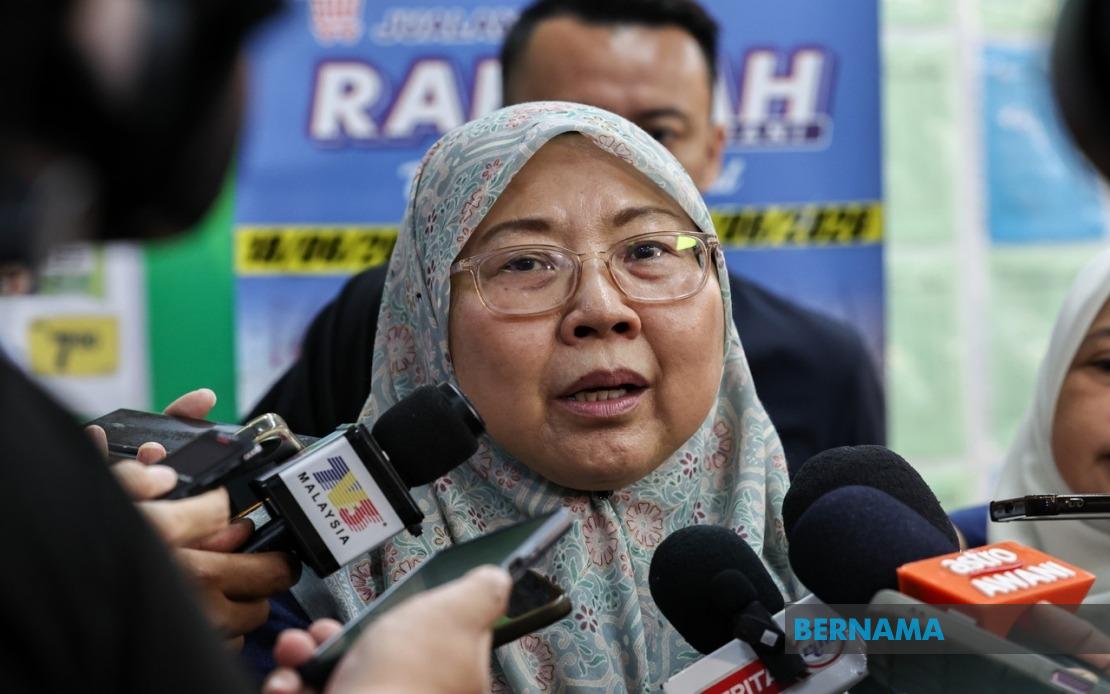
Facing potential supply pressures during upcoming state elections, Malaysia's Ministry of Domestic Trade and Cost of Living (KPDN) has moved to reassure the public that essential goods will remain readily available across Johor and Negeri Sembilan. Deputy Minister Datuk Dr Fuziah Salleh addressed concerns that international logistics disruptions stemming from the West Asia conflict might strain local inventories, particularly as voter participation could temporarily boost demand from visiting officials and out-of-state observers.
The ministry's confidence rests on a strategic overhaul of how subsidised staples reach consumers. A reconfigured distribution network for government-assisted cooking oil bypasses traditional wholesale channels entirely, sending supplies directly from repackers to retail points of sale. This streamlined approach aims to reduce inefficiencies and prevent the bottlenecks that sometimes plague multi-tier supply chains. For Malaysian readers accustomed to occasional shortages of price-controlled goods, this architectural shift represents a notable attempt to modernise distribution infrastructure.
Johor's cooking oil allocation exemplifies the scale of preparations underway. The state receives more than 3,000 metric tonnes monthly through a network of 18 repackers feeding 95 designated retail points, including Econsave supermarkets. A recent inspection at the Econsave Taman Daya outlet revealed approximately 100 cartons available daily, indicating that current inventories comfortably exceed baseline consumption. Such stockpiling cushions demand spikes during election periods when transient populations swell temporarily.
Beyond mere inventory management, the ministry has tightened controls to prevent misuse of subsidised goods. Checkout procedures now require either digital app verification or MyKad identity card scanning before purchase, ensuring that price-capped items reach only eligible Malaysian citizens. This gate-keeping mechanism addresses longstanding concerns about subsidy leakage—a persistent policy challenge across Southeast Asia where neighbouring populations sometimes exploit price differentials. For policymakers in the region, Malaysia's multi-layered verification approach offers a template for protecting targeted welfare benefits.
The broader Rahmah MADANI Sales Programme (PJRM) demonstrates the government's wider cost-of-living strategy extending well beyond elections. Between January and mid-June 2026, the programme staged 13,692 events nationwide, with Johor alone hosting 920 sessions across all 56 state constituencies. These direct-to-consumer sales initiatives attracted 2.3 million visitors in Johor alone and generated 1.46 million transactions, suggesting widespread public engagement with subsidised purchasing opportunities.
Election timing adds urgency to supply assurances. Johor's state poll is scheduled for July 11, with early voting on July 7 and candidate nominations on June 27. This compressed calendar means logistical preparations must conclude within weeks. The ministry's public statements serve dual purposes: genuinely ensuring adequate stocks while signalling government competence to voters. In Malaysian political culture, where economic management directly influences electoral outcomes, supply security becomes both practical necessity and campaign narrative.
Global commodity prices and international shipping costs form the backdrop to these domestic measures. The West Asia conflict has elevated logistics expenses across Asia-Pacific trade routes, increasing the cost burden on governments that subsidise essential goods. Malaysia's ability to maintain stable cooking oil quotas despite such headwinds reflects both strategic reserves and negotiated supply contracts, yet represents a growing fiscal pressure that policymakers cannot indefinitely sustain without policy adjustments.
Negeri Sembilan's inclusion in the ministry's assurances acknowledges that election-related supply challenges extend beyond Johor's boundaries, even though that state dominates attention. The two states together represent a significant portion of Malaysia's population and economic activity, making their stability during political transitions important for broader national confidence. Election periods typically see temporary migration as people travel to vote or observe proceedings, straining local infrastructure including food distribution networks.
The ministry's emphasis on proactive measures rather than reactive crisis management suggests learning from previous election cycles. Historical instances of periodic shortages during major political events have prompted institutional reforms aimed at anticipatory planning. KPDN's repositioning of itself from a regulatory body to an active logistics orchestrator reflects evolving expectations of how government agencies should manage public welfare during sensitive periods.
For regional observers, Malaysia's approach offers insights into how middle-income Southeast Asian nations navigate the intersection of electoral politics and economic management. The combination of supply chain modernisation, tighter subsidy controls, and direct-to-consumer programmes creates a multi-layered strategy that addresses both immediate election-period concerns and longer-term cost-of-living pressures facing ordinary Malaysians. Success in July's Johor polls would validate these approaches; failure would prompt recalibration.