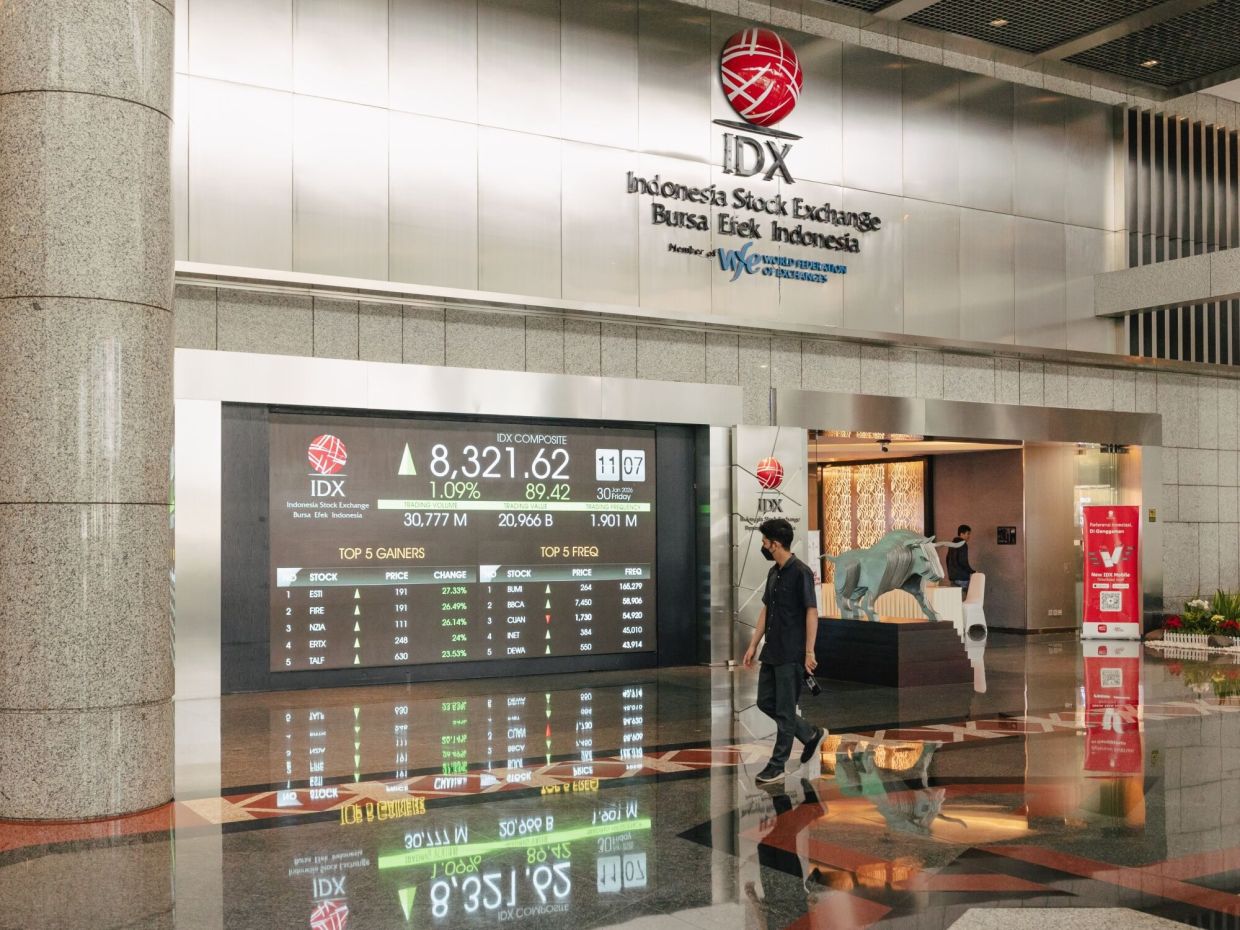
The world's largest index provider has escalated its investigation into Indonesia's market integrity, releasing a damning accessibility review that spotlights persistent deficiencies in ownership disclosure and coordinated trading activities. This latest warning arrives at a crucial juncture, with MSCI preparing to announce within days whether to strip Indonesia of its emerging market classification—a decision that would reverberate across global investment portfolios and potentially unleash capital outflows exceeding $13 billion.
Indonesia's financial markets have endured a torrid year of deterioration since MSCI first sounded alarm bells in January about the country's investability standards and hinted at a possible downgrade to frontier status. That early warning has proven prophetic, with the Jakarta stock exchange collapsing 29 percent through 2026 as foreign institutional investors have liquidated approximately $3.65 billion in holdings. The psychological impact of MSCI's scrutiny has compounded the technical selling pressure, creating a vicious cycle where concerns about market accessibility translate directly into asset flight.
MSCI's Thursday disclosure specifically cited opacity surrounding shareholder identification and the presence of what it characterized as coordinated trading behaviour that obscures genuine market dynamics. By downgrading Indonesia's information flow criterion to negative, the index provider has signalled that the nation's disclosure regime fails to provide global fund managers with adequate visibility into true ownership patterns and free-floating shares available for trading. This transparency deficit strikes at the heart of index provider confidence, since emerging market classifications rely on the assumption that foreign investors can accurately gauge their exposure and price discovery functions remain uncompromised.
The technical mechanics of a downgrade would prove devastating for Indonesia's capital markets. MSCI's indexes form the tracking benchmark for hundreds of billions of dollars in passive investment vehicles globally. Any reclassification to frontier status would mechanically trigger forced selling by index-tracking funds unable to hold frontier-classified securities, irrespective of individual company fundamentals. Active managers benchmarked to MSCI indices would simultaneously face pressure to reduce their Indonesian allocations or face tracking error penalties, amplifying the exodus.
Not all market observers interpret MSCI's latest review as uniformly catastrophic. Mohit Mirpuri, a portfolio manager at SGMC Capital in Singapore, contended that the accessibility assessment was more nuanced than headlines suggested, noting that only one of MSCI's accessibility measures deteriorated while Indonesia maintained competitive positioning against regional peers including South Korea, China and India across several evaluation dimensions. This contrarian reading suggests the market may be overreacting to MSCI's findings and that emerging market status retention remains plausible if authorities demonstrate sufficient commitment to remedial action.
Indonesian authorities responded to January's initial warning with a flurry of reform initiatives designed to address MSCI's core objections. The capital markets regulator and stock exchange mandated a doubling of minimum free-float requirements for listed companies to 15 percent, a structural change intended to improve liquidity and reduce the influence of controlling shareholders. The sense of urgency prompted dramatic personnel upheaval, with the exchange's chief executive and the regulatory body's leadership resigning on the same January afternoon—a symbolic gesture underscoring official commitment to rehabilitation.
Despite these measures, MSCI extended its review timeline in April and subsequently removed six companies from its benchmark indexes in May, predominantly enterprises affiliated with prominent tycoons. Each removal step has triggered sharp equity market declines, suggesting investors fear the removals portend a broader downgrade decision. This gradualist approach by MSCI—signalling problems through sequential actions rather than one dramatic reclassification—has proven psychologically damaging, keeping the market in perpetual anxiety about the final verdict.
Beyond index methodology concerns, Indonesia's deteriorating macroeconomic backdrop has intensified investor unease. The incoming administration under President Prabowo Subianto has pursued populist policy initiatives that markets have interpreted as fiscally expansionary and potentially inflationary. These concerns, combined with doubts about policy credibility, have compelled the central bank to aggressively raise interest rates in recent weeks to defend the rupiah, which has plumbed record lows. This currency crisis dynamic creates a destabilizing feedback loop where capital flight weakens the exchange rate, necessitating higher rates, which in turn incentivizes further foreign selling of domestic assets.
MSCI has also identified structural currency market impediments that constrain portfolio flows. The absence of an efficient offshore rupiah market restricts foreign investors' ability to hedge currency exposure, while onshore market constraints limit the supply of derivatives available for risk management. These practical barriers to efficient portfolio management make Indonesia less attractive to global asset allocators than emerging markets offering smoother currency mechanics. For a nation dependent on capital inflows, currency market infrastructure deficiencies amplify the impact of other governance concerns.
International credit rating agencies have moved in concert with MSCI's negative reassessment. Both Moody's and Fitch downgraded their debt rating outlooks for Indonesia to negative earlier in 2026, explicitly citing erosion in policymaking credibility as the $1.4 trillion economy confronts collapsing investor confidence. This synchronized negative assessment from rating agencies and index providers represents a watershed moment, with global institutional capital reallocating away from Indonesia on a much broader front than MSCI's specific index actions alone would suggest.
The immediate question facing Indonesian policymakers is whether they can persuade MSCI to maintain emerging market status despite evident governance and macroeconomic headwinds. Success would require demonstrable progress on transparency measures alongside reassurance about fiscal and monetary policy credibility. Yet the confluence of index concerns, ratings downgrades, and currency volatility creates a formidable credibility challenge. Even if MSCI grants a reprieve, the underlying investor confidence deficit may persist, condemning Indonesia to a prolonged period of capital scarcity regardless of technical classification decisions.
For Malaysian investors and policymakers, Indonesia's predicament offers cautionary lessons about the criticality of maintaining market infrastructure standards and policy predictability. As emerging markets throughout Southeast Asia compete for global capital, any perception of governance deterioration or opacity in capital markets regulation can trigger rapid repricing and flows diversion. Indonesia's experience underscores how quickly investor confidence can evaporate when transparency and policy consistency falter, regardless of underlying economic scale or long-term growth potential.