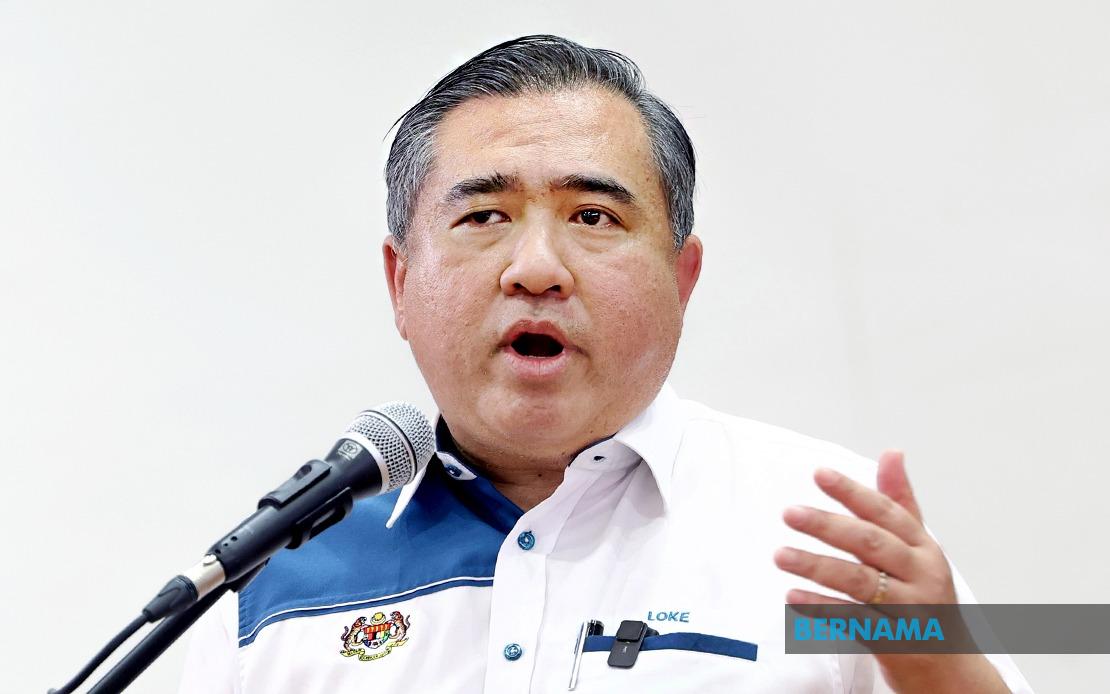
Transport Minister Anthony Loke has clarified that the Southern Shuttle service's current reliance on diesel trains represents a pragmatic interim solution rather than a permanent fixture for commuters in Johor. Speaking on the matter this week, Loke explained that the decision to deploy existing diesel rolling stock now, rather than postpone the service launch, reflects the government's commitment to delivering tangible transport benefits to residents without imposing lengthy delays. The choice between waiting several years for new infrastructure or providing immediate service options underscores a fundamental tension in public transport planning across Southeast Asia, where infrastructure projects frequently face completion delays that test public patience.
The Ministry of Transport has committed substantial annual resources to support the initiative, with subsidies ranging from RM11 million to RM15 million allocated to expand rail-based public transport accessibility across the region. This financial commitment reveals official intent to keep fares competitive and usage accessible despite the interim nature of the current equipment. Such subsidy levels demonstrate that even temporary arrangements receive sustained government backing, suggesting policymakers view the Southern Shuttle as strategically important rather than a stopgap measure destined for rapid replacement without proper ongoing support.
The arrival timeline for new Electric Multiple Unit train sets stretches across two to three years, during which diesel operations will continue serving the three-station network connecting Kulai, JB Sentral, and Pasir Gudang. Loke justified this extended wait by emphasizing the practicality of immediate service deployment, framing the diesel-to-electric transition as an inevitable evolution rather than an unexpected recourse. The mathematics favouring early commencement appear compelling: residents beginning journeys now rather than deferring travel until future EMU availability accumulates significant quality-of-life benefits across thousands of annual commuters.
Once the Gemas-Johor Bahru electrified double-tracking project reaches completion, the network will transition entirely to Electric Train Service operations on that route. This broader infrastructure development will ultimately render diesel traction obsolete across the corridor, creating natural pathways for phasing out existing diesel stock as new electric capabilities become operational. The electrification project represents a substantial modernization effort extending beyond the Southern Shuttle itself, suggesting a coordinated approach to upgrading southern rail corridors rather than piecemeal interventions.
The service offers competitive travel timings that distinguish it from conventional bus alternatives. The Kulai-JB Sentral segment accommodates passengers in approximately 40 minutes, whilst the Kempas Baru-Pasir Gudang journey requires between 40 and 45 minutes. These intervals position rail as a viable option for time-conscious commuters seeking alternatives to Johor's increasingly congested road networks. Journey reliability and comfort standards associated with rail transport provide advantages beyond raw speed, particularly during peak traffic periods when road-based transport faces unpredictable delays.
A particularly noteworthy development involves repurposing the Kempas Baru-Pasir Gudang corridor for passenger services after serving exclusively freight functions. Opening freight infrastructure to passenger traffic demonstrates efficient asset utilization within Malaysia's rail network, transforming existing capacity into new commuter value. This conversion reflects broader Southeast Asian trends toward maximizing existing infrastructure utility rather than building entirely new systems, an approach that accelerates service availability whilst managing capital expenditure.
Criticism regarding fare pricing has surfaced from certain quarters, with observers noting that Southern Shuttle fares reportedly exceed comparable services in Kuala Lumpur and Seremban by approximately threefold. Fare structure concerns merit serious consideration within Malaysia's public transport policy debate, particularly as new services establish pricing precedents. Transport affordability directly influences service uptake, and fare levels substantially above established regional benchmarks may suppress demand among price-sensitive commuter segments, undermining the social equity objectives implicit in subsidy allocation.
The temporary diesel deployment strategy reflects pragmatic transport governance that prioritizes immediate accessibility over waiting for optimal long-term solutions. However, this approach introduces a tension between serving current commuter needs and the messaging conveyed by interim technologies. Southeast Asian commuters increasingly expect rail investments to demonstrate environmental commitment and technological advancement, raising questions about passenger perception when new services deploy established diesel technology despite regional shifts toward electrification and sustainability messaging.
Looking forward, the transition pathway from diesel to electric operations should incorporate strategic planning around equipment disposition, workforce training aligned with new systems, and passenger experience continuity during conversion phases. The two-to-three-year window provides adequate preparation time, yet requires coordinated scheduling between EMU acquisition, workforce development, and service transition management. Malaysian transport authorities implementing comparable transitions elsewhere can examine the Southern Shuttle experience as a case study in managing interim solutions without compromising long-term modernization objectives.