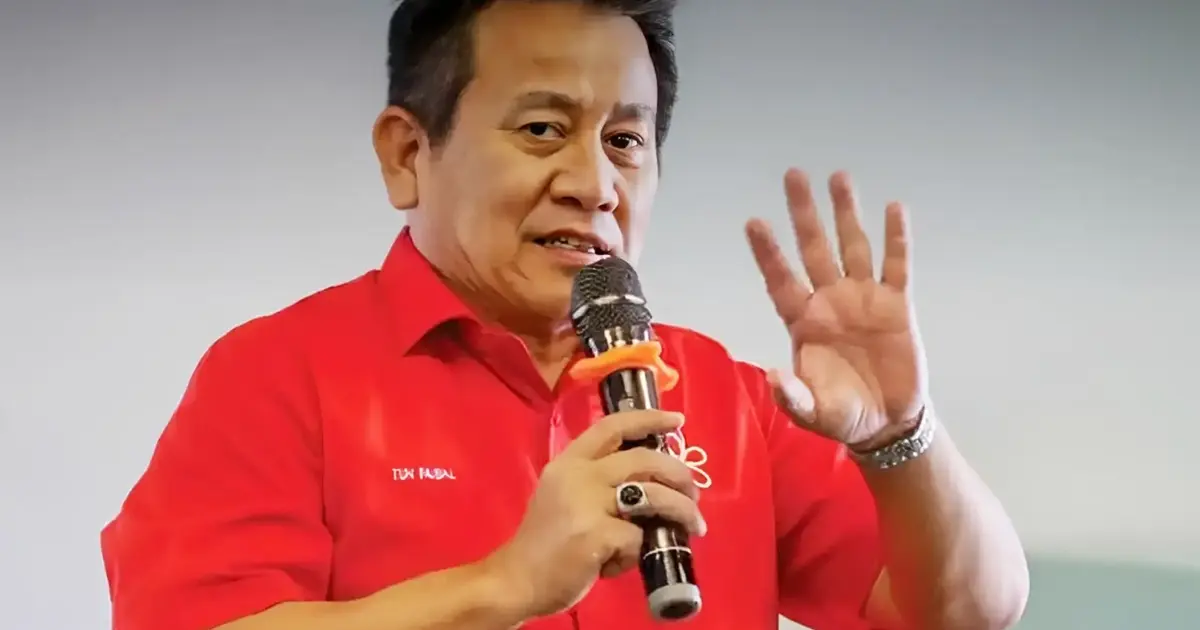
Tun Faisal Ismail Aziz, a prominent figure within Bersatu, has cast doubt on the effectiveness of Perikatan Nasional's decision to convene an emergency Supreme Council meeting, raising fundamental questions about the coalition's internal governance structure and operational efficiency.
The Bersatu leader's criticism centres on what he views as a structural flaw in how the coalition approaches major decisions. His contention is straightforward: if the Supreme Council's resolutions ultimately require independent approval from each constituent party before taking effect, then assembling the council to deliberate and make decisions becomes largely ceremonial rather than substantive.
This line of argument reflects broader tensions within Perikatan Nasional regarding decision-making authority and the balance of power between the coalition's central body and its member organisations. The coalition comprises multiple political parties, each with its own organisational structure, leadership, and membership base. When the Supreme Council reaches a consensus, those decisions theoretically should carry weight and be binding, or at least carry significant binding authority over coalition members.
However, Tun Faisal's position suggests that in practice, the coalition operates differently. Member parties appear to retain sufficient autonomy to revisit, debate, and potentially reject or modify decisions emanating from the Supreme Council level. This arrangement effectively means that the council serves as an advisory body rather than the ultimate decision-making authority within the alliance.
The implications of this structural issue are significant for Perikatan Nasional's operational cohesion. In coalition politics, clarity about where decision-making authority resides is crucial for maintaining unity and presenting a coherent front to the electorate and to government partners. When authority is diffused across multiple layers, with parties able to override central decisions, the coalition's ability to respond swiftly to political developments becomes compromised.
Emergency meetings, by their nature, are convened to address urgent matters requiring immediate resolution. They typically carry an expectation that decisions reached will be implemented promptly. If those decisions then must navigate approval processes within individual member parties, the sense of urgency is effectively diluted, and whatever crisis prompted the emergency session may have evolved significantly by the time all parties complete their respective deliberation and approval procedures.
Tun Faisal's critique also touches on the credibility and confidence issues that can arise from such structural ambiguity. When coalition partners see that decisions made at the highest level of the alliance may subsequently be unravelled or modified through party-level processes, it raises questions about whether the Supreme Council actually wields meaningful authority or whether it functions primarily as a forum for information-sharing and preliminary negotiation.
For Malaysian political observers, this internal dynamic within Perikatan Nasional carries importance beyond the coalition itself. The quality of governance depends substantially on how political coalitions manage their internal processes. A coalition unable to make decisions decisively at its central level may struggle to provide effective parliamentary oversight, formulate coherent policy positions, or respond appropriately to government initiatives. These institutional weaknesses can cascade into broader governance challenges.
Furthermore, Tun Faisal's observation reflects a common challenge in multi-party coalitions across democratic systems globally. The tension between preserving member autonomy and creating a functional central authority is perpetual. Some coalitions resolve this through clear hierarchies where central decisions truly bind members. Others embrace a more consensual model where member parties retain veto power but accept slower decision-making. Perikatan Nasional appears caught between these two models, satisfying neither approach fully.
The question of whether emergency sessions of the Supreme Council serve meaningful purposes thus becomes not merely an internal administrative matter but an indicator of the coalition's broader institutional maturity and operational effectiveness. If Tun Faisal's assessment is accurate—that such meetings lack substantive weight because their outcomes require downstream validation—then Perikatan Nasional may need to fundamentally reconsider how it structures authority and decision-making processes.
This situation also highlights why coalitions, whether in government or opposition, require clear constitutional documents and operating procedures that explicitly delineate authority at each organisational level. Without such clarity, disagreements emerge about who decides what, and political energy that could be directed toward policy or parliamentary matters becomes consumed by internal jurisdictional disputes.
For Malaysian observers tracking coalition politics, Tun Faisal's challenge to the emergency meeting's utility underscores an ongoing debate about how Perikatan Nasional will evolve. The coalition must eventually clarify whether its Supreme Council holds genuine binding authority or whether it functions as a coordination mechanism among essentially independent parties. That resolution will fundamentally shape both the coalition's internal dynamics and its effectiveness as a political force in the Malaysian system.