Prime Minister Datuk Seri Anwar Ibrahim has characterised his official working visit to Turkmenistan as a milestone achievement in deepening Malaysia's engagement with the Central Asian nation, particularly through the expansion of strategic cooperation frameworks and the cultivation of diplomatic goodwill between Kuala Lumpur and Ashgabat.
The two-day visit, which commenced on June 18, represents Anwar's inaugural official trip to Turkmenistan since his appointment as Malaysia's 10th Prime Minister in November 2022. The initiative came at the formal invitation of Turkmenistan President Serdar Berdimuhamedov, underscoring the importance both nations place on strengthening ties at the highest political level. Through this engagement, Malaysia has positioned itself to build meaningful partnerships with resource-rich nations in the Caucasus and Central Asian regions, areas of growing strategic significance to Southeast Asian economic interests.
The Prime Minister emphasised that the visit has successfully unlocked opportunities for expanded bilateral cooperation across multiple sectors, with particular emphasis on the energy domain. Given Turkmenistan's position as a major natural gas and petroleum producer and Malaysia's established expertise in energy exploration, refining, and technology transfer through entities like PETRONAS, the convergence of interests offers considerable scope for mutually beneficial ventures. The energy sector represents one of the most promising avenues for deepening economic ties, as both nations stand to gain from knowledge exchange, joint ventures, and potential infrastructure development initiatives.
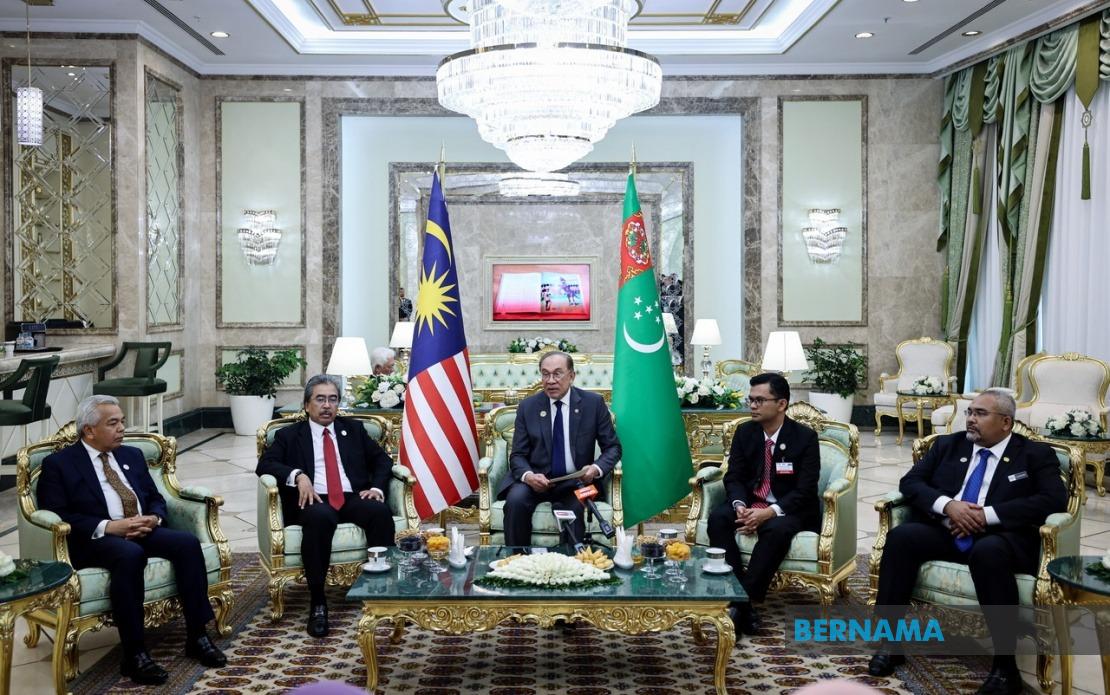
Anwar's delegation comprised a carefully selected high-level team reflecting the multifaceted nature of the bilateral relationship. Minister of Investment, Trade and Industry Datuk Seri Johari Abdul Ghani accompanied the Prime Minister, signalling Malaysia's intention to facilitate commercial engagement and attract Turkmenistan's interest in Malaysian investment opportunities. Minister of Economy Akmal Nasrullah Mohd Nasir's presence further underscored the economic dimension of the visit, suggesting substantive discussions on trade frameworks and economic collaboration mechanisms. The inclusion of officials from the Prime Minister's Office and the Foreign Ministry demonstrated the diplomatic weight accorded to the mission.
Turkey's role as a strategic gateway between Europe and Asia, combined with its substantial hydrocarbon reserves, makes bilateral economic partnerships with Malaysian entities strategically valuable. PETRONAS, represented within the delegation, stands as Malaysia's premier energy corporation and an internationally recognised player in upstream and downstream petroleum operations. The presence of PETRONAS representatives suggests that detailed technical discussions likely occurred regarding potential partnerships, technology cooperation, or exploration opportunities that could benefit both national energy security interests.
President Serdar Berdimuhamedov's extended hospitality and the warm reception extended to the Malaysian delegation reflect Turkmenistan's receptiveness to strengthening ties with Southeast Asian partners. This openness signals an opportunity for Malaysia to expand its diplomatic footprint beyond traditional markets and establish itself as a valued partner in Central Asian affairs. For Turkmenistan, engagement with ASEAN nations like Malaysia provides diversification of international partnerships and access to Asian markets and technical expertise.
The visit's emphasis on opening new chapters in bilateral cooperation suggests that discussions progressed beyond routine diplomatic pleasantries toward the establishment of concrete frameworks. Such frameworks typically encompass memoranda of understanding, joint commissions for trade and investment, and working groups focused on specific sectors. These institutional mechanisms facilitate sustained engagement beyond individual official visits and create momentum for ongoing collaboration at technical and commercial levels.
From Malaysia's perspective, deepening relations with Central Asian energy producers supports the nation's long-term economic diversification strategy and energy security objectives. As Malaysia transitions toward more sustainable energy models while maintaining operational petroleum interests, partnerships with established producers offer insights into resource management, export logistics, and global market positioning. Furthermore, cultural and religious commonalities between Malaysia and Turkmenistan—both predominantly Muslim nations—provide additional foundations for people-to-people engagement and soft diplomacy initiatives.
The timing of this inaugural visit under Anwar's administration reflects the new government's commitment to expanding Malaysia's international engagement and recalibrating foreign policy priorities. By prioritising visits to resource-rich regions and forging connections with countries offering complementary economic strengths, Malaysia positions itself strategically within emerging global economic architectures that transcend traditional regional boundaries.
Anwar's appreciation for the coordinated efforts of multiple stakeholders—including the Malaysian Embassy in Ashgabat, security personnel, and media representatives—underscores the whole-of-government approach required for successful high-level diplomatic missions. Such coordination ensures that visits generate maximum diplomatic and commercial value while projecting a professional image of Malaysian governance and institutional competence.
Looking forward, the relationships and frameworks established during this visit are likely to generate tangible outcomes in the coming months and years. Whether through energy sector collaborations, trade agreements, or cultural exchange programmes, the foundations laid during Anwar's Turkmenistan visit provide pathways for sustained Malaysian engagement in Central Asia. This strategic positioning may yield dividends not only in bilateral relations but also in Malaysia's broader efforts to strengthen ASEAN's collective engagement with nations beyond the traditional Southeast Asian sphere.