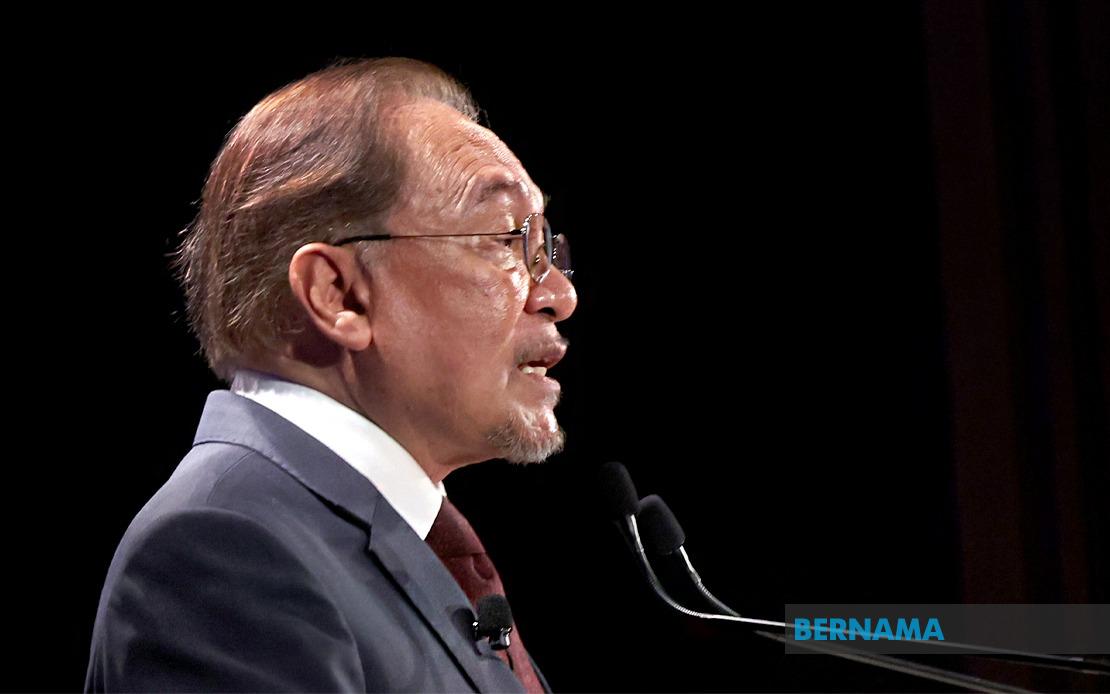
Prime Minister Datuk Seri Anwar Ibrahim's concluding day in Turkmenistan on June 19 brings together an intensive schedule of high-level diplomatic engagements that underscores Malaysia's strategic push into Central Asia. The visit to Ashgabat, the capital nestled along the Caspian Sea's eastern shore, represents an important widening of Malaysia's regional footprint beyond its traditional Southeast Asian sphere of influence, signalling the government's commitment to diversifying international partnerships.
The prime minister's morning itinerary begins with a ceremonial welcome at the Presidential Palace hosted by Turkmenistan President Serdar Berdimuhamedov, followed by a private one-on-one session between the two leaders. Such tête-à-tête meetings typically serve as opportunities for confidential discussions on sensitive matters, allowing both sides to address concerns and establish personal rapport that transcends formal diplomatic channels. The subsequent bilateral meeting will broaden these conversations to include broader strategic considerations affecting both nations.
A pivotal element of Anwar's visit involves the signing of multiple bilateral instruments. Beyond a joint statement formalising the visit, the two governments will exchange an Air Services Agreement, which carries particular significance for tourism and business connectivity between Malaysia and Turkmenistan. Additionally, the Academy of Sciences Malaysia and its Turkmen counterpart will formalise research collaboration through a memorandum of understanding, creating institutional linkages for scientific advancement. Transport ministries will similarly establish cooperative mechanisms, whilst oil and gas sector partnerships will be documented, reflecting Petronas's substantial presence in the Central Asian energy landscape.
The substantive agenda encompasses several critical areas where Malaysia seeks to deepen ties. Trade and investment form the cornerstone, with both governments keen to explore commercial opportunities that benefit private sector entities from both nations. Energy cooperation looms particularly large given Turkmenistan's hydrocarbon wealth and Malaysia's expertise in petroleum exploration and production. Agricultural and commodity exchanges offer complementary advantages, as Turkmenistan's land-based resources align with Malaysia's manufacturing capabilities. Digital transformation and science and technology partnerships represent forward-looking dimensions that position both countries within modern economic paradigms, whilst tourism development capitalises on growing Asian middle-class travel patterns.
Beyond bilateral matters, Anwar and Berdimuhamedov will exchange perspectives on regional and international issues, particularly concerning ASEAN developments and Central Asian geopolitics. This dialogue proves valuable for Malaysia, which increasingly recognises that understanding Central Asian perspectives on regional security, energy transit, and great power dynamics enriches its own strategic positioning. Central Asia's proximity to key global powers and its role as a hydrocarbon corridor makes such exchanges germane to broader Malaysian foreign policy objectives.
The cultural and ceremonial dimensions punctuating the schedule reflect diplomatic protocol's importance. Anwar's attendance at Friday prayers at the Turkmenbashi Ruhy Mosque demonstrates respect for local religious traditions and connects the Malaysian delegation with Turkmenistan's Islamic heritage. The Presidential Palace luncheon following private talks provides an informal setting for extended conversation and relationship-building amongst senior officials. These moments, whilst less visible than formal negotiations, often prove crucial for establishing mutual understanding and trust.
Anwar will jointly oversee the Malaysia-Turkmenistan Forum with President Berdimuhamedov at the Chamber of Commerce and Industry of Turkmenistan, providing a platform for business communities from both nations to identify partnership opportunities. Such forums catalyse private sector engagement, often yielding commercial relationships that extend far beyond government coordination. The concluding press conference with Malaysian media ensures that the delegation's achievements reach domestic audiences, validating the government's international engagement strategy to the Malaysian public.
The delegation's composition strengthens the visit's substantive weight. Minister of Investment, Trade and Industry Datuk Seri Johari Abdul Ghani and Minister of Economy Akmal Nasrullah Mohd Nasir bring portfolio expertise directly relevant to the visit's commercial dimensions, signalling that trade and investment discussions carry genuine ministerial-level authority. Their presence ensures that identified opportunities can receive immediate attention from relevant government departments, accelerating potential follow-through on agreements.
Ashgabat's distinctive character as the White Marble City, holding the Guinness World Record for marble-clad building concentration with over 500 structures, provides an atmospheric backdrop for this diplomatic engagement. The city's monumental architecture and gold-leafed aesthetics reflect Turkmenistan's hydrocarbon wealth and architectural ambitions, contextualising the nation as a Central Asian hub with distinctive identity and growing international engagement aspirations.
Turkmenistan's geographical position as a bridge between Central and South Asia, bordered by Kazakhstan, Uzbekistan, Afghanistan, Iran, and the Caspian Sea, renders it strategically valuable. The country sits astride energy corridors and regional transport routes that increasingly matter for Malaysian interests. Its landlocked character and Caspian Sea access position it as a crucial node within continental trade networks, justifying Malaysia's diplomatic attention.
Commercial statistics underscore the visit's practical importance. In 2025, Turkmenistan ranked as Malaysia's fourth-largest trading partner amongst Central Asian nations, with bilateral trade reaching RM75.80 million. Malaysian exports valued at RM75.50 million registered a commendable 9 per cent year-on-year increase, indicating growing market penetration. More significantly, Petronas has accumulated RM52.73 billion in investments since 1996, establishing the national oil company as a cornerstone of Malaysia's economic presence in Turkmenistan. This sustained engagement demonstrates that Malaysian corporate investment in Central Asian energy reflects not fleeting interest but strategic commitment.
The visit represents Malaysia's evolving geopolitical calculus, acknowledging that Asian nations must cultivate relationships across the continent, not merely within immediate regional neighbourhoods. Turkmenistan offers complementary economic interests, Islamic heritage alignment, and energy sector opportunities that Malaysian entities are well-positioned to exploit. By elevating diplomatic engagement to prime ministerial level, Malaysia signals that Central Asian partnerships merit comparable attention to more established bilateral relationships, potentially opening avenues for expanding Malaysia's regional influence and commercial footprint.