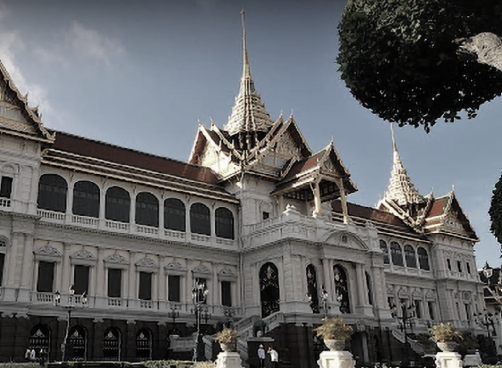
Thailand's Criminal Court has sentenced a 43-year-old man to 18 months in jail for posting a comment about the monarchy in a private Facebook group, underscoring the kingdom's continued enforcement of its stringent lese-majeste legislation. The ruling, announced on Friday, came after the defendant made remarks in "Royalist Marketplace," a Facebook group with over 2.2 million members that has become an unexpected platform for discussing Thailand's royal institution.
The conviction highlights the ongoing struggle between efforts to regulate speech concerning the monarchy and calls for democratic reform in Thailand. The defendant's original sentence of three years was halved to 18 months due to his confession, and he was released on bail of 100,000 baht (approximately US$3,043) pending an appeal. The case represents one of dozens of prosecutions under Thailand's royal insult statutes, which carry maximum penalties of up to 15 years per offence and have drawn criticism from international human rights organisations for their role in suppressing legitimate discourse.
The "Royalist Marketplace" group itself represents a remarkable development in Thai society. Founded by exiled royal scholar and critic Pavin Chachavalpongpun, the private forum emerged as an unprecedented venue where Thais could openly discuss matters pertaining to the monarchy—a topic traditionally considered largely off-limits in public discourse. The group's creation reflected a shifting social landscape, particularly following the youth-driven mass protests of 2020 and 2021, when a new generation of activists openly called for reforms to both the institution of the monarchy and the legal framework surrounding it, including amendments to the lese-majeste law itself.
Those demonstrations represented a watershed moment in Thai politics. For decades, the monarchy had been treated as sacrosanct in public conversation, with criticism tantamount to social and legal transgression. However, the 2020-2021 protest movement fundamentally altered the national conversation, with activists leveraging social media and public gatherings to articulate grievances that had previously remained largely unspoken. The emergence of platforms like "Royalist Marketplace" reflected this generational shift, providing spaces where Thais could engage in structured, albeit risky, dialogue about their country's political system.
The momentum generated by these protests, however, has since dissipated significantly. Many prominent activists and ordinary participants have faced multiple criminal charges, including lese-majeste offences, effectively dampening enthusiasm for public demonstrations and organised dissent. The prosecutorial strategy appears designed to raise the costs of participation in such movements, creating a chilling effect on broader society. As arrest warrants and convictions accumulated, the visibility of protest activity diminished considerably, suggesting that legal pressure has succeeded in constraining mobilisation efforts.
Data compiled by Thai Lawyers for Human Rights reveals the scale of prosecutions under royal defamation statutes. Since 2020, at least 291 people have been charged under lese-majeste laws, with at least 17 of those prosecutions specifically targeting comments made within the "Royalist Marketplace" Facebook group. This concentration of enforcement action against a single online community underscores how authorities have focused attention on digital spaces where discussion of monarchy-related matters occurs, treating social media platforms as priority targets for surveillance and legal action.
The sentencing pattern evident in this case—with courts applying maximum sentences that are subsequently reduced through the confession mechanism—may reflect judicial discretion within parameters established by the law. According to Noppol Achamas, information officer at Thai Lawyers for Human Rights, the court practice of halving sentences for those who plead guilty provides defendants a limited avenue for reducing their exposure, though it simultaneously pressures individuals to accept judicial outcomes rather than mount full defences.
The persistence of these prosecutions reflects broader tensions within Thai society regarding the balance between institutional protection and democratic expression. Thailand has experienced multiple constitutional crises and military interventions in recent decades, each tied partly to competing visions regarding the proper role and boundaries of royal authority. The lese-majeste law, originally intended to shield the institution from malicious attacks, has increasingly become a tool for suppressing political commentary more broadly, according to regional human rights monitors.
For Malaysia and other Southeast Asian nations observing Thailand's legal trajectory, the case offers important perspective on how restrictive speech laws interact with digital communication platforms. Both Malaysia and Singapore maintain their own sedition and defamation statutes with significant penalties, and the Thai experience demonstrates how courts interpret these laws in the social media era. The question of whether private online groups constitute genuine public discourse—and thus legitimately subject to regulation—remains contested across the region.
The international dimension of this issue has also become evident. Pavin Chachavalpongpun, who founded the "Royalist Marketplace" group, operates from abroad after facing Thai legal pressure, yet his online platform continues operating and attracting members despite the risks participants face. This reflects how exile communities and diaspora networks increasingly shape political discourse in their countries of origin through digital channels, creating enforcement challenges for authorities who must navigate questions of jurisdiction and jurisdiction over foreign-based platforms.
As Thailand grapples with these questions, the trajectory appears set for continued prosecutions of lese-majeste offences, particularly targeting individuals who utilise online platforms to express views about the monarchy. The question whether such enforcement genuinely protects royal dignity or instead functions primarily as a mechanism for constraining democratic discourse remains contested, both within Thailand and among international observers monitoring the kingdom's human rights record.