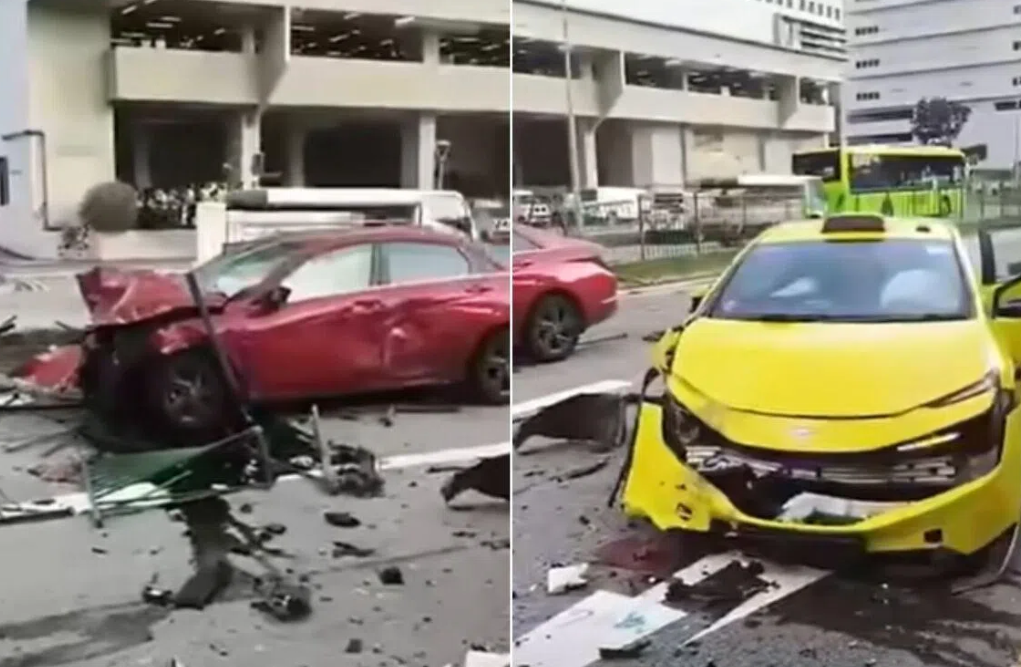
A 36-year-old man has been charged in Singapore courts following a dangerous driving incident in Kallang that resulted in injuries to two taxi workers, with authorities alleging he was under the influence of methamphetamine at the time. Mohamed Firdouz Mohamed Akram appeared in court on June 19 to face a significant array of offences stemming from the collision on Kallang Bahru, including operating a motor vehicle without holding the required Class 3 licence, driving whilst impaired by Ice, and causing bodily injury through reckless vehicle operation. The incident has drawn attention to the ongoing problem of drug-impaired driving in Singapore and the enforcement mechanisms authorities employ to combat such offences.
According to court records, the collision occurred in the early morning hours of June 17 at approximately 8am when Firdouz allegedly operated his vehicle along Kallang Bahru in a manner that showed inadequate vehicle control. The impact involved a taxi carrying two occupants whose identities were not disclosed beyond their demographic details. The 60-year-old taxi operator sustained chest pains from the collision, whilst his 43-year-old passenger reported tailbone injuries requiring medical attention. Both victims were transported for treatment, with the severity of their conditions not immediately disclosed in initial reports.
The Singapore Police Force revealed that Firdouz abandoned the vehicle at the collision scene and departed before officers arrived to conduct their investigation. This flight from the scene compounded the seriousness of his situation, as leaving the location of an accident is itself a traffic violation. However, police moved quickly to establish the driver's identity through standard investigative procedures and located him within five hours of receiving the initial incident report, demonstrating the efficiency of Singapore's law enforcement response mechanisms.
Searches of the abandoned vehicle yielded a concerning collection of items that broadened the scope of the investigation considerably. Officers discovered suspected drugs, drug consumption implements, electronic vaporising devices, and a knuckleduster—a weapon classified as a possession offence under Singapore law. These discoveries led to the addition of two weapons possession charges to the charge sheet. The items were secured as evidence for use in the upcoming trial proceedings, suggesting prosecutors intend to establish a pattern of criminal behaviour extending beyond the traffic violation.
Further investigation revealed that Firdouz was located in a room at the Village Hotel Katong situated on Marine Parade Road approximately five hours after the collision, at around 1pm on the same day. During his apprehension at this location, authorities discovered two knives in his possession, leading to additional weapons charges. The presence of multiple weapons on his person raises questions about his state of mind and intentions during the period following the collision, though police statements have not elaborated on the circumstances of these discoveries.
The charges relating to drug-impaired driving carry substantial statutory penalties designed to deter drivers from operating vehicles while under narcotic influence. Conviction on the methamphetamine driving charge alone exposes Firdouz to imprisonment for up to twelve months, a monetary fine not exceeding S$10,000, or a combination of both sanctions. These penalties reflect Singapore's zero-tolerance approach to substance-impaired driving, which authorities classify as a significant public safety threat. The category of methamphetamine used in this case—colloquially known as Ice—represents a particularly problematic stimulant drug in Southeast Asia, known for its potency and the impaired judgment it induces in users.
The counts related to causing bodily injury whilst operating a vehicle in a dangerous manner carry similarly serious consequences under Singapore traffic law. Offenders convicted on these charges face up to one year imprisonment and mandatory fines ranging from S$2,000 to S$10,000. These provisions exist to protect innocent road users from preventable harm caused by reckless or impaired operators. The legislation reflects the principle that the privilege of driving a motor vehicle on public roads carries corresponding responsibilities toward fellow citizens.
The case underscores ongoing concerns within Singapore regarding substance abuse and its intersection with road safety. Methamphetamine consumption has been a persistent challenge for law enforcement authorities across Southeast Asia, and impaired driving represents one of the most visible harms created by drug use. The incident highlights why authorities maintain stringent testing protocols following traffic collisions, allowing officers to establish chemical impairment through standardised procedures.
For Malaysian observers and regional readers, this case demonstrates the robust enforcement mechanisms that Singapore maintains for traffic and drug-related offences. The quick identification and apprehension of the suspect, coupled with comprehensive investigation procedures, reflects best practices in road safety enforcement. The territorial jurisdiction implications are also noteworthy—Malaysian drivers and residents familiar with cross-border travel between Singapore and Malaysia should note the severity with which Singapore treats drug-impaired driving and the certainty of prosecution for such offences.
The procedural aspect of the case indicates that Firdouz's case will be mentioned again in court on July 17, at which point the legal proceedings will likely advance toward trial or sentencing based on pleas entered. The involvement of multiple charges suggests the prosecution intends to pursue a comprehensive case addressing not merely the traffic elements but the broader pattern of alleged criminal conduct. The case is expected to proceed through Singapore's court system, which typically moves with considerable efficiency in traffic and drug-related matters.
The incident serves as a cautionary reminder of the dangers posed when impaired drivers operate vehicles on public roads. The injuries sustained by the taxi workers, though apparently not life-threatening based on available information, represent the very real human cost of such conduct. Road safety advocates often cite cases such as this when arguing for enhanced public education campaigns regarding the dangers of drug-impaired driving and the necessity of enforcement activities that protect innocent road users from preventable injury.


%22%2F%3E%3C%2Fpattern%3E%3C%2Fdefs%3E%3Crect%20width%3D%22100%25%22%20height%3D%22100%25%22%20fill%3D%22url(%23ph4j1eeg)%22%2F%3E%3Crect%20width%3D%22100%25%22%20height%3D%22100%25%22%20fill%3D%22url(%23ph4j1eep)%22%2F%3E%3Ctext%20x%3D%2250%25%22%20y%3D%2250%25%22%20text-anchor%3D%22middle%22%20dominant-baseline%3D%22central%22%20fill%3D%22rgba(255%2C255%2C255%2C0.95)%22%20font-family%3D%22Georgia%2C%20'Times%20New%20Roman'%2C%20serif%22%20font-weight%3D%22700%22%20font-size%3D%22194%22%20letter-spacing%3D%22-0.02em%22%3ETeacher%3C%2Ftext%3E%3C%2Fsvg%3E)