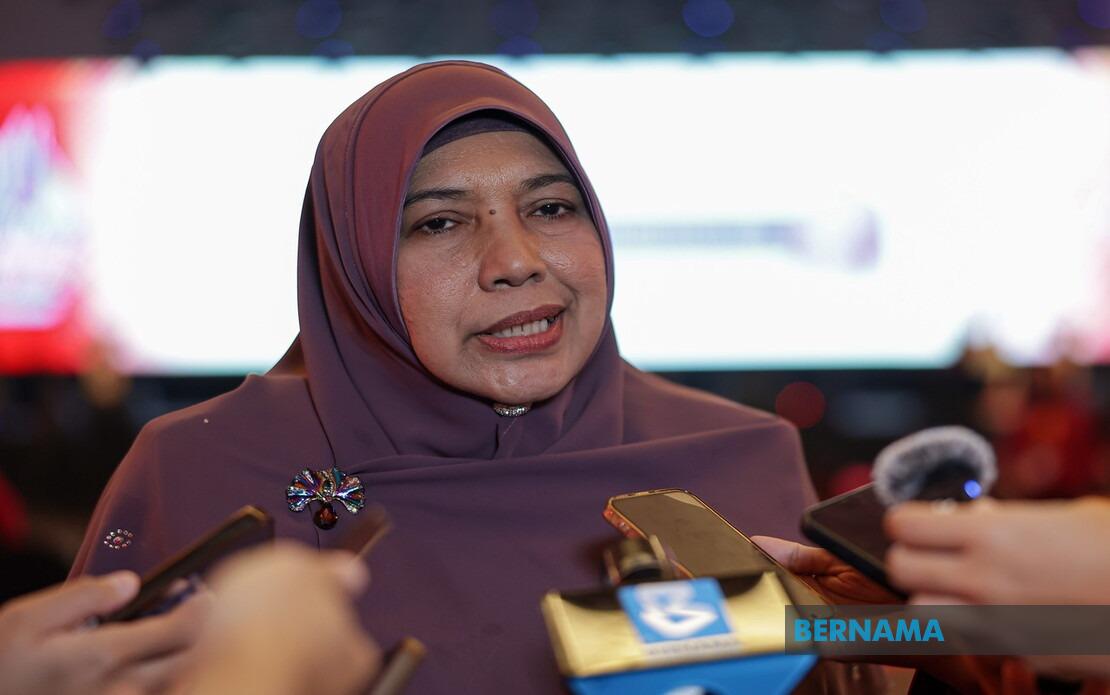
The HAWANA 2026 Summit, opening tomorrow at the PICCA Convention Centre @ Arena Butterworth under Prime Minister Datuk Seri Anwar Ibrahim's patronage, features a newly unveiled photo exhibition that documents the evolution of Malaysia's journalism community celebration and its humanitarian welfare programme. Set up to commemorate the occasion, the gallery represents a deliberate effort by Bernama, Malaysia's national news agency, to preserve institutional memory while highlighting the tangible human impact of collective industry support mechanisms that often operate outside public view.
The exhibition divides into two complementary narratives. The first traces HAWANA's journey from its 2018 inception through 2025, capturing the summit's journey across multiple Malaysian cities—Kuala Lumpur, Melaka, Ipoh in Perak, and Kuching in Sarawak—before returning to the capital. The second segment presents visual testimony from individuals who have benefited from Tabung Kasih@HAWANA, the fund established to provide financial and medical assistance to journalists and media veterans encountering personal crises or health complications. Together, these parallel displays construct a narrative that links institutional celebration to concrete welfare outcomes.
Datin Paduka Nur-ul Afida Kamaludin, chief executive officer of Bernama and chair of the HAWANA 2026 Working Committee, emphasized that the gallery serves a strategic communication purpose. Beyond merely documenting past events, she positioned the exhibition as demonstrating Bernama's pivotal yet often invisible role coordinating both the summit's logistics and the secretariat functions managing Tabung Kasih@HAWANA. This dual function—organizing celebration whilst administering welfare—represents a substantial institutional commitment that remains largely unknown to journalists outside the industry's inner circles.
The curatorial approach reflects deliberate pedagogical choices. Bernama's Photo Desk, under editor Mohamad Bakri Darus, selected images with bilingual Malay and English captions to ensure accessibility across Malaysia's media landscape. This linguistic accommodation acknowledges the multilingual character of Malaysian journalism and respects readers navigating between official and vernacular press channels. The decision to provide contextual framing for each photograph suggests recognition that archival imagery requires interpretive scaffolding to generate meaning for audiences encountering the documentation years after original events.
The exhibition encompasses a comprehensive range of HAWANA programming that extends beyond ceremonial formalities. Featured content includes Strategic Partner Meetings that likely facilitate industry coordination, Media Forums providing professional development and policy discussion platforms, the HAWANA-DBP Pantun Festival celebrating traditional Malaysian poetry, carnival and exhibition spaces enabling informal networking, and sports competitions fostering camaraderie. This programming diversity indicates that HAWANA functions simultaneously as professional conference, cultural celebration, and community-building mechanism—a multivalent gathering uncommon in most journalistic associations.
For Malaysian readers and media professionals, the exhibition carries particular significance in highlighting institutional mechanisms for supporting workers in an industry increasingly characterized by economic precarity. As journalism faces sustained revenue pressures and organizational restructuring across Southeast Asia, collective welfare schemes like Tabung Kasih@HAWANA represent practical responses to market failures in protecting individual practitioners. The visibility the gallery affords to beneficiary stories may encourage similar initiatives within other industry sectors or professional associations wrestling with comparable challenges.
The timing of this exhibition aligns with broader conversations about journalism's societal role and professional sustainability. By juxtaposing celebration imagery with beneficiary narratives, the gallery implicitly argues that supporting individual journalists constitutes supporting the institution of journalism itself. This framing rejects false dichotomies between professional pride and material welfare, instead positioning mutual aid as intrinsic to journalistic culture and identity. For media practitioners contemplating career longevity, such visible institutional support may influence retention decisions.
The evolution across venues—from Kuala Lumpur's initial gathering to the expansion into Melaka, Perak, and Sarawak—reflects deliberate geographic distribution strategies that extend celebration beyond the capital's journalism establishment. This decentralization acknowledges that journalists work throughout Malaysia's states and regions, facing comparable challenges despite geographic distance from national news production centers. Rotating venues also builds reciprocal relationships across state-level press clubs and journalist associations, strengthening horizontal professional networks.
Beyond archival documentation, the exhibition functions as institutional validation for the journalists and media workers featured in beneficiary narratives. Public recognition of individuals receiving Tabung Kasih@HAWANA assistance, mediated through professional gallery space rather than welfare office confidentiality, potentially destigmatizes requesting or receiving such aid. Within professional communities where individual achievement often dominates cultural narratives, explicit celebration of collective support systems may normalize interdependence and reduce isolating shame frequently accompanying financial difficulty or health crises.
The careful curation and bilingual presentation indicate that Bernama views this exhibition as contributing to historical documentation of Malaysian journalism. By preserving these narratives through professional photographic standards and institutional gallery presentation, the agency positions HAWANA celebrations and Tabung Kasih recipients within journalism's archival record. This elevation of typically ephemeral industry events into documented cultural artifacts suggests recognition that informal practices and mutual aid mechanisms warrant preservation alongside formal organizational histories.
As the HAWANA 2026 Summit commences, the photo gallery invites reflection on what distinguishes viable journalism communities from those fragmenting under market pressures. The exhibition's central argument—that celebration and mutual aid constitute inseparable components of professional community—deserves consideration across Southeast Asia's media landscape. As journalists throughout the region contend with economic uncertainty, digital disruption, and political pressures, models demonstrating how professional associations can function simultaneously as celebratory, developmental, and welfare institutions offer potential institutional templates worthy of examination and adaptation.
%22%2F%3E%3C%2Fpattern%3E%3C%2Fdefs%3E%3Crect%20width%3D%22100%25%22%20height%3D%22100%25%22%20fill%3D%22url(%23ph4j1eeg)%22%2F%3E%3Crect%20width%3D%22100%25%22%20height%3D%22100%25%22%20fill%3D%22url(%23ph4j1eep)%22%2F%3E%3Ctext%20x%3D%2250%25%22%20y%3D%2250%25%22%20text-anchor%3D%22middle%22%20dominant-baseline%3D%22central%22%20fill%3D%22rgba(255%2C255%2C255%2C0.95)%22%20font-family%3D%22Georgia%2C%20'Times%20New%20Roman'%2C%20serif%22%20font-weight%3D%22700%22%20font-size%3D%22194%22%20letter-spacing%3D%22-0.02em%22%3ETeacher%3C%2Ftext%3E%3C%2Fsvg%3E)