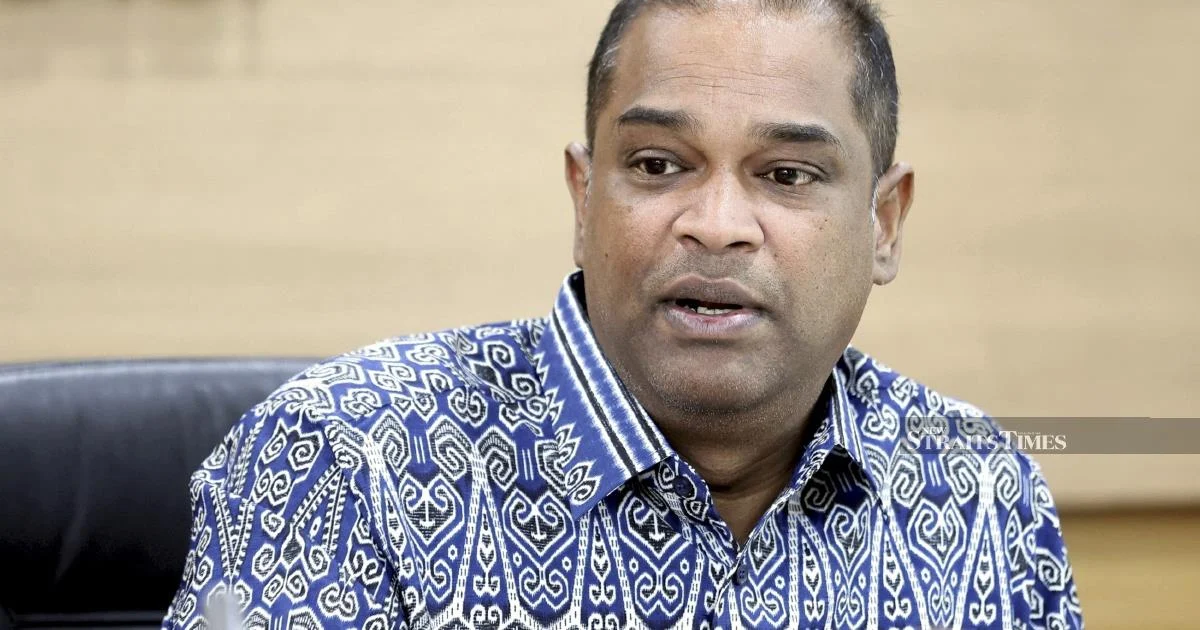
Datuk Seri R. Ramanan, PKR's second-in-command, has voiced strong disapproval of the way contemporary Malaysian politicians are instrumentalising the monarchy for partisan advantage, particularly as Johor state gears up for its 16th election. The senior politician's intervention highlights growing concern among opposition figures that electoral campaigns are increasingly blurring the boundary between the revered institution of royalty and the cut-and-thrust of party politics.
Ramanan's criticism reflects a broader anxiety within PKR ranks about how the monarchy, traditionally positioned above the fray of everyday politics, has become a reference point in campaign messaging and political discourse. The warning comes at a critical juncture when Johor, Malaysia's southern industrial and commercial hub, prepares for polls that will shape the state's political direction for the next electoral cycle. Such concerns are particularly sensitive in Johor, where the Sultan commands significant symbolic authority within the state's constitutional framework.
The tendency to invoke royal institutions during electioneering is not unique to Malaysia's current political landscape, but its frequency and directness appear to have intensified in recent years. Opposition parties contend that invoking royal patronage or seeking royal endorsement—whether implicit or explicit—fundamentally undermines the non-partisan character that the monarchy has traditionally maintained. This separation of powers principle has historically been regarded as fundamental to Malaysia's constitutional stability and institutional health.
Political analysts suggest that Ramanan's intervention serves multiple purposes within the opposition movement. First, it establishes clear messaging that PKR and its allies maintain respect for constitutional institutions even while campaigning vigorously for electoral support. Second, it implicitly challenges rival parties—particularly those perceived to benefit from closer royal connections—to conduct campaigns on policy substance rather than institutional proximity. This tactical approach allows the opposition to occupy moral high ground without directly attacking the monarchy itself.
For Malaysian voters, particularly in Johor, such warnings underscore a significant dimension of contemporary political contestation that extends beyond conventional policy disagreements. Elections increasingly require scrutiny not only of what parties propose to do but also how they conduct their campaigns and what constitutional principles they uphold. The integrity of democratic processes depends partly on maintaining institutional separation and ensuring that revered bodies remain above partisan squabbling.
The timing of Ramanan's statement is strategically significant. As parties mobilise ground organisations and intensify campaign activity, early calls for institutional restraint can shape the overall tenor of electioneering. Should other senior figures from both government and opposition endorse similar principles, electoral campaigns might maintain higher standards of institutional respect. Conversely, if such warnings go unheeded, the coming months could witness further erosion of traditional boundaries between palace and party politics.
Johor's political significance extends beyond state boundaries. As Malaysia's most economically dynamic state and a bellwether for national political trends, electoral outcomes and campaign conduct there carry implications for how Malaysian democracy functions more broadly. The state has historically been a proving ground for political movements and ideas that subsequently influence national politics. This magnifies the importance of maintaining institutional integrity during Johor campaigns, as patterns established there often ripple across the federation.
The royal institution's constitutional role in Johor is particularly important to understand in this context. Unlike some other states, Johor's Sultan possesses defined powers in state governance, including authority over matters relating to Islam and Malay customs. This constitutional prominence makes it all the more essential that political actors respect the monarchy's neutrality. Should political leaders attempt to manipulate the institution or utilise it for narrow partisan gain, they risk undermining public confidence in both the monarchy and the democratic system itself.
Ramanan's position also reflects PKR's broader strategy of positioning itself as a defender of constitutional values and institutional integrity. In Malaysian politics, where trust in institutions has occasionally wavered, opposition parties that can convincingly claim to safeguard constitutional principles often attract voters concerned about governmental accountability and fairness. By framing his criticism in terms of protecting the royal institution rather than attacking competitors, Ramanan appeals to conservative and traditional voters who might otherwise be sceptical of opposition messaging.
The challenge for all political actors moving forward involves conducting aggressive campaigns that compete for voter support while respecting institutional boundaries. This is not a contradiction that should be resolved by abandoning electoral competition but rather by elevating the standard of how that competition is conducted. In societies with constitutional monarchies and established democratic traditions, the capacity to combine competitive politics with institutional respect is itself a marker of political maturity.
Looking beyond Johor, Ramanan's intervention suggests that constitutional and institutional issues will feature more prominently in Malaysian electoral discourse going forward. Voters increasingly recognise that how parties conduct themselves in office matters as much as what they promise to do. The coming months will reveal whether political leaders across the spectrum genuinely embrace the principle of keeping royal institutions insulated from campaign politics, or whether electoral pressures ultimately override such commitments. This will serve as a bellwether for the health of Malaysian democracy more broadly.