The Royal Malaysia Police have established cordons around five separate zones within storm-ravaged Bercham in Ipoh, implementing strict controls on foot and vehicular traffic to safeguard affected properties against theft and opportunistic break-ins in the wake of Friday's destructive weather event. The security lockdown represents a precautionary measure designed to protect vulnerable households during a period when many residents are displaced or occupied with emergency repairs, creating openings for criminal exploitation.
Ipoh district police chief ACP Muhammad Najib Hamzah announced the containment strategy during a media briefing held at the district police station following an inspection of the Incident Control Post established at Bercham police station. Whilst acknowledging the challenges faced by residents attempting to salvage possessions and undertake necessary cleanup work, the police leadership signalled a determination to maintain order across multiple affected neighbourhoods simultaneously.
The police chief acknowledged a need for measured flexibility when managing access permissions, particularly for residents whose homes remain within the sealed perimeter and who require entry to retrieve essential items or commence repair and recovery operations. However, this operational discretion comes with conditions and heightened scrutiny, especially during nighttime hours when visibility is compromised and criminal activity becomes more difficult to detect or deter.
Muhammad Najib explained that after nightfall, movement restrictions will be enforced with considerably greater stringency across all designated zones. The decision reflects specific vulnerability in areas such as Anjung Bercham, which remain without electrical supply following infrastructure damage during the storm. Officers will require residents requesting nocturnal access to verify property ownership and demonstrate legitimate purposes for their presence, as authorities remain vigilant against criminals posing as cleanup crews to conduct theft operations.
By 8 am on the day of the briefing, law enforcement agencies had received 492 storm-related incident reports channelled through the official Op Bencana emergency reporting system. The police chief stressed that no time limitation applies to residents wishing to lodge formal complaints or reports of storm damage, property loss, or suspicious activities, providing victims flexibility in documenting their experiences and enabling ongoing investigation of criminal incidents that may emerge during the recovery phase.
The full economic toll of the disaster remains under assessment, with officials declining to release preliminary damage valuations until comprehensive surveys of affected properties can be completed. The hesitation to provide early figures reflects the complexity of calculating losses across residential properties, commercial establishments, and public infrastructure simultaneously, particularly when some damage may not become apparent until cleanup operations expose secondary destruction.
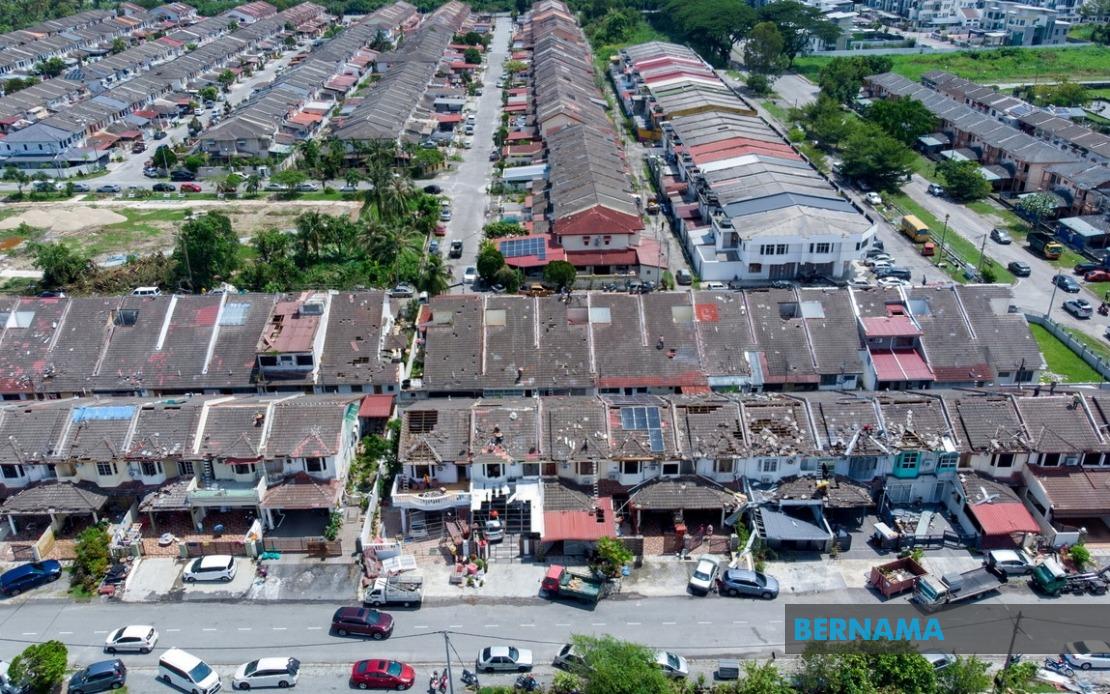
Ipoh Barat Member of Parliament M. Kulasegaran, who also holds the position of Deputy Minister in the Prime Minister's Department (Law and Institutional Reform), characterised the meteorological event as extraordinary and unprecedented in nature. Kulasegaran's assessment indicated that the storm had impacted more than 200 residential dwellings across the locality, substantially exceeding damage patterns from comparable weather events in recent years and suggesting unusual atmospheric conditions.
Meteorological and disaster management specialists have attributed the unusually intense and destructive weather pattern to a landspout phenomenon, a rare rotating vortex of air that develops beneath cumulonimbus clouds and strikes with concentrated force across narrow ground areas. Unlike conventional tornadoes, landspouts form over land with distinctive rotational characteristics and can produce extreme wind speeds capable of widespread structural damage, consistent with the destruction patterns documented in Bercham.
The communities most severely affected encompass Anjung Bercham Utara, Taman Mujur, Kampung Bercham, Kampung Tersusun Tasek, Taman Pusat Bercham, and Taman Indah Sakti, representing a geographically dispersed impact pattern across multiple residential zones rather than concentrated devastation in a single neighbourhood. This distribution suggests the weather system traced a relatively broad path across the district, affecting both established residential areas and newer planned residential communities.
For Malaysian residents in areas vulnerable to similar severe weather events, the police response in Bercham illustrates the operational coordination required when disaster management intersects with law enforcement objectives. The deployment of perimeter security reflects acknowledged risks that natural disasters create enforcement challenges and opportunities for criminal exploitation that require preventive strategies rather than purely reactive responses. The approach taken by Ipoh district police establishes a framework other Malaysian enforcement agencies may reference when managing comparable situations involving widespread property damage, displaced populations, and degraded infrastructure.
The situation underscores the necessity for comprehensive disaster preparedness planning that incorporates law enforcement dimensions alongside conventional emergency response, medical services, and infrastructure restoration activities. As climate patterns produce more frequent severe weather events across Southeast Asia, the integration of security operations into broader disaster management protocols has become an increasingly important consideration for both civil authorities and communities seeking to protect accumulated assets and maintain social order during recovery periods.