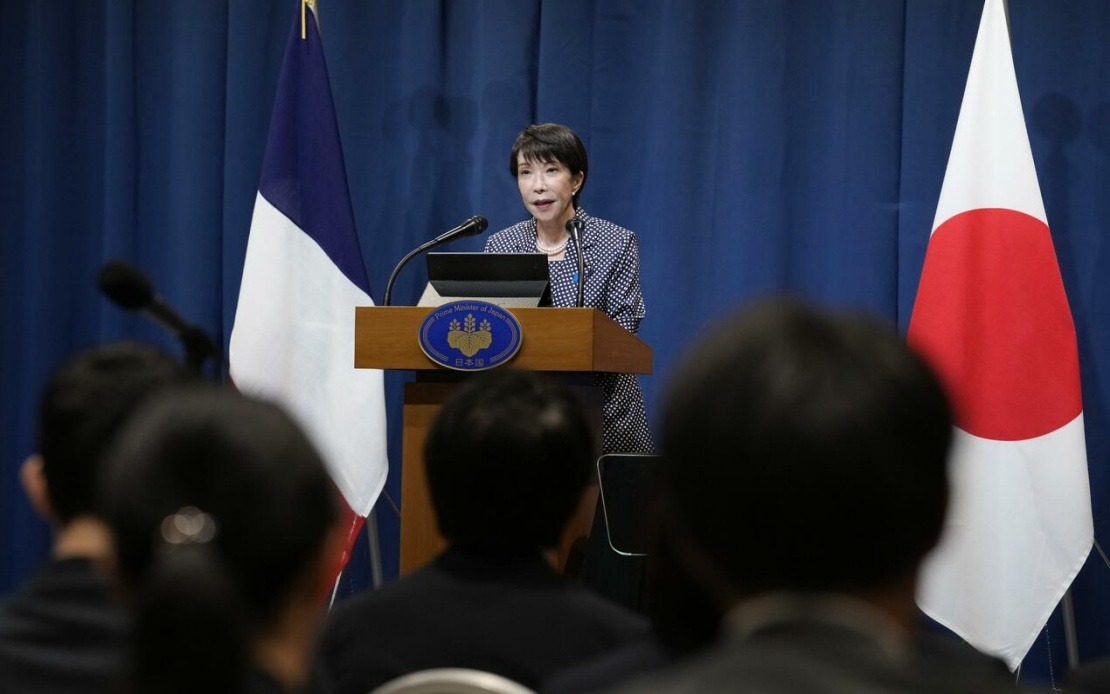
Prime Minister Sanae Takaichi's Cabinet has experienced a notable erosion in public support, with approval ratings slipping to 55.8 per cent according to a Kyodo News survey conducted over the weekend. This represents the lowest level of backing recorded since Takaichi assumed office in October of the previous year, signalling growing discontent among Japanese voters at a critical juncture for the administration.
The deterioration in Cabinet support reflects mounting apprehension within Japan regarding geopolitical developments in West Asia and their potential repercussions for the nation's economy. As a resource-dependent nation heavily reliant on energy imports and trade through strategic waterways, Japan faces heightened vulnerability to regional instability. The poll reveals that public anxiety extends beyond immediate security concerns to encompass broader economic implications, particularly given the fragility of consumer confidence amid persistent inflationary pressures.
When questioned about Japan's potential military involvement in safeguarding maritime routes, respondents demonstrated considerable caution. A majority of 54.7 per cent expressed opposition to deploying the Japanese Self-Defence Forces to critical shipping lanes, including the Strait of Hormuz, to ensure unimpeded passage of commercial vessels. Conversely, 36.6 per cent of survey participants supported such intervention, indicating a substantial policy divide within the electorate on how Japan should respond to regional security challenges.
The timing of this survey is particularly significant, as it was conducted following a preliminary peace accord between the United States and Iran. The preliminary agreement notably includes provisions for Tehran to reopen the Strait of Hormuz, a development that had temporarily reduced immediate anxieties about potential supply chain disruptions. However, this geopolitical reprieve appears insufficient to substantially restore public confidence in the Takaichi administration, suggesting that underlying economic grievances dominate public sentiment.
The persistence of household economic hardship emerged as a dominant concern in the polling data. Japanese families continue to grapple with elevated price levels across essential goods and services, creating sustained pressure on household budgets and diminishing disposable income. This widespread financial strain has made fiscal and tax policies central to public discourse, with citizens seeking relief from the government through concrete measures that directly impact their purchasing power and cost of living.
The survey identified food price inflation as a particular flashpoint for public discontent. When presented with proposals to address this specific challenge, 43.9 per cent of respondents indicated they would accept a reduction in the consumption tax rate applied to food and beverages, from the current level of 8.0 per cent to 1.0 per cent, provided such action accelerates the implementation timeline. This substantial plurality suggests that Japanese households view targeted tax relief as a pragmatic approach to alleviating immediate economic distress, even if the reduction is modest rather than transformative.
A secondary group of respondents, comprising 22.6 per cent of those surveyed, advocated for more radical action. This cohort supported eliminating the consumption tax entirely on food and beverages, aligning with pledges previously made by Japan's ruling coalition parties. The existence of this significant constituency for zero-rating essential food items reflects deeper frustration with current policy approaches and suggests that a meaningful segment of the voting public seeks more aggressive intervention to address cost-of-living pressures.
The divergence between the two tax-reduction proposals reveals complexity within public opinion. While nearly two-thirds of those expressing a preference for consumption tax modification support either the 8 per cent to 1 per cent reduction or complete elimination, the distribution indicates pragmatism alongside more ambitious expectations. The 43.9 per cent supporting the more moderate reduction may reflect either acceptance of fiscal realities or uncertainty about the feasibility of more comprehensive tax elimination.
For Malaysia and the broader Southeast Asian region, Japan's domestic political challenges carry significance beyond its borders. As the region's second-largest economy and a major investor and trading partner across Southeast Asia, fluctuations in Japanese political stability and consumer confidence can ripple through regional economies. Japanese foreign direct investment and corporate expansion within Southeast Asia have historically been influenced by domestic political consensus and economic performance. The erosion of support for the Takaichi Cabinet could potentially constrain Japanese economic engagement with the region if the government becomes preoccupied with domestic political consolidation.
Furthermore, Japan's approach to regional security and maritime cooperation, which remains a subject of public debate, intersects with Southeast Asian interests. Nations throughout the region depend on stable shipping routes and benefit from Japanese participation in regional security architectures. The apparent public reluctance to support unilateral Japanese military involvement in distant waterways may shape Tokyo's regional diplomacy and defence posture in coming months.
The economic pressures facing Japanese households also provide context for understanding broader consumption patterns across East Asia. As Japanese consumer spending slows due to inflation and reduced confidence, this typically reverberates through supply chains and bilateral trade relationships. Southeast Asian exporters of raw materials and manufactured goods could experience reduced demand from Japanese buyers if household economic distress persists and constrains retail spending.
Looking forward, Prime Minister Takaichi faces the dual challenge of restoring public confidence while navigating complex international circumstances. The government's response to inflation, particularly regarding taxation of essential goods, will likely prove decisive in determining whether the Cabinet's approval rating stabilises or continues its downward trajectory. With confidence at its lowest point since her appointment, Takaichi must balance fiscal responsibility with demonstrable relief for struggling households to retain political viability.
%22%2F%3E%3C%2Fpattern%3E%3C%2Fdefs%3E%3Crect%20width%3D%22100%25%22%20height%3D%22100%25%22%20fill%3D%22url(%23ph3i46gg)%22%2F%3E%3Crect%20width%3D%22100%25%22%20height%3D%22100%25%22%20fill%3D%22url(%23ph3i46gp)%22%2F%3E%3Ctext%20x%3D%2250%25%22%20y%3D%2250%25%22%20text-anchor%3D%22middle%22%20dominant-baseline%3D%22central%22%20fill%3D%22rgba(255%2C255%2C255%2C0.95)%22%20font-family%3D%22Georgia%2C%20'Times%20New%20Roman'%2C%20serif%22%20font-weight%3D%22700%22%20font-size%3D%22320%22%20letter-spacing%3D%22-0.02em%22%3E24%3C%2Ftext%3E%3C%2Fsvg%3E)
%22%2F%3E%3C%2Fpattern%3E%3C%2Fdefs%3E%3Crect%20width%3D%22100%25%22%20height%3D%22100%25%22%20fill%3D%22url(%23ph2u52ag)%22%2F%3E%3Crect%20width%3D%22100%25%22%20height%3D%22100%25%22%20fill%3D%22url(%23ph2u52ap)%22%2F%3E%3Ctext%20x%3D%2250%25%22%20y%3D%2250%25%22%20text-anchor%3D%22middle%22%20dominant-baseline%3D%22central%22%20fill%3D%22rgba(255%2C255%2C255%2C0.95)%22%20font-family%3D%22Georgia%2C%20'Times%20New%20Roman'%2C%20serif%22%20font-weight%3D%22700%22%20font-size%3D%22320%22%20letter-spacing%3D%22-0.02em%22%3EData%3C%2Ftext%3E%3C%2Fsvg%3E)
%22%2F%3E%3C%2Fpattern%3E%3C%2Fdefs%3E%3Crect%20width%3D%22100%25%22%20height%3D%22100%25%22%20fill%3D%22url(%23ph7ag3g)%22%2F%3E%3Crect%20width%3D%22100%25%22%20height%3D%22100%25%22%20fill%3D%22url(%23ph7ag3p)%22%2F%3E%3Ctext%20x%3D%2250%25%22%20y%3D%2250%25%22%20text-anchor%3D%22middle%22%20dominant-baseline%3D%22central%22%20fill%3D%22rgba(255%2C255%2C255%2C0.95)%22%20font-family%3D%22Georgia%2C%20'Times%20New%20Roman'%2C%20serif%22%20font-weight%3D%22700%22%20font-size%3D%22170%22%20letter-spacing%3D%22-0.02em%22%3EMalaysia%3C%2Ftext%3E%3C%2Fsvg%3E)