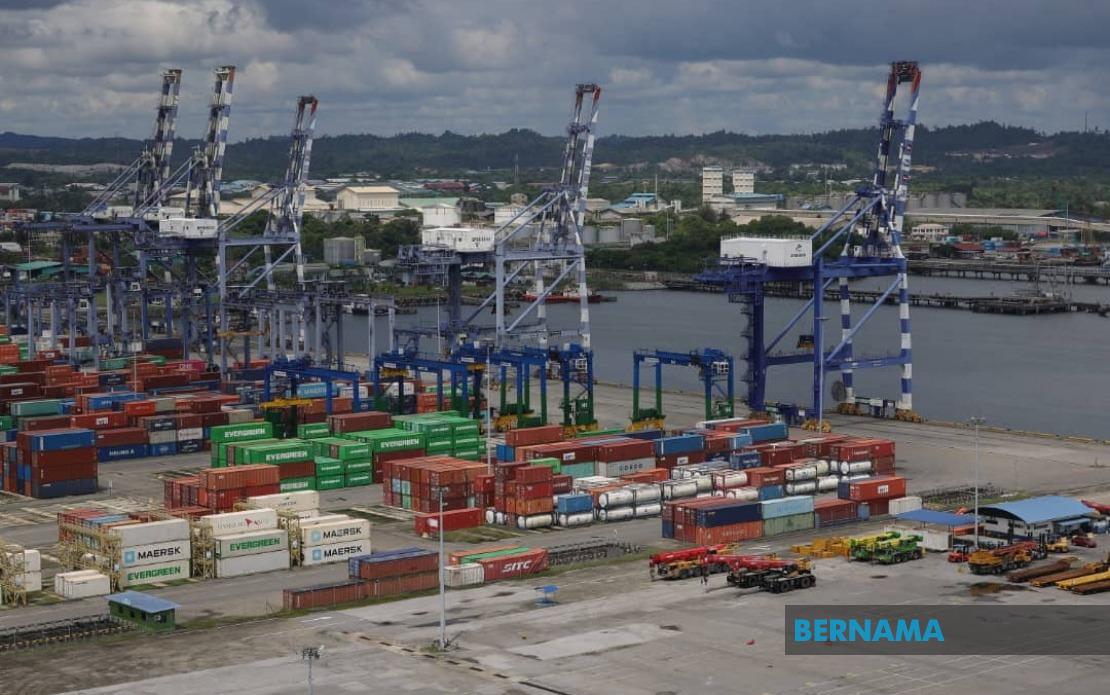
The Sarawak state government has formally assumed regulatory control of Bintulu Port in what federal officials describe as one of the most significant achievements in implementing the Malaysia Agreement 1963. Minister in the Prime Minister's Department (Sabah and Sarawak) Datuk Mustapha Sakmud marked the transition with a ceremonial cheque handover in Bintulu, attended by Prime Minister Datuk Seri Anwar Ibrahim and Sarawak Premier Tan Sri Abang Johari Tun Openg. The shift in administrative authority signals a fresh approach to federal-state relations, moving beyond decades of centralised control to recognise Sarawak's constitutional standing as a founding member of the Malaysian federation.
The transfer addresses longstanding calls from Sarawak for greater autonomy over strategic economic assets within its territory. Rather than viewing the handover as a diminishment of federal power, Mustapha framed it as a strengthening mechanism for the Malaysian federation itself, emphasising that recognising the rights and potential of Sabah and Sarawak ultimately benefits the nation as a whole. This narrative shift is significant in Malaysian federalism, suggesting a willingness at the highest levels to revisit the power-sharing arrangements established in 1963 and to implement them more fully than has been done historically.
Bintulu Port's evolution represents far more than a symbolic transfer of paperwork. The facility has grown beyond its original identity as Malaysia's primary liquefied natural gas export hub to become a diversified economic engine. The port now functions as a convergence point for industrial operations, logistics services, and emerging green energy initiatives. For Malaysia's regional standing in the Asia-Pacific, this diversification is strategically important, as global supply chains increasingly demand facilities that align with sustainability commitments and low-carbon operational standards.
Sarawak's competitive advantage in renewable energy, particularly its substantial hydroelectric capacity, makes the state an increasingly attractive destination for multinational corporations seeking to establish operations with strong environmental credentials. The connection between port infrastructure and energy resources is not incidental but symbiotic. Investors considering relocation to Southeast Asia now evaluate energy availability and cost alongside port efficiency, and Sarawak's combination of both attributes creates a compelling proposition. The state's positioning as a hub for clean industries and high-value manufacturing could reshape regional investment patterns over the coming decade.
The MA63 implementation through this port handover extends implications beyond Sarawak's borders. Other Southeast Asian nations, including Singapore and Indonesia, are closely monitoring how Malaysia addresses power-sharing between federal and state authorities. How successfully Sarawak exercises its new regulatory responsibilities will either validate or undermine arguments for similar arrangements in other federal systems in the region. The eyes of both regional investors and governments are watching whether this decentralisation delivers tangible economic benefits or becomes bogged down in bureaucratic transition challenges.
For Malaysian investors and businesses operating from other states, the Bintulu transition carries implications regarding the broader trajectory of federalism within Malaysia. If the handover proves successful in accelerating port development and attracting foreign capital, pressure may mount for comparable arrangements affecting other major infrastructure assets in Peninsular Malaysia or Sabah. The precedent being set here could reshape how future infrastructure projects are structured and governed across the federation.
The timing of this announcement comes amid broader efforts to strengthen Malaysia-Sarawak relations after periods of tension surrounding resources, land rights, and revenue sharing. By facilitating greater state control over Bintulu Port, the federal government appears to be investing political capital in restoring confidence and demonstrating commitment to MA63 beyond rhetorical endorsement. For Sarawak voters, tangible policy outcomes matter more than symbolic gestures, and the concrete transfer of regulatory authority sends a message that constitutional agreements will be operationalised.
The port's transformation into a green energy centre aligns with global decarbonisation trends and Malaysia's international climate commitments. As countries and corporations accelerate their transition away from fossil fuels, ports capable of supporting clean energy industries and sustainable manufacturing will command premium valuations. Bintulu's hydroelectric advantage and now its state-controlled regulatory environment position it to capture disproportionate shares of investment flows directed toward low-carbon Southeast Asian operations.
Mustapha's emphasis on win-win outcomes reflects diplomatic language designed to ease any concerns within federal structures that decentralisation represents a loss of authority or control. In reality, such transitions always involve trade-offs. What the federal government gains is relief from direct administrative burdens and improved state-level relations; what it potentially relinquishes is direct oversight of revenues and strategic decision-making at a major maritime facility. Whether this balance proves advantageous will depend heavily on implementation outcomes over the next three to five years.
The ceremony itself, bringing together the Prime Minister and Sarawak Premier in formal recognition of the transition, carried symbolic weight beyond the immediate port management issue. Such high-level engagement demonstrates political commitment to making MA63 implementation real rather than allowing it to become another dormant constitutional provision. For observers tracking Malaysia's federal evolution, this moment represents either a genuine inflection point toward genuine power-sharing or another cycle of promising reform followed by gradual institutional resistance.
Looking forward, the success of Bintulu Port's transition will likely influence negotiations over other constitutionally enshrined MA63 provisions that remain unimplemented decades after independence. Sarawak has long advocated for greater control over natural resources, including petroleum and gas reserves. The port handover could establish a model—both practically and politically—for addressing these more contentious issues. Whether federal authorities prove willing to extend similar autonomy to resource management decisions represents the true test of MA63 implementation commitment.
%22%2F%3E%3C%2Fpattern%3E%3C%2Fdefs%3E%3Crect%20width%3D%22100%25%22%20height%3D%22100%25%22%20fill%3D%22url(%23ph3i46gg)%22%2F%3E%3Crect%20width%3D%22100%25%22%20height%3D%22100%25%22%20fill%3D%22url(%23ph3i46gp)%22%2F%3E%3Ctext%20x%3D%2250%25%22%20y%3D%2250%25%22%20text-anchor%3D%22middle%22%20dominant-baseline%3D%22central%22%20fill%3D%22rgba(255%2C255%2C255%2C0.95)%22%20font-family%3D%22Georgia%2C%20'Times%20New%20Roman'%2C%20serif%22%20font-weight%3D%22700%22%20font-size%3D%22320%22%20letter-spacing%3D%22-0.02em%22%3E24%3C%2Ftext%3E%3C%2Fsvg%3E)
%22%2F%3E%3C%2Fpattern%3E%3C%2Fdefs%3E%3Crect%20width%3D%22100%25%22%20height%3D%22100%25%22%20fill%3D%22url(%23ph2u52ag)%22%2F%3E%3Crect%20width%3D%22100%25%22%20height%3D%22100%25%22%20fill%3D%22url(%23ph2u52ap)%22%2F%3E%3Ctext%20x%3D%2250%25%22%20y%3D%2250%25%22%20text-anchor%3D%22middle%22%20dominant-baseline%3D%22central%22%20fill%3D%22rgba(255%2C255%2C255%2C0.95)%22%20font-family%3D%22Georgia%2C%20'Times%20New%20Roman'%2C%20serif%22%20font-weight%3D%22700%22%20font-size%3D%22320%22%20letter-spacing%3D%22-0.02em%22%3EData%3C%2Ftext%3E%3C%2Fsvg%3E)
%22%2F%3E%3C%2Fpattern%3E%3C%2Fdefs%3E%3Crect%20width%3D%22100%25%22%20height%3D%22100%25%22%20fill%3D%22url(%23ph7ag3g)%22%2F%3E%3Crect%20width%3D%22100%25%22%20height%3D%22100%25%22%20fill%3D%22url(%23ph7ag3p)%22%2F%3E%3Ctext%20x%3D%2250%25%22%20y%3D%2250%25%22%20text-anchor%3D%22middle%22%20dominant-baseline%3D%22central%22%20fill%3D%22rgba(255%2C255%2C255%2C0.95)%22%20font-family%3D%22Georgia%2C%20'Times%20New%20Roman'%2C%20serif%22%20font-weight%3D%22700%22%20font-size%3D%22170%22%20letter-spacing%3D%22-0.02em%22%3EMalaysia%3C%2Ftext%3E%3C%2Fsvg%3E)