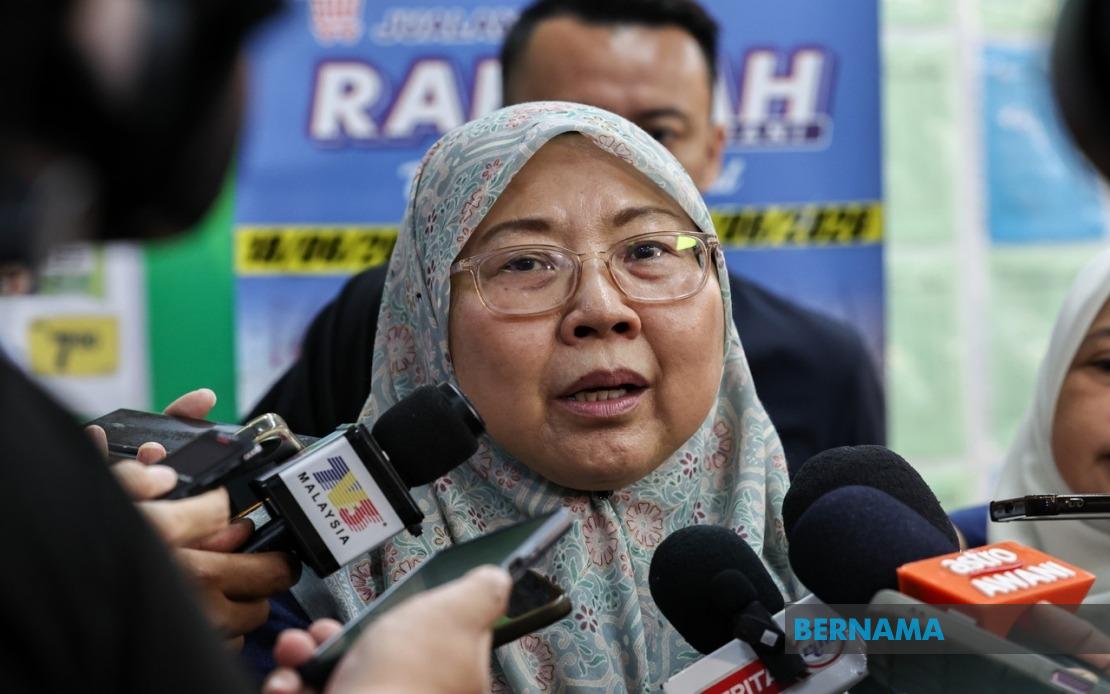
PKR's candidate selection process for the imminent state elections in Johor and Negeri Sembilan has reached the final stages, with party secretary-general Datuk Dr Fuziah Salleh indicating that the list is approximately 99 per cent complete. The party will contest 20 seats in Johor and 16 in Negeri Sembilan, with formal announcement of the nominees expected within days. Speaking at an event in Johor Bahru, Dr Fuziah emphasised the party's commitment to presenting candidates that reflect both continuity and regeneration within its ranks.
The composition of PKR's candidate slate reflects broader strategic thinking within the opposition coalition. The party intends to field a balanced combination that marries seasoned political operators with emerging talent, while ensuring adequate female representation and youth participation. However, Dr Fuziah declined to specify the exact proportion of new faces in the candidate list, saying this detail would be revealed during the official announcement. This measured approach suggests PKR is calibrating its selection to retain organisational stability whilst projecting forward momentum and renewal to voters.
A lingering point of contention within the opposition coalition concerns the Puteri Wangsa constituency in Johor. Amanah, another component party in the Pakatan Harapan alliance, has claimed ownership of the seat, arguing that it was merely loaned to MUDA during the 2022 state election and should revert to Amanah's control. Dr Zuhan Zain, Amanah's Johor vice chairman, has publicly resisted PKR's assertion that the seat belongs to the party. Rather than attempting to mediate the dispute herself, Dr Fuziah deflected the issue upward, indicating that resolution would come through negotiations between the highest echelons of the component parties. This deferential stance underscores the delicate balance required to maintain coalition unity ahead of critical electoral contests.
The timing of these elections carries particular significance for Malaysian politics. Johor's state legislative assembly, comprising 56 seats, was dissolved on June 1, with nomination day set for June 27 and polling scheduled for July 11. Prior to dissolution, Barisan Nasional maintained a commanding position with 40 seats, whilst Pakatan Harapan held 12, Perikatan Nasional three, and MUDA one seat. This configuration suggests that despite contesting 20 seats, PKR faces an uphill battle in a state where BN has traditionally enjoyed strong support. The opposition's prospects will largely depend on whether the coalition can consolidate its vote and mobilise voters across the targeted constituencies.
Negeri Sembilan presents a somewhat different electoral landscape. The state assembly's 36 seats were dissolved on June 5, with nomination set for July 18 and early voting on July 28, followed by general polling on August 1. In the pre-dissolution assembly, Pakatan Harapan controlled 17 seats, giving it a slim majority, whilst Barisan Nasional held 14 and Perikatan Nasional five. PKR's decision to field 16 candidates suggests the party is prioritising depth of coverage over concentration of resources, aiming to contest almost half the legislature. Maintaining PH's slender advantage will be crucial if the opposition hopes to retain state government control.
For Malaysian voters and political observers, PKR's candidate announcements matter considerably because the party functions as the de facto standard-bearer of the opposition coalition. As the largest component of Pakatan Harapan, PKR's strategic choices regarding candidate selection, seat allocation, and coalition management set the tone for broader opposition performance. The commitment to balancing experience with fresh talent addresses a common criticism that opposition parties have failed to refresh their political ranks, thereby appearing stale compared to ruling coalitions.
Internally, PKR is also managing disciplinary matters that could affect its cohesion and public image. The party's Disciplinary Board is reviewing the case of Subang MP Wong Chen, who confronted PKR leadership with a direct ultimatum: either sack him or abandon the investigation. Such high-profile confrontations between individual MPs and central party authority typically signal deeper organisational tensions. By routing the matter through formal disciplinary processes, PKR seeks to demonstrate institutional integrity, though the outcome may alienate either Wong's supporters or party hardliners depending on the ruling.
The broader regional context adds weight to these electoral contests. Johor and Negeri Sembilan represent critical battlegrounds in the ongoing struggle between Pakatan Harapan and the Barisan Nasional-Perikatan Nasional alliance for political dominance in Peninsular Malaysia. Success in these states would boost PH's narrative of resurgence, whilst defeats would reinforce perceptions of the opposition's declining fortunes. For PKR specifically, strong performance would consolidate its position as the backbone of opposition governance in Malaysia.
For Southeast Asian readers tracking Malaysian politics, these elections underscore the region's enduring competitive multi-party dynamics. Unlike some neighbouring nations, Malaysia's political landscape remains genuinely contested, with state-level elections serving as meaningful tests of party strength and coalition viability. The meticulous sequencing of candidate announcements and electoral calendars reflects the democratic maturity of Malaysia's electoral process, notwithstanding occasional controversies.
The imminent announcement of PKR's final candidate list will provide the first concrete indication of the party's strategic priorities across these two states. Observers will scrutinise not only the names themselves but also their demographic profiles, geographic distribution, and past electoral records. The balance between rewarding incumbent performers and investing in new constituencies will signal whether PKR views these elections as defensive holding operations or as opportunities for expansion. Within coming days, this calculus will become clear when the party formally unveils its roster.