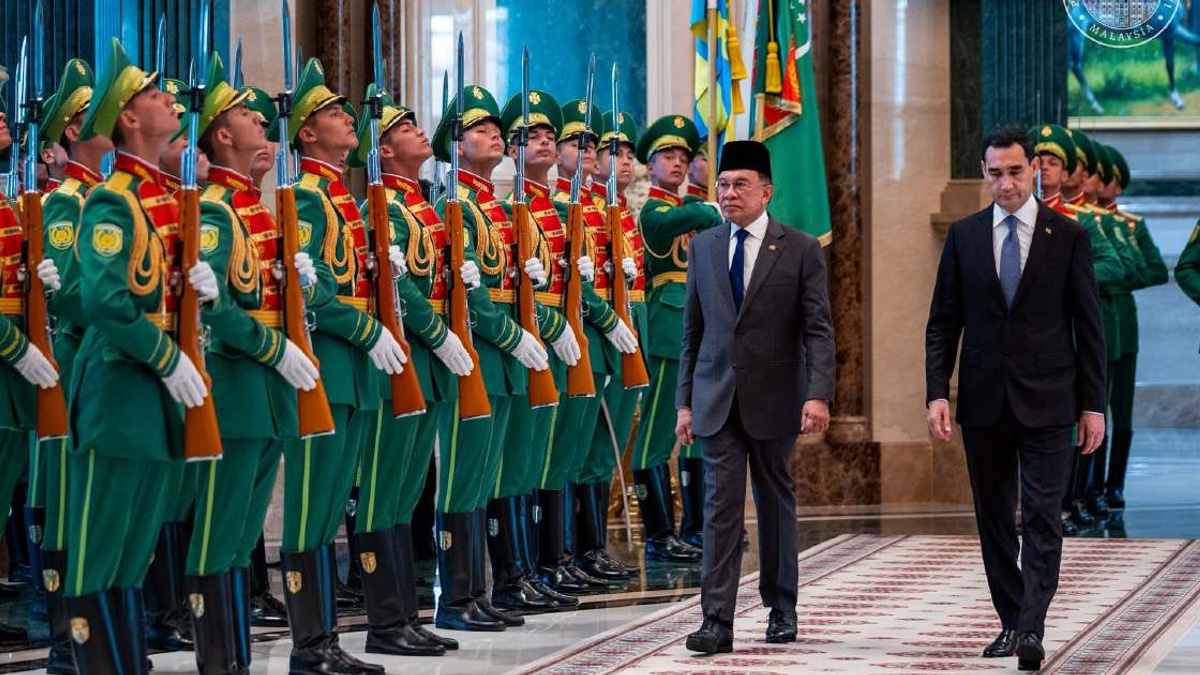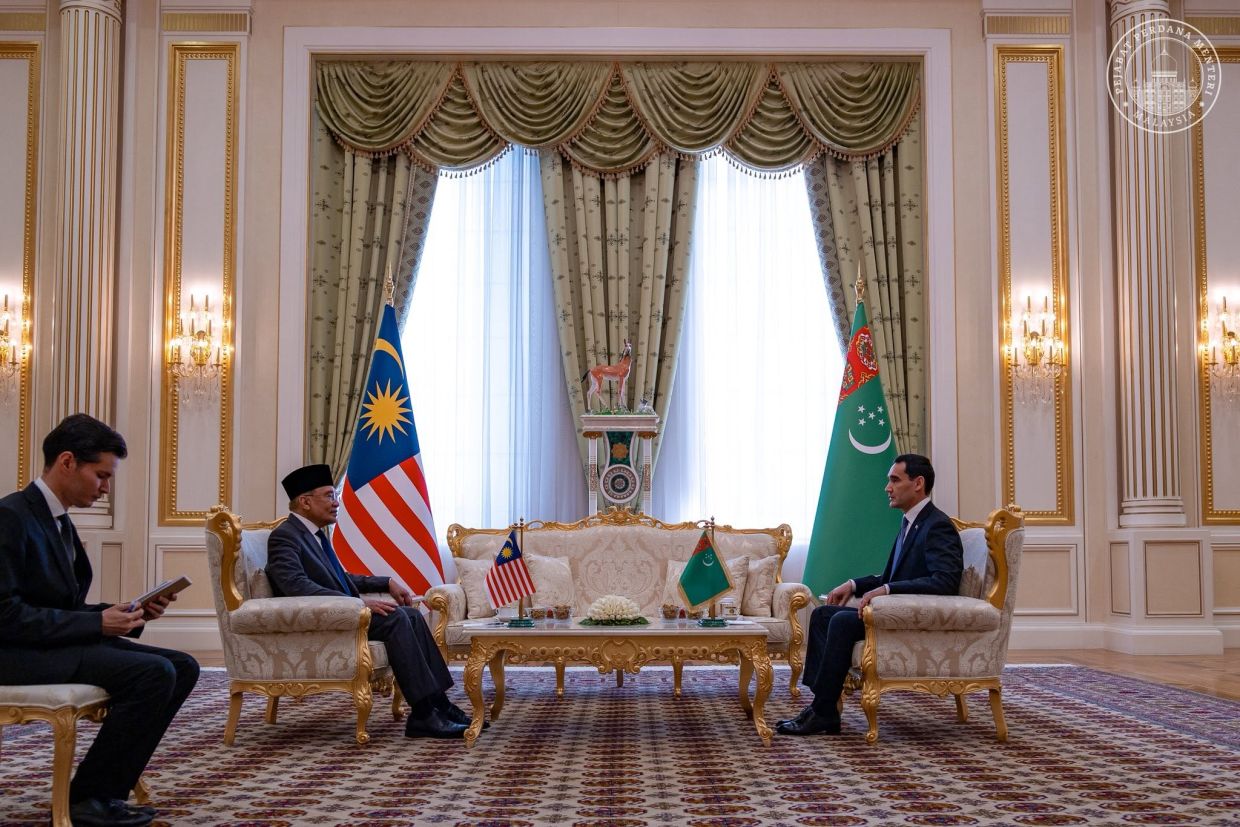
Prime Minister Datuk Seri Anwar Ibrahim watched as Petronas and Turkmenistan authorities signed a landmark strategic partnership agreement in Ashgabat today, positioning the energy pact as a watershed moment for Malaysian-Turkmenistan economic and energy collaboration. The ceremony, which took place in the presence of Turkmenistan President Serdar Berdimuhamedov, underscores Malaysia's sustained commitment to deepening ties within Central Asia, a region increasingly vital to the nation's long-term energy security and investment strategies.
The partnership arrives at a symbolic juncture, coinciding with three decades of continuous cooperation between Malaysia and Turkmenistan in the energy sector. This three-decade relationship has served as the foundational pillar of bilateral engagement, demonstrating the resilience and mutual benefit underlying the two nations' economic collaboration. By formalising this new strategic arrangement, both countries are signalling their intent to build upon this proven track record and expand cooperation into fresh domains that hold considerable promise for mutual prosperity.
Beyond commercial considerations, the agreement represents a broader affirmation of Malaysia's technical prowess and competitive standing in global energy markets. The partnership validates the nation's engineering expertise, workforce capabilities, and technological innovations on an international platform, suggesting that Malaysian firms possess the sophistication and reliability that international energy producers seek in their partners. This validation carries significant implications for Malaysia's ambitions to position itself as a credible player in energy infrastructure and resource development across Asia and beyond.
Crucially, the partnership opens pathways for Petronas to deepen its involvement in developing Turkmenistan's colossal natural gas reserves, among the world's most substantial. Turkmenistan's energy wealth, particularly its gas deposits, represents an opportunity for Malaysia to secure long-term energy supplies whilst simultaneously generating valuable investment returns. The exploration and development of these vast hydrocarbon resources could generate substantial revenues and technological exchange benefits for both parties, contributing to regional energy stability in a geopolitically complex era.
The strategic arrangement emphasises knowledge transfer and human capital development as integral components of the partnership. By facilitating the exchange of technical expertise, training programmes, and professional development opportunities, the two countries aim to build institutional capacity within Turkmenistan whilst simultaneously creating professional advancement pathways for Malaysian workers. Such human-centred approaches to bilateral cooperation have proven more durable than transaction-focused arrangements, as they create stakeholder networks and cultural understanding that transcend individual commercial projects.
Economically, Malaysia's standing within the Central Asian region reflects growing commercial importance. Turkmenistan ranked as Malaysia's fourth-largest trading partner among Central Asian nations in 2025, with bilateral trade valued at RM75.80 million. Malaysian exports to the country totalled RM75.50 million, representing a robust nine percent increase year-on-year, indicating expanding market penetration and rising demand for Malaysian goods and services. These figures, whilst modest in global terms, suggest meaningful growth trajectories and untapped market potential that the partnership aims to unleash.
Petronas has maintained a substantial long-term commitment to the Turkmenistan market, with cumulative investments reaching RM52.73 billion since establishing operations there in 1996. This investment figure, spanning nearly three decades, testifies to the company's confidence in the country's energy potential and the stability of its operating environment. Such sustained capital commitment provides a foundation of operational experience and established relationships that positions Petronas advantageously to expand its portfolio and influence within Turkmenistan's energy sector.
Anwar's two-day official visit, which commenced with a ceremonial welcome at the Presidential Palace, reflects the high-level political attention devoted to Malaysia-Turkmenistan relations. The bilateral meetings between Malaysian and Turkmenistan delegations provided opportunities for addressing broader governmental concerns beyond energy cooperation, potentially encompassing trade facilitation, investment promotion, and regional security considerations. Such high-level engagement signals to international investors that both governments prioritise the relationship and possess commitment to removing obstacles to commercial activity.
The MADANI government's framing of this partnership as contributing to broader economic development and energy security strategies indicates how Malaysia conceptualises its Central Asian engagement. Rather than viewing energy cooperation as a discrete sector activity, officials present it as part of a comprehensive developmental vision that encompasses investment attraction, technology dissemination, and sustainable growth. This holistic perspective aligns Malaysia's bilateral relationships with its domestic development objectives, creating coherence between foreign economic policy and domestic prosperity ambitions.
For Southeast Asian observers, this partnership illustrates how regional energy companies are expanding their geographic footprints to secure supply chains and investment returns. As traditional energy markets mature and competition intensifies, companies increasingly look toward Central Asia's vast untapped reserves and developing infrastructure. Malaysia's success in establishing itself as a credible partner in such markets offers lessons for other regional energy producers seeking to internationalise their operations and secure their economic futures amidst global energy transitions.
Looking forward, the strategic partnership framework provides flexibility for expanding cooperation across multiple energy subsectors and potentially into adjacent domains such as petrochemicals, industrial development, and environmental management. The formalised arrangement creates institutional mechanisms for regular consultation, dispute resolution, and collaborative planning, reducing transaction costs for future commercial engagements and building confidence for larger-scale investments. Such structural foundations prove essential when companies and governments contemplate multi-billion dollar infrastructure projects requiring sustained commitment across multiple political and business cycles.