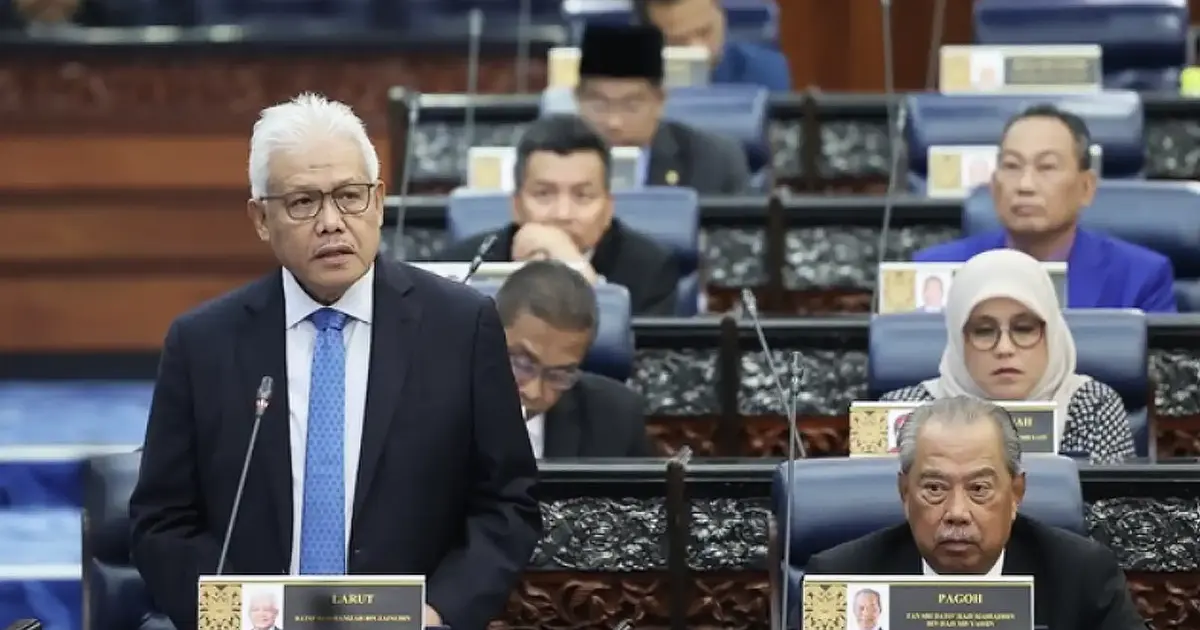
Hamzah Zainudin has returned to the opposition leader's prominent seat in the Dewan Rakyat, restoring a seating arrangement that reflects shifting parliamentary dynamics following recent political movements. The repositioning marks a visible acknowledgement of parliamentary hierarchy and factional realignments within Malaysia's opposition bloc, as Bersatu president Muhyiddin Yassin has been moved substantially further back in the front row, occupying a position eight seats removed from the opposition leader's traditional place.
Seating arrangements in Parliament carry symbolic weight in Malaysian politics, communicating parliamentary standing and the relative prominence of political figures within the chamber. The front row traditionally reserves its prime positions for opposition leadership and senior government figures, making shifts in placement matters of procedural and political significance. Hamzah's return to the opposition leader's seat signals his continued leadership of the parliamentary opposition, a role that carries considerable responsibility in holding the government accountable and articulating alternative policy positions on the floor.
Muhyiddin's repositioning reflects broader dynamics within Bersatu and the opposition coalition. As party president, Muhyiddin previously occupied a position of considerable prominence, sitting immediately alongside the opposition leader. His movement down the front row suggests evolving relationships within the opposition bloc and possibly differing strategic priorities or roles among its constituent members. The significance of this physical displacement extends beyond mere seating logistics; it represents a recalibration of visible leadership within parliamentary opposition ranks.
The opposition's organisational structure and internal leadership hierarchy have undergone multiple iterations in recent years, shaped by legislative composition, electoral outcomes, and inter-party agreements. Seating arrangements typically reflect these formal and informal power structures, with leadership councils and coalition agreements determining which figures occupy the most prominent parliamentary positions. Hamzah's restoration to the opposition leader's seat codifies a particular configuration of opposition leadership that may have emerged from recent consultations or parliamentary developments.
For Malaysian observers, such parliamentary choreography offers insight into opposition coalition stability and the relative influence of different parties and personalities. Bersatu's position within the opposition bloc has been subject to various interpretations and strategic considerations, particularly given its evolving relationship with other opposition parties and former coalition partners. Muhyiddin's diminished front-row prominence, while remaining visible, suggests a calibration of roles rather than a fundamental shift in party status.
Parliamentary seating reflects not only formal positions but also practical considerations regarding legislative efficiency and debate procedures. The opposition leader coordinates parliamentary business, leads questioning of government ministers, and orchestrates legislative strategy. The specific positioning of other senior opposition figures facilitates communication, coordination, and visible collaboration during parliamentary sessions. Hamzah's return to the central opposition leader's position accordingly reestablishes clear parliamentary leadership lines.
These arrangements also carry implications for how different opposition parties signal their policy priorities and collaborative approach. Proximity to the opposition leader in the chamber can denote alignment on legislative strategy, indicate closer coordination on particular issues, or reflect broader coalition cohesion. The specific positioning of Muhyiddin and other opposition figures communicates something of the coalition's internal structure to fellow legislators and public observers following parliamentary proceedings.
Within Southeast Asian context, Malaysian parliamentary opposition dynamics merit attention given the region's varied democratic arrangements and the particular challenges opposition forces face in maintaining coherence and presenting unified alternatives. Opposition coalitions across the region frequently grapple with balancing distinct party interests against collective legislative effectiveness. The visible repositioning in the Dewan Rakyat reflects decisions about how the Malaysian opposition chooses to organise itself and present its leadership to both the parliament and the electorate.
The restoration of Hamzah to the opposition leader's seat may also carry implications for upcoming parliamentary sessions and legislative priorities. Clear opposition leadership arrangements typically precede periods of substantial parliamentary activity, whether through scheduled government business, opposition-initiated questioning, or expected debates on significant policy matters. The formalisation of seating arrangements often coincides with renewed parliamentary engagement and clearly demarcated opposition strategy.
For Malaysian political observers tracking coalition stability and leadership evolution, such changes warrant careful attention. While seating adjustments might appear procedural, they frequently telegraph deeper organisational shifts and policy realignments among political actors. The specific movement of Muhyiddin, combined with Hamzah's restoration to prominence, creates a visible marker of current opposition configuration that will be observed by government strategists, fellow legislators, and the wider public seeking to understand the opposition's current trajectory and internal structures.