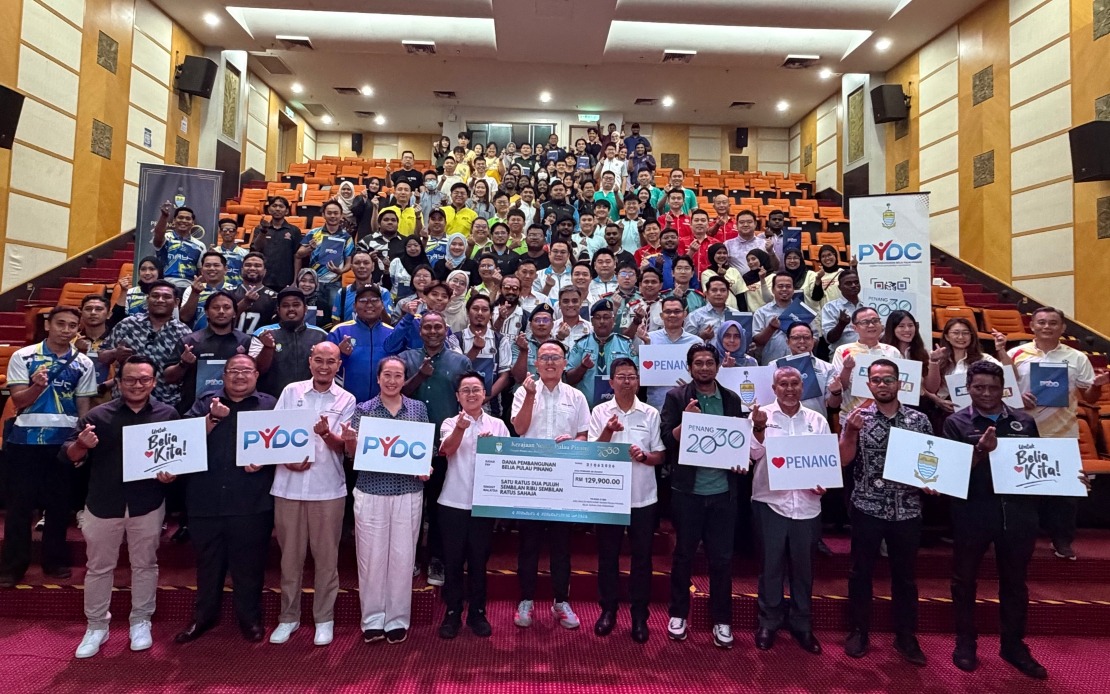
The Penang state government has green-lit RM129,900 in funding for youth-centred initiatives this year, with the allocation intended to benefit 68 separate programmes coordinated by 48 different associations operating across the state. The approval came through during a Youth State Executive Council Meeting, which sanctioned the disbursement as part of a larger RM200,000 allocation earmarked for youth-related activities. According to Daniel Gooi Zi Sen, chairman of Penang's Youth, Sports and Health Committee, the fund represents a deliberate strategic investment in developing the state's younger generation across multiple competency areas.
The breadth of the approved programmes reflects an intentional approach to youth development that extends beyond conventional activity-based support. The RM129,900 in funds will underpin initiatives spanning skills acquisition, employability enhancement, voluntary service participation, and leadership cultivation. Rather than treating financial support as simple grants, state leadership has positioned these allocations as a demonstration of institutional confidence in youth associations. The framing underscores a philosophy where funding serves as validation of the creative vision and organisational capacity that young people themselves bring to community building.
Penang's youth development strategy aligns with broader Southeast Asian efforts to create structured pathways for young citizens to transition into productive adulthood. The emphasis on marketability—particularly relevant in an increasingly competitive regional economy—suggests recognition that technical and soft skills remain critical differentiators for employment prospects. For Malaysian youth navigating a landscape transformed by technological disruption and global competition, such targeted investments in capacity-building carry tangible consequences for career trajectories and social mobility.
The allocation also incorporates volunteerism as a programme pillar, reflecting growing acknowledgment across the region that civic participation and community service contribute meaningfully to social cohesion and individual character development. This dimension addresses longstanding concerns about disengagement among younger demographics, particularly in emerging economies where rapid urbanisation and digital disruption can erode traditional community bonds. By institutionalising support for volunteer-led initiatives, Penang creates structured incentives for youth to invest time and energy in collective welfare beyond personal economic advancement.
Leadership development features prominently within the fund's architecture, suggesting state policymakers recognise that building sustainable institutions and solving complex social challenges requires cultivating a generation equipped with decision-making experience and ethical grounding. Effective youth leadership programmes typically combine mentorship with practical responsibility, creating safe spaces for young people to experiment with governance and problem-solving under guidance. The scale of investment—touching 68 separate initiatives—indicates an understanding that leadership emerges through diverse pathways rather than centralised, standardised channels.
Daniel Gooi's accompanying statement emphasised that recipient organisations must operate with integrity and transparency, setting clear expectations for stewardship of public resources. This emphasis carries particular weight in Malaysia, where questions about fund management and governance have periodically surfaced in youth-focused initiatives. By establishing these requirements upfront, the Penang government signals commitment to accountability frameworks that protect both public interest and organisational credibility. Recipient associations must demonstrate not merely competent execution but also principled conduct throughout programme delivery.
Critically, Gooi articulated that programme success cannot be reduced to activity completion metrics alone. This perspective reflects sophisticated programme design thinking increasingly adopted across development sectors. A youth leadership workshop, for example, should not be judged solely by attendance figures or session completion rates, but by measurable shifts in participants' confidence, decision-making capabilities, and subsequent civic participation. This longer-term evaluation approach demands more rigorous monitoring infrastructure but yields deeper understanding of actual social impact.
For Malaysian stakeholders in youth development—whether in government, civil society, or the private sector—Penang's approach offers instructive lessons. The state's willingness to diversify funding across 48 organisations suggests confidence in distributed models of programme delivery rather than centralised provision. This distributional strategy can enhance relevance and cultural resonance, as locally-rooted associations typically understand community contexts and youth aspirations more intimately than distant bureaucratic entities. The trade-off involves increased complexity in oversight and accountability management, requiring sophisticated monitoring systems.
The implications extend beyond Penang's boundaries. Other Malaysian states contemplating youth development strategies can reference Penang's allocation levels, programme categorisation, and governance expectations as benchmarks. The RM200,000 total pool—with RM129,900 distributed in the first tranche—suggests a deliberate sequencing approach, potentially allowing mid-year assessment and adjustment. This pacing contrasts sharply with funding models that disburse entire annual allocations upfront without capacity for adaptive management.
Regionally, Penang's initiative reflects the broader Southeast Asian recognition that youth unemployment and underemployment pose significant economic and social risks. With youth populations across the region facing skills mismatches and limited advancement opportunities, government-supported programmes that bridge educational institutions and employment markets carry outsized importance. Malaysia's position as a middle-income economy with sophisticated financial services and manufacturing sectors demands increasingly specialised talent pipelines—precisely the kind of skills development that targeted youth funding addresses.
The timing of this allocation also merits consideration. In a post-pandemic context marked by accelerated digital transformation and labour market volatility, youth-focused interventions take on heightened significance. Young Malaysians entering the workforce face fundamentally different opportunities and challenges than previous cohorts, requiring adaptive training and mindset development. Programme categories emphasising marketability and skills explicitly acknowledge this reality, positioning participating youth to navigate labour markets shaped by automation, global supply chain reconfiguration, and evolving sectoral demands.
Looking ahead, the success of Penang's Youth Development Fund will depend substantially on implementation quality among recipient organisations. Technical capacity in programme design, monitoring systems that track participant outcomes beyond immediate activity metrics, and sustained engagement mechanisms that extend impact beyond programme conclusion will all prove determinative. The state government's establishment of integrity and transparency requirements creates a foundation, but translating principles into consistent practice requires ongoing oversight, capacity building support for partner organisations, and willingness to learn from programme evaluation findings.
The RM129,900 allocation represents more than fiscal commitment; it signals institutional priority assigned to youth development within Penang's governance framework. Whether this translates into measurable improvements in youth employment rates, civic participation, and social cohesion will ultimately determine whether the investment fulfilled its broader developmental purpose. For Malaysian policymakers and youth advocates nationwide, Penang's approach offers a tested model worthy of adaptation and scaling.