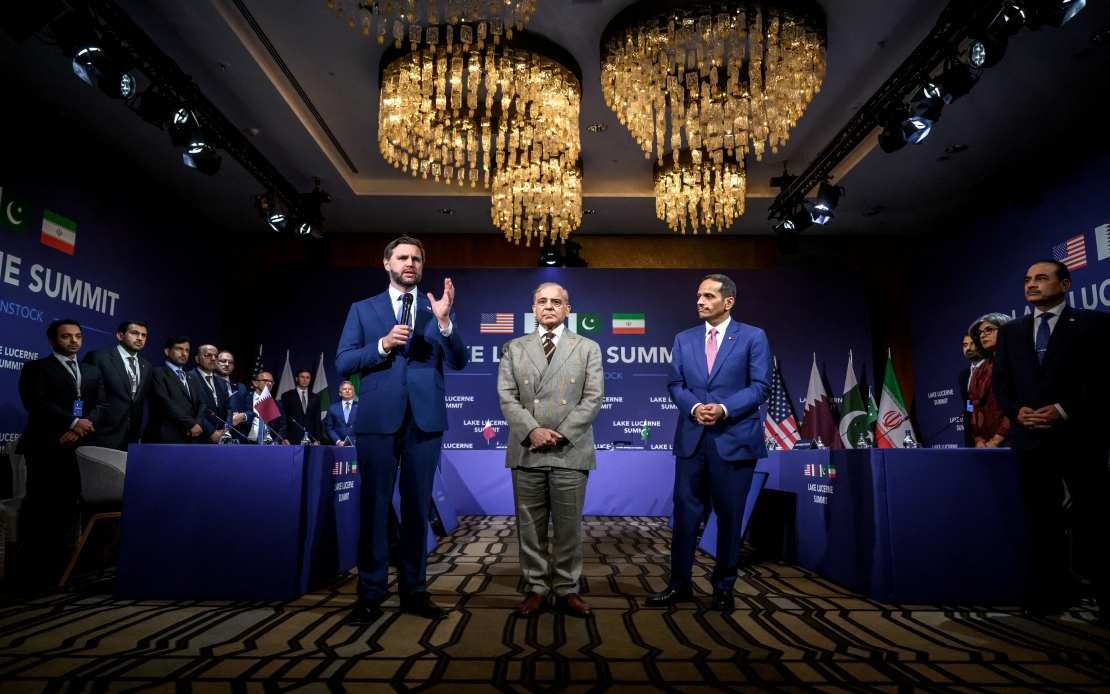
Negotiations between the United States and Iran have entered their opening phase following the conclusion of the first formal round of talks held in Switzerland over the weekend. The discussions, which brought together delegations from both nations alongside mediators from Qatar and Pakistan, represent a significant diplomatic engagement in efforts to resolve the prolonged conflict affecting West Asia and regional maritime security.
The initial session took place under the auspices of a fresh memorandum of understanding that was formally signed on Wednesday, establishing the framework for these multilateral discussions. Both American and Iranian delegations arrived in Switzerland prepared for technical-level negotiations aimed at translating the broad principles of the interim agreement into concrete implementation mechanisms and operational details.
Leadership on the American side is being provided by US Vice President JD Vance, while Iran has fielded its Parliament Speaker Mohammad Bagher Qalibaf and Foreign Minister Abbas Araghchi to steer the negotiations. The inclusion of such high-ranking officials underscores the significance each nation places on these discussions and the desire to achieve substantive progress beyond merely conducting ceremonial talks.
According to sources within the Iranian negotiating delegation who spoke to regional media outlets, the inaugural round of talks proceeded for approximately eighty minutes before being suspended. The interruption was deliberately scheduled to permit each participating delegation adequate time to conduct internal consultations and review the tenor and substance of the opening exchanges, a standard diplomatic practice allowing negotiators to recalibrate positions and seek guidance from their respective capitals.
For Malaysian observers and regional analysts, these developments hold considerable significance given the implications for global energy security and maritime commerce. Any sustained reduction in tensions affecting the Persian Gulf region and the strategically vital Strait of Hormuz stands to benefit Southeast Asian economies dependent on uninterrupted oil and gas supplies. The waterway remains one of the world's most critical shipping chokepoints, and instability in the region carries ripple effects extending far beyond the immediate parties involved.
Qatar and Pakistan have accepted central roles as neutral facilitators, a reflection of their respective diplomatic standing and historical relationships with both Iran and the United States. Qatar's positioning as a bridge between various geopolitical actors, combined with Pakistan's longstanding engagement across West Asia, makes these nations well-positioned to guide discussions toward practical solutions. Their mediation reflects broader regional interest in achieving stability rather than allowing prolonged confrontation to persist.
The temporary nature of the first session's suspension, while the discussions proceed on a structured timeline, suggests both sides recognise the complexity of transforming a political agreement into workable operational protocols. Implementation mechanisms require careful negotiation, particularly regarding verification procedures, sanctions relief sequencing, and reciprocal confidence-building measures that satisfy the security concerns of each party.
The fact that negotiators were prepared to suspend talks for internal deliberation rather than extending discussions beyond productive capacity indicates a measured approach focused on achieving durable outcomes rather than superficial agreements. This deliberative pace may frustrate those seeking immediate breakthroughs, yet such methodology often produces more resilient settlements less vulnerable to future collapse when unexpected complications emerge.
No schedule for subsequent negotiating sessions has yet been announced publicly, though both delegations remain in Switzerland positioning themselves for rapid reconvening should progress warrant continued engagement. The decision to maintain delegations on-site rather than suspending proceedings entirely suggests optimism about prospects for advancing the discussions within coming days.
For Southeast Asian policymakers and business interests, the trajectory of these Iran-US negotiations warrants close attention. Regional maritime trade, energy supplies, and the broader balance of power in the Indian Ocean region all depend partly on the stability outcomes that emerge from Swiss negotiations. A successful implementation of the interim agreement would contribute meaningfully to the strategic environment within which regional economies operate and compete for resources.
The involvement of Pakistan as a mediator deserves particular attention for Malaysian and broader ASEAN stakeholders. Pakistan's role demonstrates how non-aligned nations can deploy diplomatic leverage to help major powers navigate confrontation toward negotiated resolution, a model potentially applicable to other regional tensions. This precedent validates the concept that third-party mediation by respected regional actors can effectively bridge seemingly intractable differences between great powers when those intermediaries possess credibility with all participants.
The coming days will likely prove decisive in determining whether these initial discussions can be built upon to achieve substantive agreements. The suspension after the first session allows space for diplomatic channels to convey signals about the flexibility and willingness of each side to move toward compromise positions. Success would signal a shifting approach to conflict resolution in West Asia, with implications extending across maritime security, energy markets, and great power competition throughout the Indian Ocean region.