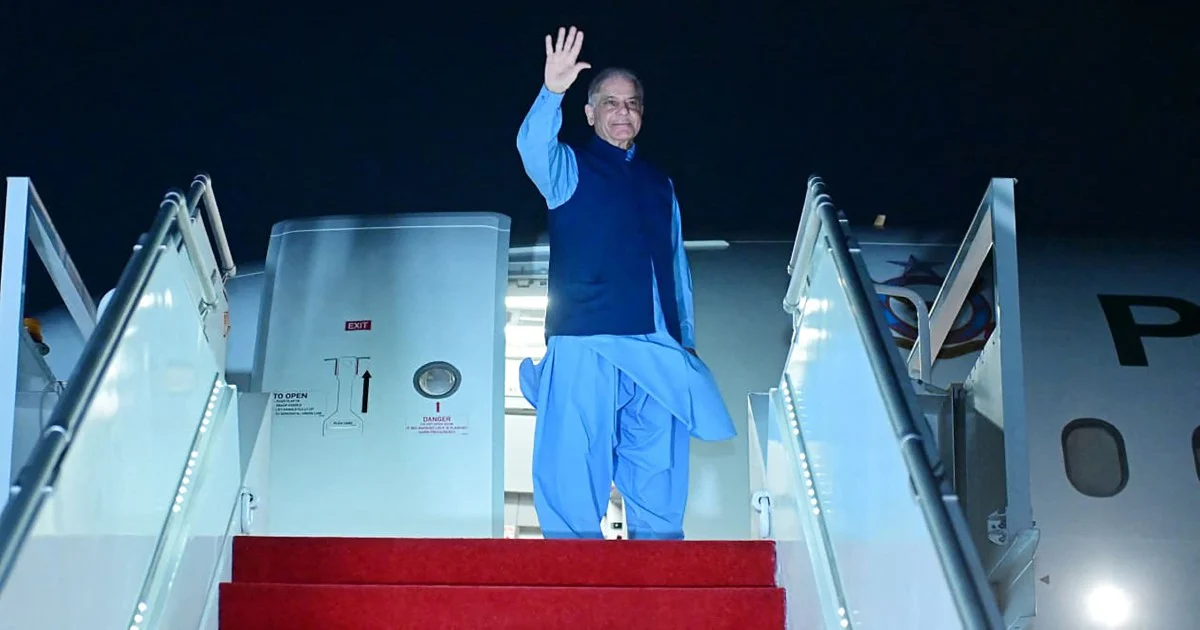
Pakistan's Prime Minister Shehbaz Sharif touched down in Switzerland on Sunday morning, marking Islamabad's diplomatic entry into a critical round of technical-level talks aimed at resolving escalating tensions between the United States and Iran. His participation underscores Pakistan's positioning as a key regional player willing to engage in mediation efforts at a time when Middle Eastern instability threatens to spill across South Asia and beyond.
The technical discussions represent a significant diplomatic channel between Washington and Tehran, two powers locked in an increasingly volatile standoff that has reverberated throughout the Islamic world and destabilised global energy markets. By sending its premier to such talks, Pakistan signals both its commitment to de-escalation and its desire to maintain relevance in shaping regional outcomes that directly affect Pakistani security and economic interests.
Pakistan's involvement in these negotiations reflects a pragmatic balancing act that has defined Islamabad's foreign policy for decades. With close historical ties to Washington and substantial populations sympathetic to Iranian regional positions, Pakistan occupies a delicate diplomatic space. The country has consistently advocated for dialogue over confrontation and positioned itself as a responsible voice promoting restraint among regional stakeholders. Sharif's personal attendance at these talks elevates Pakistan's profile as more than a passive observer in Middle Eastern affairs.
The timing of these technical discussions carries particular weight given recent escalations in US-Iran hostilities. Previous rounds of diplomacy have repeatedly stalled, with both sides digging deeper into entrenched positions. Pakistan's presence may serve to introduce alternate perspectives grounded in the lived experience of a nation that has weathered decades of regional conflict and understands the devastating costs of military escalation. Islamabad can offer hard-earned wisdom about how proxy conflicts metastasise and destabilise entire regions.
From a regional security perspective, Pakistan has compelling reasons to seek de-escalation between Washington and Tehran. Any major US-Iran conflict would inevitably draw in Gulf states, potentially triggering broader Sunni-Shia tensions that directly affect Pakistan's internal stability. The country hosts one of the world's largest Shia populations alongside a significant Sunni majority, making sectarian spillover a genuine security concern. Pakistani policymakers recognise that a controlled diplomatic process serves Islamabad's interests far better than uncontrolled military escalation.
Switzerland's neutral status makes it an ideal venue for such sensitive talks. The country has historically hosted US-Iran negotiations, including the multilateral discussions that produced the Joint Comprehensive Plan of Action before its unravelling. The technical-level format suggests these talks focus on specific, measurable issues rather than grand strategic realignments, potentially making them more achievable than previous diplomatic attempts. By attending, Pakistan positions itself within an established multilateral framework rather than attempting bilateral back-channel solutions.
For Islamabad, economic considerations also weigh heavily. Pakistan's economy remains fragile, dependent on regional stability for foreign investment and trade. Any major Middle Eastern conflict would disrupt shipping lanes, spike oil prices beyond what Pakistan's import-dependent economy can sustain, and likely trigger capital flight. Pakistan currently imports approximately 80 percent of its crude oil, making it acutely vulnerable to supply shocks originating from the Persian Gulf. Sharif's presence sends a message that Islamabad views de-escalation as an economic necessity, not merely a diplomatic preference.
The technical discussions also offer Pakistan an opportunity to advocate for issues of particular concern to Islamabad. Terrorism financing, use of Pakistani territory for operations affecting regional powers, and sectarian violence often have cross-border dimensions linking Pakistan to broader Middle Eastern instability. By participating in these talks, Pakistani diplomats can emphasise how de-escalation between major powers benefits counterterrorism efforts and reduces the appeal of extremist ideologies that thrive in conditions of geopolitical chaos.
Pakistan's diplomatic gambit reflects broader shifts in how Islamabad engages with traditional rivals and partners. Under Sharif's leadership, the government has pursued normalisation with neighbours while cultivating strategic partnerships beyond traditional alignments. Pakistan's participation in US-Iran talks demonstrates that Islamabad no longer sees itself as forced to choose between Washington and Tehran but rather as an honest broker capable of engaging both sides constructively.
Looking forward, the success or failure of these technical discussions will likely shape Pakistan's subsequent diplomatic moves. If talks progress, Pakistan may find itself increasingly involved in implementation monitoring and verification mechanisms. If diplomacy stalls, Pakistan faces pressure to manage potential fallout as extremist groups use sectarian tensions as recruitment tools. Either way, Shehbaz Sharif's presence in Switzerland signals that Islamabad recognises Middle Eastern stability as intrinsically linked to Pakistan's own security and prosperity.
The discussions also carry implications for other South Asian nations watching how their larger neighbour navigates great power tensions. Pakistan's approach to these talks—balanced, pragmatic, and anchored in regional interests rather than ideological commitments—may influence how other countries in the region position themselves as Washington and Tehran remain locked in strategic competition.
%22%2F%3E%3C%2Fpattern%3E%3C%2Fdefs%3E%3Crect%20width%3D%22100%25%22%20height%3D%22100%25%22%20fill%3D%22url(%23ph1zfjjg)%22%2F%3E%3Crect%20width%3D%22100%25%22%20height%3D%22100%25%22%20fill%3D%22url(%23ph1zfjjp)%22%2F%3E%3Ctext%20x%3D%2250%25%22%20y%3D%2250%25%22%20text-anchor%3D%22middle%22%20dominant-baseline%3D%22central%22%20fill%3D%22rgba(255%2C255%2C255%2C0.95)%22%20font-family%3D%22Georgia%2C%20'Times%20New%20Roman'%2C%20serif%22%20font-weight%3D%22700%22%20font-size%3D%22151%22%20letter-spacing%3D%22-0.02em%22%3EMalaysian%3C%2Ftext%3E%3C%2Fsvg%3E)