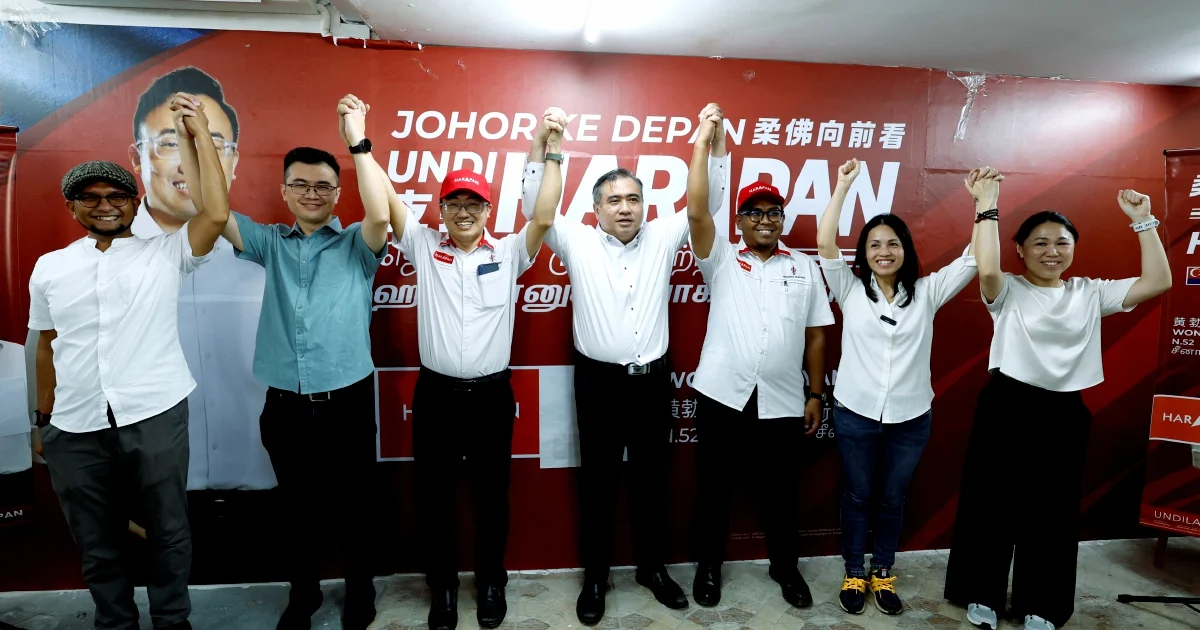
Pakatan Harapan is maintaining strategic silence on who will lead Johor as Menteri Besar, insisting that determining its candidate must wait until after the coalition secures victory in the upcoming state election. The decision reflects the opposition alliance's determination to keep public attention focused on winning votes rather than becoming entangled in succession politics before ballots are cast.
Party officials have made clear that identifying the coalition's chief ministerial pick is a secondary concern compared to the immediate task of mobilising voters across Johor. This approach prioritises maintaining party unity during the campaign phase, avoiding the distraction of internal jostling that often emerges when multiple figures harbour leadership ambitions.
The delay in naming a candidate also serves a practical political purpose. By deferring the announcement, Pakatan Harapan avoids creating early targets for opposition attacks focused on the individual rather than the coalition's broader policy platform. Opposition parties often use advance candidate announcements to launch character-based campaigns that can erode support months before voters actually cast ballots.
For Malaysian observers, this strategy contrasts with the governing Barisan Nasional's approach in recent elections, where establishment coalitions have sometimes named candidates well in advance. The trade-off between early transparency and strategic flexibility remains a recurring debate in Malaysian electoral politics, with different coalitions calibrating their timing based on perceived advantages.
Johor's importance to national political calculations cannot be overstated. As Malaysia's second-largest state by population and a Barisan Nasional stronghold, controlling the state assembly would significantly alter the balance of power and influence at the national level. The state's economic contribution and strategic location along the Singapore border add further weight to the electoral contest.
Pakatan Harapan's leadership council will ultimately make the selection once election results are confirmed, ensuring that the decision carries weight and reflects the coalition's internal negotiations following a successful campaign. This arrangement allows component parties—including PKR, DAP, and Amanah—to determine how leadership positions should be distributed based on their respective contributions to victory.
The coalition's reluctance to name candidates prematurely also reflects lessons learned from previous election cycles. Early announcements can sometimes alienate potential supporters who harbour different preferences, or they can trigger unexpected defections if ambitious figures feel passed over. Maintaining flexibility until the final moment preserves options and prevents premature consolidation of factional positions.
For Johor voters, the deferral raises questions about democratic accountability. Some analysts argue that announcing candidates before elections allows voters to make informed choices about specific leaders they will support. Others contend that concentrating on policy and platform first, then determining personalities, better serves governance outcomes by preventing personality-driven politics from overwhelming substantive debate.
The broader regional context matters too. Johor's proximity to Singapore and its economic interdependence with the city-state mean that business communities and foreign investors pay close attention to potential leadership changes. Delaying the announcement until after election results avoids weeks of speculation that might unsettle business confidence or create unnecessary policy uncertainty.
Pakatan Harapan's strategy also reflects confidence in its electoral prospects. Announcing candidates before establishing electoral viability would be tactically risky, potentially exposing chosen leaders to weeks of intensive campaigning against their personalities. By waiting, the coalition hedges against unexpected setbacks while maintaining momentum.
Observers note that this approach may frustrate Johor residents seeking clarity about prospective governance before voting. However, coalition strategists calculate that the benefits of preserved unity and maintained focus outweigh transparency concerns in a competitive electoral environment where every percentage point matters.
The decision ultimately underscores how Malaysian political strategy prioritises campaign momentum and coalition cohesion over the kind of early transparency common in more established democracies. Whether this benefits or handicaps Pakatan Harapan's electoral prospects in Johor will become clearer once polling day arrives and voters render their verdict on the coalition's campaign approach.