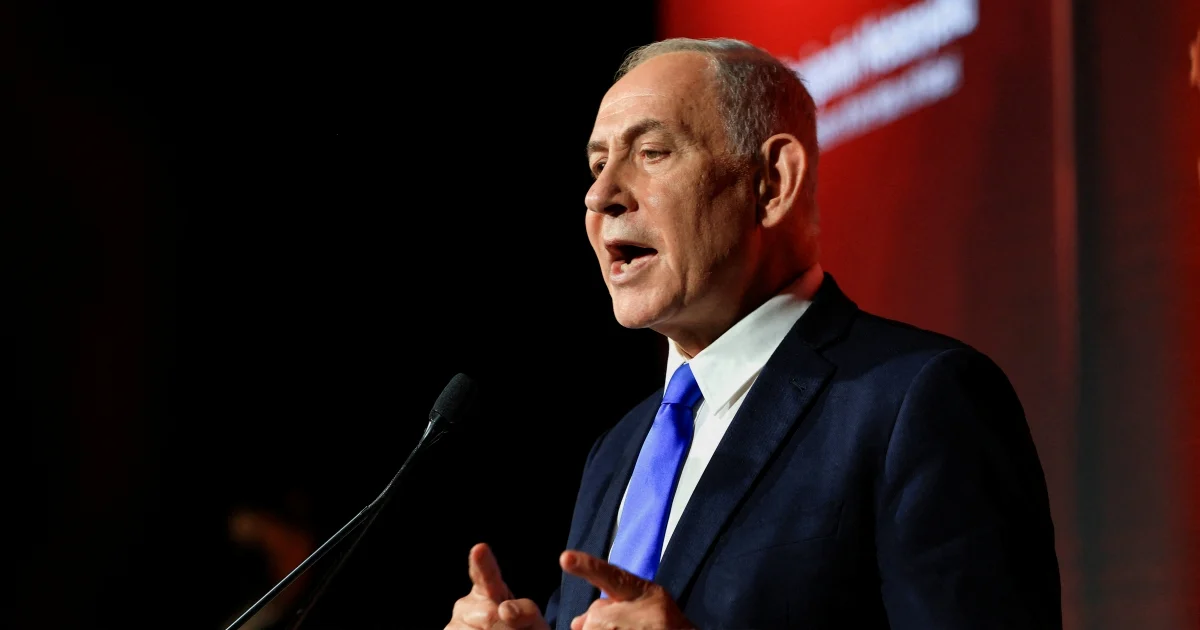
Israeli Prime Minister Benjamin Netanyahu stated on Sunday that Israeli military forces would remain deployed in southern Lebanon for an indefinite period, contingent on what he described as necessary security conditions. The declaration underscores the evolving military posture in the region following months of escalating tensions between Israeli forces and Hezbollah, the Lebanese militant group designated as a terrorist organization by Israel and several Western nations. Netanyahu's comments signal that Israel views its southern Lebanese operations as a sustained commitment rather than a temporary incursion, with no predetermined timeline for withdrawal.
The Israeli leader's pronouncement comes amid a complex security landscape in the Middle East, where multiple flashpoints demand simultaneous strategic attention. Southern Lebanon has historically served as a staging ground for operations targeting Israel, making the region a persistent security concern for Israeli policymakers. The ongoing deployment reflects broader Israeli strategic doctrine that emphasizes maintaining military advantages and controlling potential threat vectors along its northern border, a posture that has evolved considerably over the past two decades.
Netanyahu's insistence on an open-ended military presence raises significant implications for Lebanese sovereignty and regional stability. Lebanon's fragile governance structures already struggle with state capacity and territorial control, and the presence of foreign military forces complicates efforts to establish unified state authority. For Malaysian policymakers and regional observers, the situation exemplifies how unresolved conflicts can create power vacuums that multiple actors seek to fill, with corresponding risks of escalation and humanitarian costs.
Simultaneously, Netanyahu reiterated Israel's unwavering commitment to preventing Iran from developing nuclear weapons capability. This aspect of his statement connects directly to the broader Middle Eastern security architecture that impacts global energy supplies and trade routes critical to Southeast Asian economies. The United States, European nations, and regional actors have all expressed concerns about potential Iranian nuclear advancement, creating complex diplomatic dynamics that occasionally intersect with Malaysian and ASEAN interests, particularly regarding maritime security and international law.
The dual emphasis on southern Lebanon and Iranian nuclear concerns reflects Israel's perception of interconnected threats emanating from what it terms the "axis of resistance"—an informal coalition including Iran, Hezbollah, and other groups. Israeli strategic planners view these entities as coordinated threats despite their distinct organizational structures and operational independence. This perspective shapes Israeli military doctrine and defense spending, with implications for regional arms dynamics and security competition that affect neighboring states.
For Malaysia and Southeast Asia, the Israeli-Lebanese-Iranian triangle holds indirect but meaningful significance. Any major escalation in the Middle East risks disrupting global shipping lanes through which Malaysian trade flows substantially. The Strait of Hormuz, through which approximately one-third of seaborne petroleum passes, represents a critical chokepoint whose security depends partly on regional stability. Additionally, Malaysia hosts significant Iranian and Israeli diaspora communities, creating potential domestic political sensitivities around Middle Eastern conflicts.
The open-ended commitment to southern Lebanon also illustrates broader challenges facing international law and state sovereignty. While Israel justifies its military operations through security frameworks, prolonged foreign military presence in another nation's territory raises questions about proportionality and adherence to international norms. These legal and diplomatic dimensions generate debate within ASEAN capitals, where countries maintain diverse relationships with Middle Eastern actors and subscribe to principles emphasizing national sovereignty and non-interference.
Netanyahu's statements emerge within a context of domestic Israeli political pressures and coalition dynamics. His government faces criticism from multiple directions regarding both military operations and broader governance. The insistence on indefinite deployment serves partly to reassure coalition partners and security-conscious voters that governmental commitment to defense remains absolute. Understanding these domestic political drivers helps regional analysts interpret whether Israeli positions represent firm strategic necessities or negotiable postures that might shift with political circumstances.
The situation also reflects underlying patterns of proxy competition and regional power projection that characterize contemporary Middle Eastern geopolitics. Iran's influence through various armed groups, Israel's military superiority and strategic depth, and the international community's competing interests create a complex equilibrium that periodically shifts toward conflict. These dynamics occasionally spill across regions through refugee flows, radicalization, terrorism financing, and arms smuggling networks that law enforcement agencies across Southeast Asia actively monitor.
Looking forward, Netanyahu's declaration suggests that Israeli-Lebanese tensions will remain elevated for the foreseeable future, complicating efforts by Lebanese authorities to rebuild state institutions and social cohesion. International actors, including ASEAN members through multilateral forums, may find themselves navigating requests to support various diplomatic initiatives while maintaining balanced relationships across the region. Malaysia's experience managing relationships with multiple Middle Eastern states positions it potentially as a responsible interlocutor in future regional discussions.
The nuclear dimension of Netanyahu's statement connects to broader nonproliferation frameworks that Malaysia supports through international treaty participation. Any development regarding Iranian nuclear capabilities could generate pressure within UN forums and specialized agencies where Malaysia participates, potentially requiring careful diplomatic navigation to balance various interests and principles.