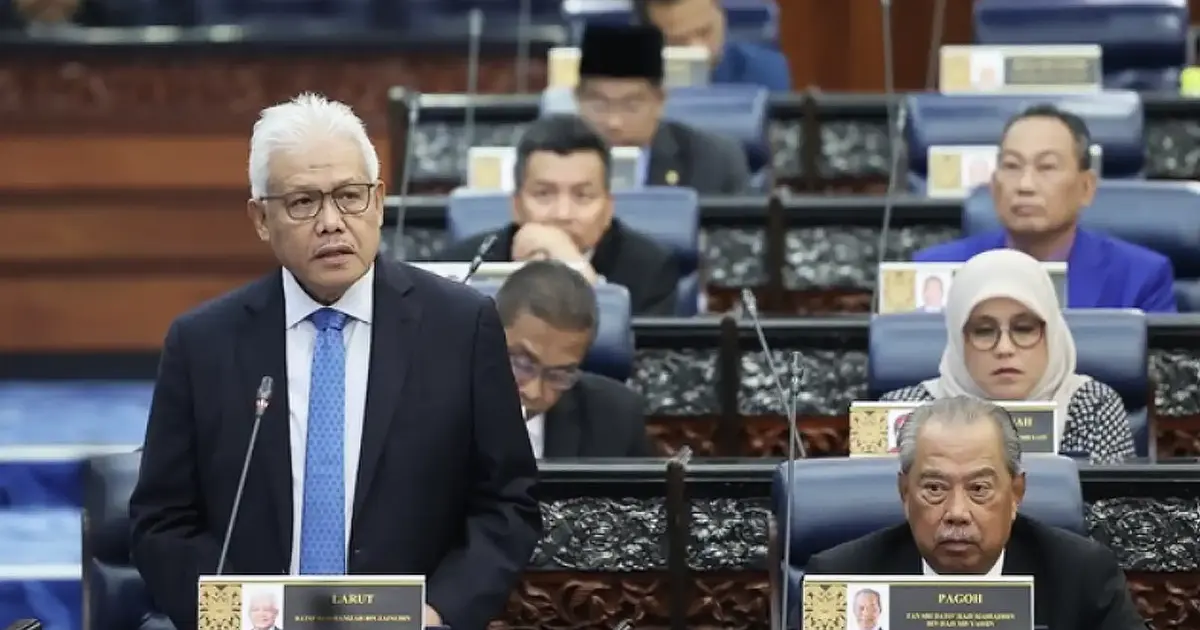
Dewan Rakyat Speaker Johari Abdul has disclosed that former Prime Minister Muhyiddin Yassin made a request to alter his seating position within the lower house of parliament. The speaker provided this information while simultaneously confirming receipt of official documentation establishing Larut MP Hamzah Zainudin as the formal opposition leader in the chamber.
Muhyiddin's petition regarding his parliamentary seat placement reflects ongoing internal dynamics within opposition ranks, signalling potential shifts in how lawmakers position themselves in the chamber. Such seating adjustments, while appearing procedural, often carry symbolic weight in parliamentary politics, particularly when involving prominent political figures. The former premier's move suggests evolving political considerations as different factions navigate their roles in the current parliamentary landscape.
The confirmation of Hamzah Zainudin's position as opposition leader marks a significant development in Malaysia's political structure. Hamzah, who represents the Larut constituency, assumes formal leadership responsibility for coordinating opposition activities and representing opposition interests during parliamentary proceedings. This appointment carries substantial implications for how dissenting voices will be organized and articulated during legislative debates.
The opposition leader's role in the Dewan Rakyat carries considerable responsibility, encompassing everything from formulating parliamentary strategy to presenting alternative policy positions and holding the government accountable through questions and debate contributions. Hamzah's assumption of this position follows established procedures for opposition designation, with the speaker's receipt of formal confirmation documentation indicating the transition has proceeded through proper constitutional channels.
For Malaysian political observers, these developments underscore the fluid nature of current parliamentary alignments. The opposition bloc continues reconfiguring itself following various political realignments that have characterized Malaysian politics in recent years. The seating arrangements within parliament often reflect these shifting alliances, making physical positioning within the chamber reflective of broader political positioning.
Muhyiddin's specific request for seating adjustment warrants attention given his history as prime minister and his current role within opposition structures. His previous tenure at the helm of government ended in 2021, after which he transitioned to opposition leadership before eventually returning to ministerial positions. His current parliamentary activities suggest he continues playing an influential role in opposition politics, even if his exact alignment and responsibilities remain subject to ongoing negotiation.
The speaker's role in managing these administrative and procedural matters reflects the impartiality expected of the Dewan Rakyat's presiding officer. Johari Abdul's disclosure of both Muhyiddin's request and the formal opposition leader confirmation demonstrates transparency in handling routine parliamentary arrangements while adhering to established procedures governing the lower house.
These developments occur within broader context of Malaysian opposition politics maintaining considerable complexity. Multiple political parties and coalitions operate within the opposition space, sometimes collaborating and sometimes maintaining independent positions. The formal designation of an opposition leader provides structural clarity, though it does not necessarily resolve all tensions or disagreements within the broader opposition camp regarding strategy, principles, and positioning.
For Malaysian readers and political stakeholders, the confirmation of Hamzah Zainudin's opposition leadership signals renewed institutional organization within parliamentary opposition structures. The opposition bloc's capacity to function effectively depends substantially on clear leadership frameworks and coordinated parliamentary tactics. Hamzah's appointment provides this institutional clarity as parliament continues functioning under post-2024 electoral configurations.
The seating arrangements in parliament, while sometimes overlooked by casual observers, serve functional purposes in managing parliamentary business and maintaining decorum. Opposition MPs require effective positioning to engage with government responses, coordinate questions, and participate meaningfully in debates. Muhyiddin's request for adjustment suggests he seeks optimal positioning for conducting parliamentary activities aligned with his current political objectives.
These parallel developments—the opposition leader designation and seating arrangement adjustment—demonstrate parliament continuing its operational functions through standard procedures. The Dewan Rakyat maintains established mechanisms for recognizing opposition leadership and accommodating legitimate requests from MPs regarding their parliamentary presence and positioning. Such administrative flexibility, managed by a neutral speaker, enables parliament to function smoothly despite political divisions.
The broader implications for Malaysian governance involve sustaining robust parliamentary opposition capable of scrutinizing government policies, proposing alternatives, and representing diverse political perspectives. Effective opposition requires both structural clarity regarding leadership and practical arrangements enabling parliamentary participation. Hamzah's confirmed leadership role and Muhyiddin's accommodation regarding seating contribute to these operational requirements, establishing conditions enabling meaningful legislative oversight and debate throughout the current parliamentary session.