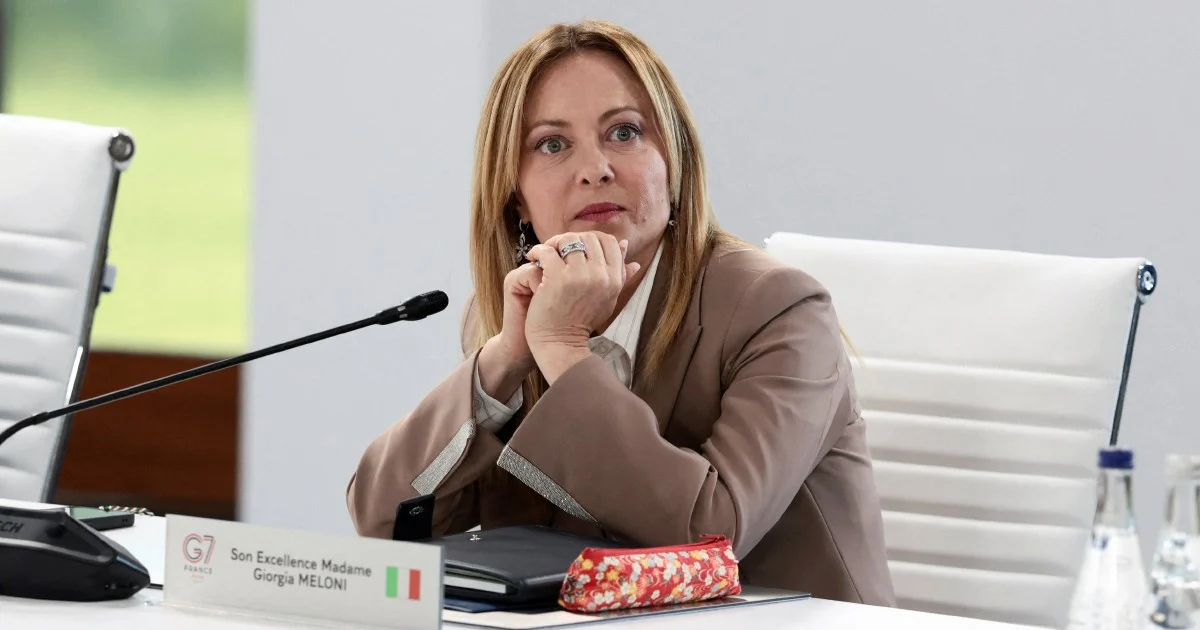
Italian Prime Minister Giorgia Meloni arrived at Donald Trump's second presidential inauguration in January 2025 with considerable fanfare, becoming the sole European leader granted an invitation to the ceremony. The gesture signalled exceptional warmth between Washington and Rome, and Meloni's presence at the historic event appeared to herald a strengthened transatlantic partnership that would elevate Italy's standing in American foreign policy. However, the initial promise of a golden era in bilateral relations has rapidly deteriorated, with Meloni increasingly distancing herself from Trump through public criticism and policy disagreements that underscore the fragility of their alliance.
Meloni's initial positioning as a Trump confidant derived from her credentials as a right-wing populist leader whose governing philosophy appeared aligned with the American president's nationalist agenda. Her Brothers of Italy party shares ideological common ground with Trump's approach to immigration, national sovereignty, and economic self-interest. The invitation to his inauguration represented a validation of her political worldview and suggested Washington viewed her as a kindred spirit who could anchor European conservatism and serve as a reliable interlocutor within European Union circles. Italy's strategic location in the Mediterranean, its military capabilities, and its NATO membership made such a partnership potentially valuable to American interests.
Yet beneath the ceremonial cordiality, fundamental tensions existed that have since surfaced. Meloni governs a European Union member state bound by supranational obligations and collective defence commitments that sometimes conflict with Trump's transactional approach to international relations. The European Union's regulatory frameworks, trade policies, and diplomatic alignments often diverge from positions the Trump administration has championed or will champion. As Trump's second term progresses and specific policies materialize, Meloni has faced pressure to defend European interests against American pressure, forcing her to adopt a more critical public posture.
The deterioration reflects a broader pattern in European-American relations under Trump's presidency. Individual European leaders may harbour ideological sympathy for Trump's conservatism, but their governmental responsibilities compel them to prioritize continental unity and institutional commitments. Meloni discovered that maintaining close personal relations with Trump while preserving her credibility within the EU demanded careful navigation. Early enthusiastic support would undermine her standing among fellow EU members and invite accusations of privileging American interests over European ones. Conversely, maintaining collective EU positions would antagonize Trump, who views such unity as obstruction to his bilateral agenda.
Meloni's shift from Trump advocate to Trump critic represents a pragmatic recalibration rather than ideological rejection. She has not abandoned her populist or nationalist credentials; instead, she has recognized that being perceived as Washington's favoured European leader carries significant costs within the EU institutional framework. European Commission authorities, other member states, and her own coalition partners may view excessive alignment with Trump as compromising Italy's autonomous policymaking capacity. For a leader who took office promising to defend Italian sovereignty and national interests, demonstrating independence from American pressure became politically essential.
The timing of Meloni's public criticism likely reflects specific policy grievances. Trump's administration has pursued aggressive tariff policies, challenged NATO burden-sharing arrangements, questioned the value of multilateral trade frameworks, and signalled willingness to pursue bilateral deals that could disadvantage European economies. Italy, as a significant exporter dependent on global trade, faces potential economic harm from protectionist measures. Additionally, Trump's approach to Ukraine, Middle Eastern conflicts, and other geopolitical issues may diverge from Italian and broader European preferences. Where these divergences become concrete and consequential, Meloni has felt compelled to articulate opposing views.
For Malaysian and Southeast Asian observers, Meloni's trajectory offers instructive lessons about the limitations of ideological alignment in international relations. Leaders who share philosophical worldviews with powerful partners may still find themselves in conflict when national interests diverge. Personal rapport between leaders, however genuine, does not override structural factors that shape state behaviour. The Italian case suggests that positioning oneself as a particular president's closest ally carries reputational risks that domestic political circumstances may ultimately outweigh. In the region's own triangulated relationships with major powers, this dynamic merits careful consideration.
Meloni's experience also highlights the constraints that EU membership imposes on Italian foreign policy autonomy. Unlike non-aligned nations that can freely choose partnership configurations, European leaders operate within institutional structures that demand coordination and restrict unilateral approaches. This context fundamentally distinguishes European politics from the freewheeling bilateral relationships that Trump has historically preferred. Meloni cannot offer Washington the kind of exclusive partnership that appeals to the American president without incurring substantial costs from her EU colleagues and the European institutional apparatus.
The diplomatic relationship between Rome and Washington will likely stabilize into a more predictable pattern of selective cooperation and managed disagreement. Italy will continue to engage NATO responsibilities, maintain security partnerships, and coordinate on shared interests, but Meloni will do so as a European leader first and Trump ally second. Public criticism serves partly to signal to EU peers that Italy remains committed to collective positions while still maintaining functional relationships with the American administration. This balancing act requires constant recalibration but allows Meloni to preserve multiple relationship domains simultaneously.
Looking forward, Meloni's evolution reflects broader European adaptability to Trump's unpredictable leadership style. European leaders increasingly recognize that enthusiasm for his election or ideological compatibility does not guarantee beneficial treatment from his administration. They have learned that demonstrating independence, maintaining EU unity, and firmly articulating European interests sometimes requires direct criticism of American positions. This maturation in European statecraft suggests that transatlantic relations will become more consistently adversarial on specific issues even as foundational security partnerships persist. Meloni has positioned Italy as a serious European actor rather than Washington's favoured client, a reorientation that may ultimately prove more durable than the honeymoon period her inauguration attendance briefly suggested.