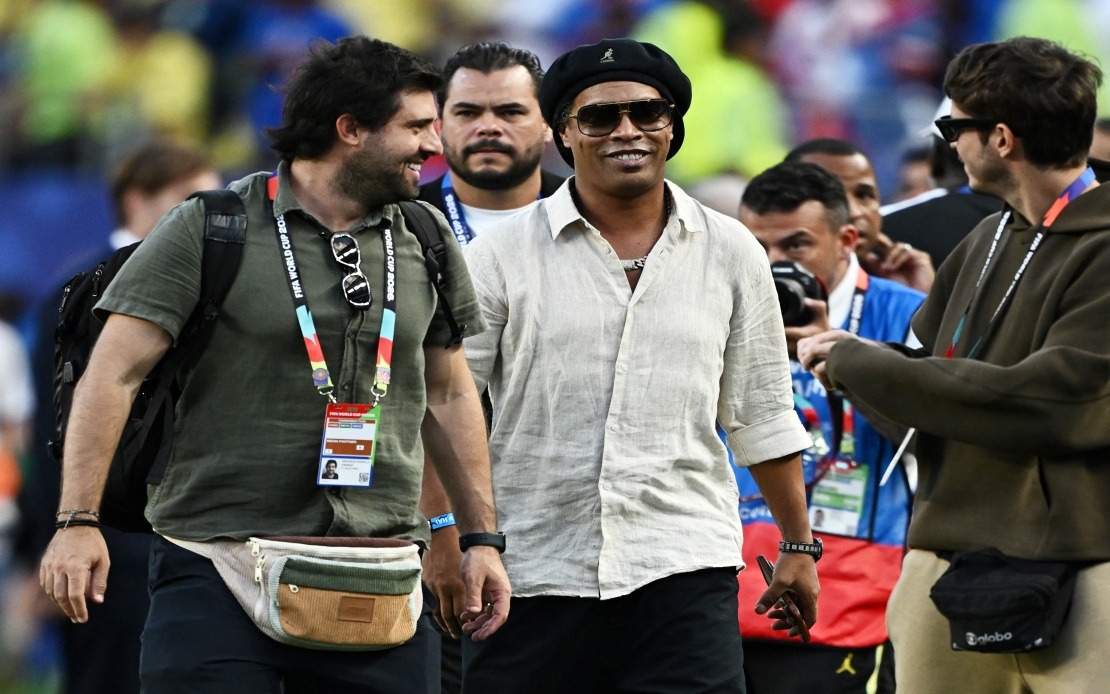
The prospect of a professional football return has emerged in an unexpected form, with former Brazilian superstar Ronaldinho poised to join Ravenna, a club competing in Italy's third tier, as he approaches his late forties. The German Press Agency reported the development, citing Italian sports media outlets that have been tracking the negotiations between the legendary playmaker and the Italian side. While concrete details remain scarce, the club has indicated that a contract signing is forthcoming, though the actual playing status remains a matter of considerable speculation.
The announcement carries an air of ambiguity deliberately maintained by both Ronaldinho and Ravenna's management. Gazzetto dello Sport, a prominent Italian sports publication, broke the story without confirmation that the two-time World Footballer of the Year will take to the pitch for competitive matches. Instead, club officials have suggested that clarity will emerge at a press event scheduled for Miami on Tuesday, leaving supporters and analysts alike to wonder whether this represents a genuine playing contract or a more symbolic arrangement centered on the iconic figure's commercial and ambassadorial value.
Ronaldinho's own words offered a tantalizing hint at genuine sporting ambitions. In comments attributed to him, the Brazilian expressed enthusiasm about stepping back onto the field, stating his eagerness to "dance with the ball again" whilst beginning "a new story" with the club's ownership family, specifically referencing Ignazio Cipriani, a businessman and proprietor of hotel properties who controls the Ravenna organization. This language suggests more than mere ceremonial involvement, hinting at a mindset prepared for actual participation in matches.
Ravenna's second-in-command took a characteristically diplomatic position when approached by ANSA, Italy's national news agency. Ariedo Braida responded to questions about playing prospects by acknowledging the uncertainty while simultaneously refusing to dismiss the possibility outright. His observation that Ronaldinho "is a champion, he knows no age" reflects both the respect afforded to elite talent and the unpredictability surrounding age-related performance in professional sport. This careful framing allows the club to manage expectations whilst preserving maximum flexibility regarding how the arrangement ultimately unfolds.
The magnitude of Ronaldinho's previous achievements cannot be overstated when evaluating this narrative. The Brazilian won football's most prestigious individual honour twice, claimed World Cup glory with his nation in 2002 at the peak of his considerable powers, and captured the Champions League trophy with Barcelona in 2006 during a period when European club football reached unprecedented competitive heights. Later in his career, he secured the Copa Libertadores championship with Atletico Mineiro in 2013, demonstrating sustained excellence across multiple continents and competitions throughout his professional lifespan.
However, the timeline since Ronaldinho's last meaningful involvement in professional football extends considerably backward. His final competitive appearance occurred in 2015 when he represented Rio de Janeiro-based Fluminense, a period now spanning nearly a decade. Following that stint, he embarked on two separate engagements with India's Premier Futsal League before formally announcing his retirement in 2017, seemingly closing the chapter on a legendary career that had captivated global audiences for nearly two decades with his technical mastery and entertaining style.
The Ravenna proposal presents a peculiar chapter in a narrative that many assumed had reached its conclusion six years ago. Italy's third-tier football division comprises clubs operating substantially below the elite echelons of international competition, making it an unconventional destination for someone of Ronaldinho's stature. The stark contrast between his previous stages—Barcelona's Camp Nou, the hallowed grounds of Brazilian football—and a modest Italian provincial club underscores either a fundamental shift in his sporting objectives or a primarily commercial arrangement wrapped in sporting language.
For Malaysian and Southeast Asian football enthusiasts, this development carries particular resonance given Ronaldinho's profound influence on global football culture. His improvisational brilliance and creative approach revolutionized how attacking football could be conceived and executed, inspiring generations across Asia who grew up watching his performances during the 2000s golden period. His previous Asian involvement through India's futsal league demonstrated a willingness to explore post-European pathways, establishing a precedent for elite players maintaining involvement in football beyond traditional retirement ages.
The broader implications extend beyond Ronaldinho himself. This situation reflects evolving attitudes toward player longevity, commercial partnerships masquerading as sporting arrangements, and the enduring marketability of football's greatest personalities. Clubs worldwide increasingly recognize that attaching legendary names—regardless of current capability—generates significant commercial returns through sponsorships, merchandise sales, and media attention. Ravenna's gambit, whether resulting in actual playing appearances or serving primarily ambassadorial functions, represents a calculated commercial investment rather than a genuine sporting necessity.
The uncertainty surrounding the Miami announcement reflects modern football's complex intersection of sport, business, and celebrity culture. Genuine clarification about Ronaldinho's actual participation level will undoubtedly reshape how observers interpret this development. Should he genuinely compete in matches, the medical and conditioning demands facing a 46-year-old body—even one belonging to an exceptional athlete—present substantial obstacles. Conversely, if this proves largely ceremonial, the arrangement still speaks volumes about football's capacity to monetize greatness long after its athletic prime has passed.
For supporters worldwide, including those across Southeast Asia who followed Ronaldinho's career with particular devotion, this development resurrects questions about the proper conclusion to legendary careers. Whether this Italian venture represents a final chapter or merely another commercial exercise remains to be determined at Tuesday's Miami gathering.