Malaysia has achieved a significant milestone in coastal conservation, with nearly 4,000 hectares of mangrove forests restored across the country through an ambitious tree-planting initiative involving more than 9.3 million saplings and other native coastal species. The accomplishment underscores the government's strategic pivot towards environmental sustainability while simultaneously pursuing economic development through what officials term the blue economy framework. This coordinated effort represents one of the more substantial mangrove rehabilitation projects undertaken in Southeast Asia in recent years, addressing both ecological decline and the economic imperatives of coastal protection.
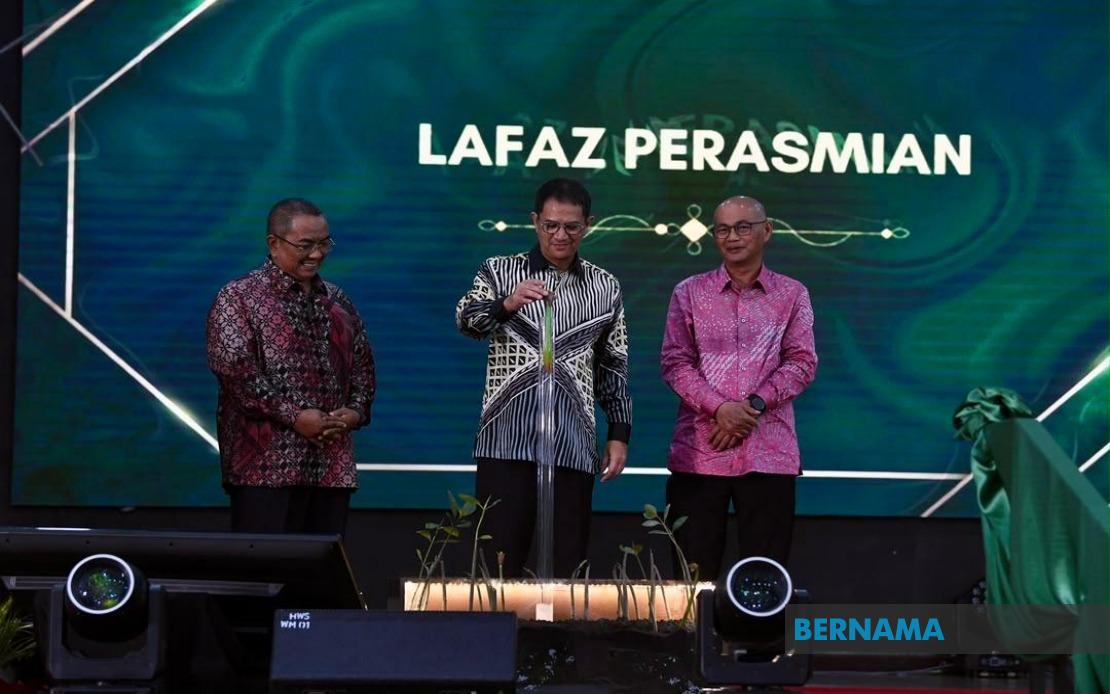
Natural Resources and Environmental Sustainability Minister Datuk Seri Arthur Joseph Kurup outlined the scope of the restoration work during celebrations marking the International Day for the Conservation of the Mangrove Ecosystem 2026 in Alor Setar. The minister emphasised that these restoration activities directly reflect broader governmental priorities around preserving Malaysia's coastal ecosystems, which face mounting pressure from urbanisation, aquaculture expansion, and climate-related threats. The deliberate framing of mangrove conservation within the context of blue economy development signals an important policy evolution—one that positions environmental protection not as a constraint on growth but as a foundation for sustainable maritime prosperity.
The financial commitment to mangrove restoration has been substantial. Through 2025, authorities have directed RM71.3 million towards implementing the National Coastal Mangrove and Suitable Species Tree Planting Programme, a comprehensive initiative encompassing not only the planting phase but also maintenance protocols, scientific research, ecosystem monitoring, and community engagement activities. This multi-faceted approach acknowledges that successful reforestation depends on sustained investment beyond the initial planting phase—a reality that many tropical restoration programmes have learned through costly experience. The allocation reflects recognition that mangrove ecosystems require careful tending to survive the pressures of coastal development and climate variability.
Looking forward, the government has incorporated mangrove conservation into its medium-term development planning framework. Under the 13th Malaysia Plan, an additional RM2 million has been allocated specifically for 2026 to advance conservation and preservation work across mangrove forests and broader coastal areas. Importantly, this funding extends across the entire federation, encompassing Peninsular Malaysia alongside Sabah and Sarawak, demonstrating that mangrove rehabilitation has become a genuinely nationwide priority rather than concentrated in particular regions. The geographic breadth of these efforts is significant, as Malaysia's mangrove ecosystems span diverse environmental conditions requiring tailored management approaches.
The restoration programme has been structured around collaborative institutional arrangements involving multiple government agencies and research bodies. Forestry Peninsular Malaysia serves as a lead coordinating body, working alongside the Sabah Forestry Department and Sarawak Forest Department to ensure implementation across different ecological contexts. The Forest Research Institute Malaysia contributes technical expertise and conducts the scientific monitoring necessary to assess whether restoration approaches prove effective over time. This inter-agency coordination represents a departure from siloed governance structures that historically hindered environmental management across Malaysia's federal system, instead leveraging comparative advantage and regional expertise.
Beyond government institutions, the programme has deliberately cultivated partnerships with non-governmental organisations and local communities, recognising that sustainable ecosystem management ultimately depends on constituencies invested in protecting mangrove forests. Participation by NGOs and community groups has facilitated environmental education initiatives and public awareness campaigns that extend beyond technical planting activities to build broader social support for mangrove conservation. During the Alor Setar celebration, Kedah Raja Muda Tengku Sarafudin Badlishah Ibni Sultan Sallehuddin presented certificates of appreciation to four NGOs and community groups, formalising recognition of their contributions and potentially encouraging continued engagement. This community-centred approach addresses a persistent challenge in environmental management: ensuring that conservation objectives align with local interests rather than appearing as externally imposed constraints.
The strategic positioning of mangrove conservation within the blue economy framework carries particular significance for Malaysian economic policy. Mangrove forests provide critical ecosystem services that support fisheries productivity, storm surge protection, carbon sequestration, and biodiversity conservation—all functions with direct economic value. By restoring nearly 4,000 hectares, Malaysia is essentially investing in natural infrastructure that yields both environmental and economic returns. This perspective has gained traction internationally as policymakers recognise that environmental degradation imposes substantial economic costs through lost fisheries productivity, increased vulnerability to extreme weather, and reduced carbon storage capacity. Malaysia's mangrove restoration thus represents rational economic stewardship rather than merely environmental philanthropy.
The National Mangrove and Coastal Ecosystem Seminar 2026, held alongside the celebration in Alor Setar, provided a forum for exchanging knowledge about restoration methodologies and research findings. The seminar featured twelve peer-reviewed papers, fifteen technical posters, and nine exhibition booths showcasing various dimensions of mangrove management and conservation innovation. This scholarly infrastructure ensures that Malaysia's restoration efforts benefit from accumulated scientific knowledge while also contributing new insights to the international literature on tropical ecosystem rehabilitation. Such knowledge-sharing mechanisms prove essential for continuously improving restoration practices, particularly in tropical contexts where ecological complexity often defies simplistic approaches.
Mangrove ecosystems across Southeast Asia face multifaceted pressures that render restoration efforts increasingly urgent. Coastal development continues converting mangrove areas into aquaculture ponds, salt ponds, and urban infrastructure, while rising sea levels and changing rainfall patterns create additional stress. Malaysia's 4,000-hectare restoration achievement, while significant, must be understood within the context of much larger mangrove losses historically documented across the region. Nevertheless, it demonstrates governmental capacity to mobilise resources and coordinate institutions around environmental objectives, establishing infrastructure that could potentially support even more ambitious restoration as political will and funding permit. The integration of restoration work with research, monitoring, and community engagement creates a model potentially transferable to other Southeast Asian nations grappling with similar mangrove decline.
The implications for Malaysian environmental governance extend beyond mangrove forests specifically. Successfully executing a nationwide restoration programme involving multiple agencies, research institutions, NGOs, and community groups establishes precedent and institutional learning that could facilitate more ambitious coastal management initiatives. As climate change increasingly threatens coastal regions throughout Southeast Asia, nations require proven capacity to implement large-scale environmental interventions. Malaysia's mangrove restoration programme, by demonstrating that such coordination is achievable, potentially positions the country as a regional leader in nature-based climate adaptation strategies. The economic framing through blue economy concepts also illustrates how environmental conservation can be articulated in terms resonating with development-oriented policymakers, potentially broadening political support for ecosystem protection beyond traditional environmental constituencies.
The restoration achievements announced in Alor Setar should be understood as both accomplishment and beginning. Malaysia has successfully demonstrated capability to restore mangrove ecosystems at meaningful scale, establishing institutional frameworks and securing financial commitments extending through at least 2026. The continued allocation of government resources, partnership mechanisms with civil society, and integration of scientific research all suggest the programme enjoys sufficient political backing to persist. Nevertheless, mounting pressures on coastal ecosystems globally mean that restoration efforts require constant reinforcement and expansion to offset ongoing losses. Malaysia's mangrove programme represents progress on an essential environmental frontier, but sustaining and accelerating restoration work will require sustained political commitment and public support.

