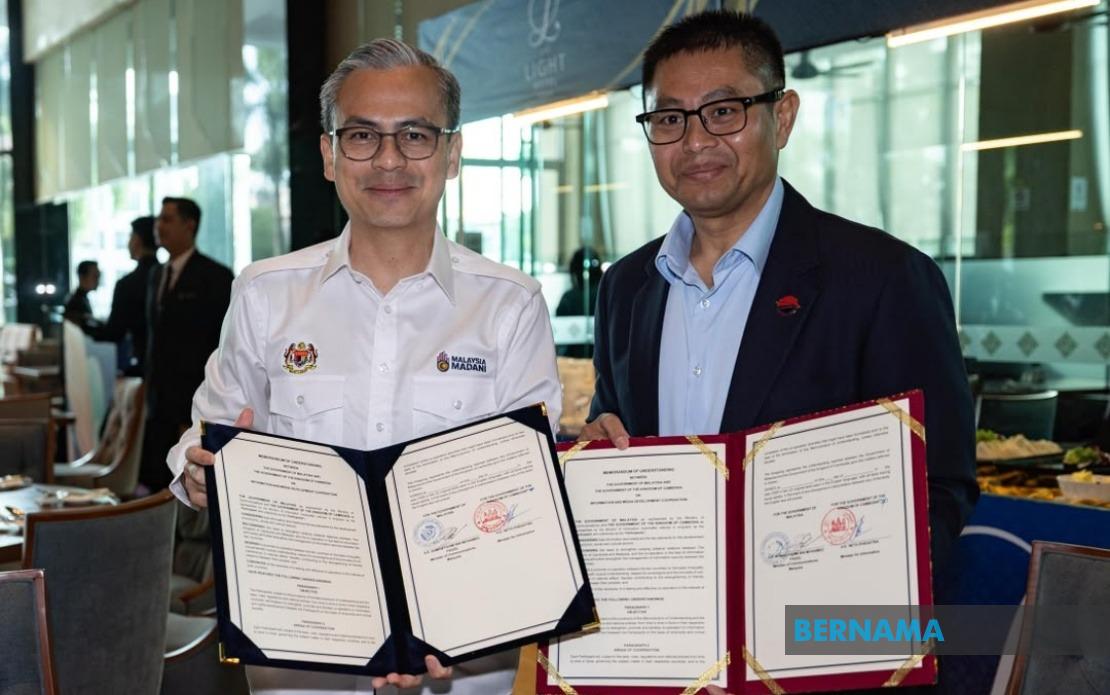
Malaysia and Cambodia have taken a significant step toward closer ties in the communications sector by signing a memorandum of understanding focused on media and information development cooperation. The agreement was signed in Butterworth on June 20, with Communications Minister Datuk Fahmi Fadzil representing Malaysia and Cambodian Information Ministry's Under Secretary of State Prak Thaveak Amida acting on behalf of Information Minister Neth Pheaktra. The ceremony took place at the Light Hotel as part of broader celebrations marking a key moment in regional media collaboration.
The scope of the partnership is notably comprehensive, touching multiple dimensions of the media landscape. Both nations have committed to facilitating the exchange of news and information, coordinating radio and television broadcasting operations, and sharing knowledge in printing and publishing sectors. The agreement also extends to professional development initiatives designed to strengthen the human capital base within both countries' media industries, reflecting recognition that skilled personnel form the backbone of credible and efficient news operations.
Beyond traditional broadcasting and print concerns, the MoU addresses contemporary challenges facing modern media systems. Cybersecurity in the media space has been included as a cooperation area, reflecting the growing vulnerability of news organisations to digital threats and the importance of protecting journalistic infrastructure. Similarly, the partners have acknowledged the need to collaborate on information policy and regulatory frameworks, suggesting both countries recognise that sustainable media development requires thoughtful governance alongside technological investment.
The agreement signals both nations' commitment to supporting innovation within their respective broadcasting and media sectors. This emphasis on forward-looking cooperation is particularly significant given the rapid transformation of global communications platforms and the competitive pressures facing traditional media outlets in Southeast Asia. By formalising mechanisms for exchanging best practices and technological insights, Malaysia and Cambodia position themselves to navigate digital disruption more effectively.
The timing of this agreement reflects broader strategic thinking about regional connectivity and integration. Both countries appear to view closer media ties as integral to strengthening bilateral relations and fostering mutual understanding between their peoples. The partnership acknowledges that an increasingly digital and interconnected communications environment creates both challenges and opportunities for neighbouring nations, making collaboration essential for maximising shared benefits while mitigating risks.
The signing occurred alongside Malaysia's celebration of National Journalists' Day (HAWANA) 2026, the sixth edition of an event that has evolved into a significant regional gathering. Approximately 1,000 media professionals from Malaysia and abroad convened at the PICCA convention centre in Butterworth under the thematic focus of "Media Integrity Strengthens Credibility." Prime Minister Datuk Seri Anwar Ibrahim was scheduled to officially launch the event, underscoring the Malaysian government's commitment to supporting press freedom and professional standards.
The presence of Prak Thaveak Amida at this high-profile gathering demonstrates Cambodia's serious engagement with the partnership framework. Rather than sending a junior representative, the Information Ministry dispatched a senior official to represent the minister, signalling institutional weight behind the commitment. This approach suggests both parties view the cooperation as strategically important rather than merely ceremonial.
Higher-level government participation in HAWANA 2026 further emphasised the significance attached to media cooperation in the region. Penang Chief Minister Chow Kon Yeow, Communications Ministry Secretary-General Datuk Abdul Halim Hamzah, Bernama Chairman Datuk Seri Wong Chun Wai, and Bernama Chief Executive Officer Datin Paduka Nur-ul Afida Kamaludin were all scheduled to attend. This concentration of media and government leadership provided a forum for discussing implementation challenges and opportunities arising from the new bilateral framework.
For Malaysian journalists and media organisations, the agreement opens practical avenues for professional development and industry advancement. Access to Cambodian expertise and potentially to collaborative opportunities in film and documentary production could expand creative possibilities for local producers. Conversely, Malaysia's more developed media infrastructure and regulatory frameworks offer potential models for Cambodian counterparts seeking to upgrade professional standards.
The emphasis on regulatory practices and information policy coordination may have particular resonance for Southeast Asian media landscapes characterised by varying approaches to press regulation and government communication. By studying each other's frameworks, both nations could identify approaches that balance press freedom with governance effectiveness, a perpetually challenging equilibrium in the region.
From a regional perspective, this bilateral initiative reflects growing recognition among Southeast Asian governments that media cooperation serves national interests beyond purely cultural exchange. As digital platforms increasingly transcend borders and misinformation spreads rapidly across regional networks, coordinated approaches to media development and cybersecurity become strategically prudent. Malaysia and Cambodia's partnership may set a template for similar arrangements with other ASEAN members.
The long-standing nature of Malaysia-Cambodia relations provided a foundation upon which this media cooperation framework could be built. The bilateral relationship, already characterised by economic and political engagement, now extends into the communications sphere, creating additional channels for dialogue and collaboration. This multifaceted approach to bilateral relations reflects modern diplomacy's recognition that sustained engagement across multiple sectors strengthens overall partnerships.