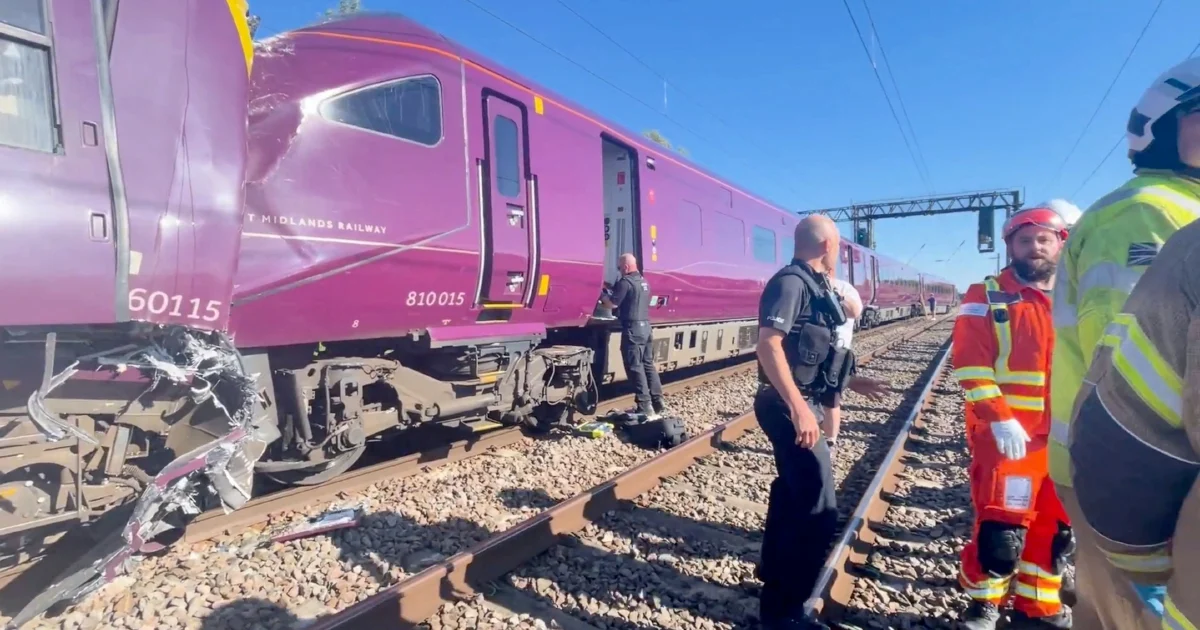
A major train disaster struck the United Kingdom on Friday when two passenger services collided in a region north of the capital, resulting in at least one death and numerous casualties. Emergency responders confirmed that more than a dozen people sustained injuries in the impact, with 11 individuals assessed as requiring urgent medical intervention. The severity of injuries ranged from minor to critical, reflecting the force of the collision and presenting a complex challenge for the emergency services mobilised to the scene.
The collision represented one of Britain's most significant railway accidents in recent years, drawing immediate attention from transport authorities and safety regulators. Initial responses from emergency services focused on rapid deployment of paramedics, firefighters, and rescue personnel to manage the immediate aftermath and provide emergency medical care. The scale of the incident necessitated a coordinated multiagency response involving multiple NHS trusts and ambulance services operating across the region.
Investigators would likely examine multiple factors contributing to the collision, including train speeds, signal operation, driver visibility, and track conditions at the moment of impact. Such incidents typically trigger comprehensive reviews of the circumstances surrounding the event, with rail safety boards examining whether systemic failures or technical malfunctions played a role. The railway industry in Britain operates under strict safety protocols, yet occasionally lapses or unforeseen circumstances can lead to tragic outcomes.
For Malaysian readers familiar with the railway network in Southeast Asia, such accidents underscore the critical importance of maintaining robust safety standards across all transportation infrastructure. The UK railway system, despite its age and complexity, maintains some of the world's most rigorous safety protocols. Nevertheless, the incident serves as a reminder that no transportation system is entirely risk-free, and continuous investment in maintenance, technology, and staff training remains essential.
The collision would inevitably prompt wider discussions about railway safety standards, investment in modernisation, and the regulatory framework governing passenger transport. Britain's rail infrastructure requires ongoing capital expenditure to upgrade signalling systems, improve track conditions, and enhance safety features. Many routes across England, Scotland, and Wales continue to operate infrastructure that dates back decades, creating both maintenance challenges and operational complexities.
Regional rail services across the UK would likely experience disruptions in the aftermath of the collision as investigation teams secured the accident site. Passengers travelling on affected routes faced significant delays and cancellations as the railway network stabilised following the incident. Such disruptions ripple through the entire transportation system, affecting commuters, businesses, and regional economic activity as alternative transport arrangements become necessary.
The incident occurred within the broader context of the UK rail sector facing considerable pressure to improve reliability and passenger satisfaction. Recent years have witnessed industrial action, service disruptions, and complaints about overcrowding and poor maintenance. The collision, while tragic and isolated, may intensify scrutiny of whether adequate investment and resource allocation have been directed toward ensuring passenger safety and service quality.
For the families and relatives of those affected, the collision represented a devastating personal tragedy requiring immediate emotional and practical support. Emergency services coordinated family reunification centres where loved ones could obtain information about casualties and receive assistance. Counselling services would be mobilised to support survivors and those affected by the loss of life.
The investigation into the collision would take considerable time, with transport authorities examining technical data, interviewing witnesses, and reconstructing the sequence of events leading to the impact. Such investigations typically remain ongoing for several months, with interim findings released periodically before comprehensive final reports emerge. These investigations provide crucial insights that influence future safety regulations and operational procedures across the British rail network and internationally.
From a regional perspective, the incident reinforces the importance of continuous safety improvements across Southeast Asian transportation systems. As the region continues expanding its rail infrastructure, including high-speed rail projects across multiple countries, the lessons emerging from such incidents prove invaluable for informing safety standards, operator training, and emergency response protocols. The UK's experience with railway regulation and accident investigation provides a reference point for developing nations enhancing their own transport safety frameworks.
Railway authorities typically strengthen existing protocols and implement additional safeguards following major incidents, reflecting a commitment to preventing recurrence. Enhanced monitoring, more frequent maintenance inspections, updated staff training procedures, and technological upgrades often follow such events. The collision, despite its tragedy, would ultimately contribute to incremental improvements in railway safety that benefit future passengers across the UK and potentially influence international best practices.
The immediate aftermath of such incidents extends beyond the physical and operational dimensions, affecting public confidence in rail travel. Passenger reassurance campaigns, transparent communication about investigation findings, and visible demonstrations of improved safety measures become necessary to rebuild trust. Transport operators work systematically to communicate that lessons have been learned and that concrete steps have been implemented to prevent similar tragedies.