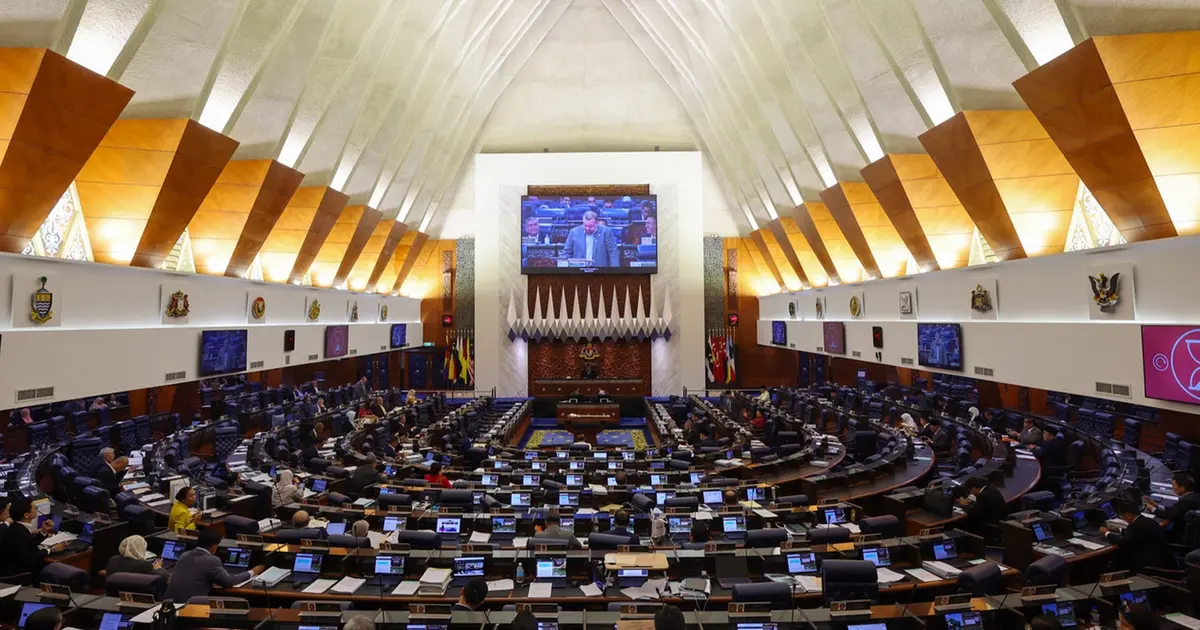
Parliament's legislative agenda for the coming week centres on four substantial bills, with particular attention focused on a constitutional proposal to restrict prime ministerial tenure. The measure limiting a prime minister's service to a single continuous 10-year period returns to the Dewan Rakyat after failing to achieve the supermajority support necessary for constitutional amendment during its last presentation. This fresh attempt at the legislative framework reflects ongoing parliamentary debate over executive power and succession planning in Malaysia's political system.
The term-limit initiative addresses fundamental questions about continuity and renewal at the nation's highest executive office. Currently, Malaysia's constitutional arrangements place no formal ceiling on how long an individual may serve as prime minister, though conventions around party leadership and electoral cycles have historically shaped transitions in power. The proposed 10-year cap would establish a legally binding threshold, obliging any sitting premier to step aside regardless of their party's parliamentary strength. This contrasts sharply with many Commonwealth democracies that similarly restrict executive tenure, making the measure a significant constitutional development should it succeed.
The failure to secure two-thirds backing on the previous parliamentary attempt underscores the substantial political consensus required for constitutional change in Malaysia. Amendments to the Federal Constitution demand support from at least two-thirds of all members present and voting, a threshold designed to prevent majoritarian overreach and protect fundamental constitutional principles. That the bill fell short during its last iteration suggests deep divisions within parliament, whether rooted in principled constitutional concerns or tactical political considerations. Understanding which legislators opposed the measure and their stated reasoning remains crucial context for assessing its prospects in the coming sitting.
For Malaysian voters and political observers, the debate carries practical implications for governance transitions and power consolidation. A 10-year limit would prevent the indefinite accumulation of executive authority within a single individual, theoretically encouraging institutional renewal and reducing the incentive for leaders to manipulate constitutional safeguards or extend their grip on office through extraordinary means. Conversely, critics may argue that arbitrary term limits constrain voters' freedom to re-elect capable leaders or can trigger destabilising succession struggles as an incumbent approaches their final year. Southeast Asian governance patterns, where some neighbours impose strict term limits whilst others maintain open-ended arrangements, illustrate the genuine trade-offs at stake.
The broader parliamentary agenda's inclusion of three additional major bills suggests this sitting addresses multiple facets of constitutional and legislative reform. Without details of those companion measures, observers should note that significant legislative sessions often bundle related reforms or use multiple bills to generate broader consensus. The timing of these four pieces may reflect coordinated constitutional renewal efforts or responses to specific governance challenges that have emerged in recent parliamentary sessions. Tracking which bills advance and which face obstacles will reveal parliament's current priorities and the strength of various voting coalitions.
The supermajority requirement itself warrants examination in context of current parliamentary arithmetic. Malaysia's multiparty system, combined with coalition politics and occasional floor-crossing, creates shifting parliamentary majorities that can hinder constitutional amendments even when broad public or elite support exists. Previous governments have sometimes pursued term limits or executive restrictions with varied success, reflecting how constitutional engineering intertwines with tactical political advantage. Understanding whether all coalition partners support the term-limit measure, or whether some parties view it as disadvantageous to their medium-term interests, clarifies the legislative mathematics facing the bill's proponents.
Regional comparisons illuminate the significance of Malaysia's approach to prime ministerial tenure. Thailand's 2017 constitution limited prime ministerial terms, whilst Indonesia's system allows only two consecutive five-year terms. Singapore's dominant-party system operates without explicit tenure limits but relies on internal succession planning within the ruling party. The Philippines imposes a single six-year presidential term with no re-election. Malaysia's exploration of a 10-year cap positions the country alongside international practice on executive term limits, though the specific duration reflects local constitutional traditions and political calculations.
The coming parliamentary session occurs within Malaysia's broader constitutional reform trajectory. Over recent years, amendments have addressed electoral boundaries, anti-defection rules, and executive accountability mechanisms. A 10-year prime ministerial term limit, if adopted, would constitute another significant calibration of executive power relative to parliament and the citizenry. Such cumulative reforms reflect evolving expectations about governance quality, leadership accountability, and institutional safeguards—themes increasingly central to Malaysian democratic discourse and public conversation.
Observers should monitor not only whether the term-limit bill achieves passage but also the margin by which it succeeds or fails. A narrow two-thirds majority would signal bare-minimum coalition unity, potentially indicating that some government members voted reluctantly or abstained. A comfortable supermajority, conversely, would demonstrate authentic cross-party consensus on restricting executive tenure—a stronger mandate for implementation. The parliamentary debate itself, should it proceed to substantive discussion, will reveal the quality of constitutional argument on both sides and the depth of conviction among legislators regarding prime ministerial term limits.