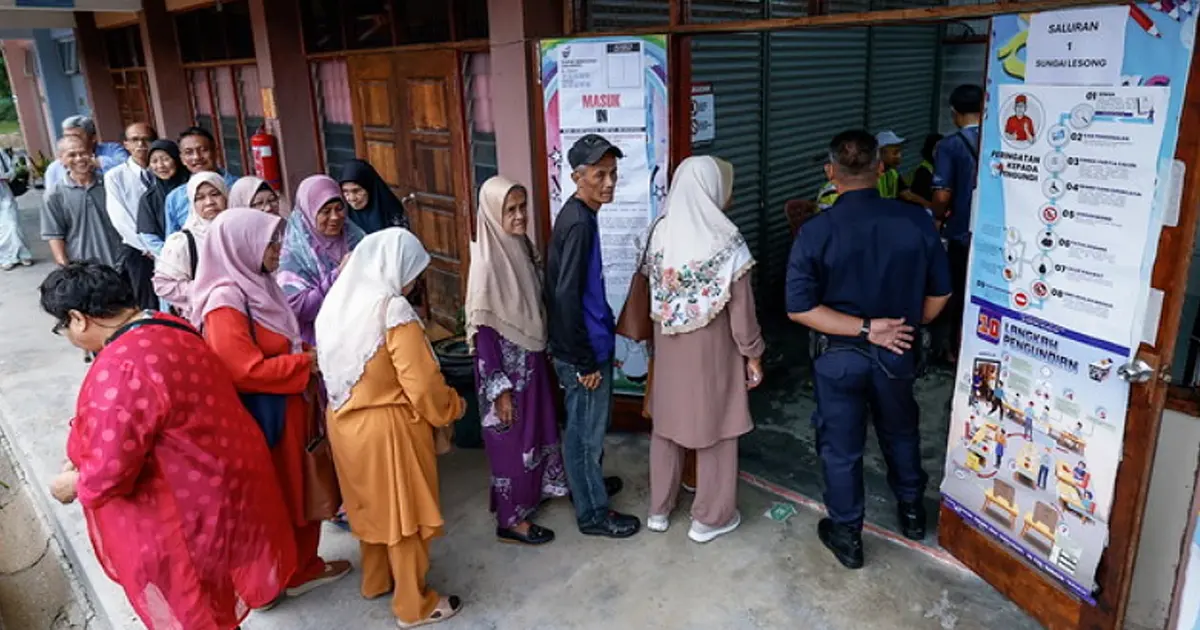
The persistent emphasis on 3R-related matters threatens to drain Malay voters of emotional energy, according to Awang Azman Pawi of Universiti Malaya, signalling a potential shift in how this crucial electoral bloc evaluates political parties. The analyst's assessment reveals a critical disconnect between the concerns dominating political discourse and the everyday preoccupations of ordinary Malaysians grappling with rising expenses and economic uncertainty.
The concept of emotional fatigue among voters is not merely a psychological phenomenon but carries significant electoral ramifications. When populations become exhausted by continuous exposure to emotionally charged political rhetoric, their engagement levels typically decline, voter turnout may suffer, and their receptiveness to political messaging diminishes. In Malaysia's context, where Malay voters represent a substantial demographic force, this fatigue could fundamentally reshape political calculations and campaign strategies across all major parties competing for their support.
Awang Azman Pawi's observation underscores an increasingly evident reality in contemporary Malaysian politics: the gap between what dominates the political narrative and what genuinely concerns households. While political parties and commentators continue debating 3R issues with considerable intensity, many Malaysians are preoccupied with more immediate material concerns. The cumulative weight of monthly expenses, stagnant wages relative to inflation, and uncertainty about long-term financial stability occupy the mental space that political discourse increasingly fails to address.
Parties vying for electoral support face a critical reassessment of their messaging priorities. According to Awang Azman Pawi, political organisations will ultimately be evaluated not through their rhetorical positions on 3R matters, but through concrete performance metrics and their demonstrated capacity to resolve tangible issues affecting voters' daily lives. This represents a fundamental reorientation of political accountability—from ideological positioning to pragmatic delivery.
The cost of living emerges as a particularly potent issue in this recalibration of voter priorities. Malaysia has experienced sustained inflationary pressures affecting essential commodities, transportation, housing, and utility costs. These expenses directly impact household budgets across income levels and geographic regions, creating a shared experience of economic strain that transcends traditional political dividing lines. Parties that fail to articulate credible strategies for addressing these pressures risk appearing tone-deaf to voter concerns, regardless of their positions on other contentious issues.
This shift in voter sentiment carries implications extending beyond immediate electoral outcomes. If Malay voters increasingly prioritise economic performance and cost-of-living relief over other political discourse, governing coalitions will face pressure to demonstrate competence in economic management, inflation control, and provision of targeted relief for struggling households. The political space for abstract or identity-focused discussions may contract as voters demand tangible evidence of improved economic circumstances.
The Malaysian context also reflects broader patterns observed in other democracies, where electoral attention cycles alternate between symbolic and material concerns. However, the specific combination of Malaysia's demographic composition, multicultural landscape, and recent economic challenges creates a unique dynamic. Malay voters' potential emotional fatigue with 3R issues could realign political coalitions if other parties successfully position themselves as more focused on bread-and-butter economics.
Awang Azman Pawi's analysis suggests that political parties must develop more sophisticated approaches to voter engagement that balance multiple registers of concern. Rather than assuming that continuous reinforcement of particular messages maintains voter enthusiasm, evidence increasingly points toward the need for diversified messaging that acknowledges voters' multiplicity of interests and concerns. Parties demonstrating this sophistication may capture voter support even from constituencies traditionally considered politically distant.
For Malaysia's political future, the implications are substantial. If emotional fatigue becomes widespread among Malay voters, it could reduce the polarisation that has characterised recent electoral cycles, potentially creating openings for alternative political narratives centred on economic competence, institutional reform, and governance quality. Conversely, parties that maintain their current messaging despite signals of voter weariness risk losing relevance among the very demographic they seek to mobilise.
The coming electoral cycle will serve as a crucial test of whether analysts' observations translate into measurable shifts in voter behaviour. Political strategists who recognise this fatigue and adapt their campaigns accordingly may gain meaningful advantages over competitors maintaining conventional approaches. Ultimately, Awang Azman Pawi's warning reflects a maturing electorate increasingly demanding that political parties justify their mandates through performance rather than rhetoric alone.