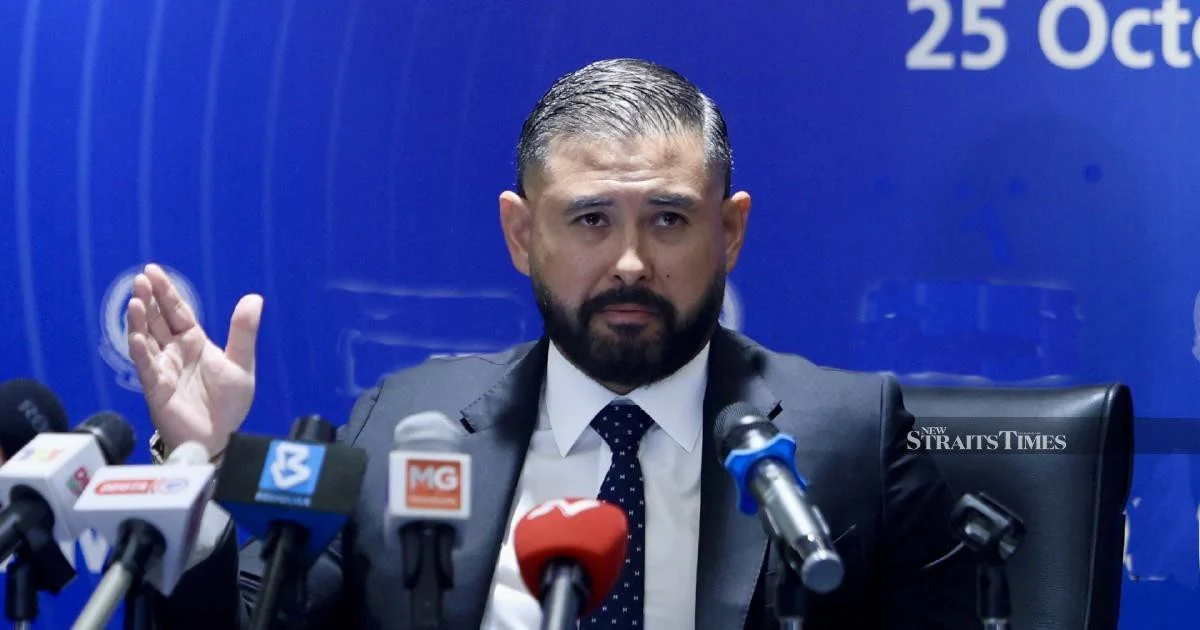
Johor's Regent Tunku Ismail Sultan Ibrahim has publicly challenged the Prime Minister's recent characterisation of the state's financial position, rejecting the suggestion that Johor is afflicted by significant internal leakages. In his response, the Regent presented a contrasting analysis: rather than acknowledging problems within Johor's own revenue management systems, he contended that the federal government's fiscal arrangements are fundamentally responsible for preventing the state from retaining a fair share of its generated income.
The exchange reflects a deeper tension between Kuala Lumpur and Johor over how to interpret the state's fiscal health and revenue dynamics. The Prime Minister had framed Johor's situation as one of internal inefficiency—the suggestion being that money collected within the state was disappearing through poor administration or leakage. This characterisation implicitly places the onus on Johor's state government to tighten its financial controls. The Regent's counterargument, however, reframes the problem entirely, shifting focus from internal mismanagement to the structural relationship between federal and state revenue-sharing arrangements.
This dispute touches on longstanding grievances that several Malaysian states have raised regarding the distribution of federal allocations and the mechanisms through which revenue collected within their borders flows back to them. Johor, as one of Malaysia's most economically productive states, has particular reason to scrutinise these arrangements. The state's significant industrial base, port infrastructure, and manufacturing sectors generate substantial tax revenue and economic output, yet the state government's ability to access and retain these resources depends heavily on federal mechanisms and constitutional provisions that distribute money between layers of government.
The Regent's position suggests frustration with a system in which revenue generation and revenue retention are decoupled. A state may collect or facilitate the generation of considerable income, but constitutional provisions and federal policies determine how much of that revenue actually remains available for state-level spending and development. From Johor's perspective, characterising this as a state-level leakage problem misdiagnoses the issue—the money is not leaking; it is being systematically redistributed upward through legitimate federal channels that may disadvantage economically productive states.
This disagreement also carries political weight. By framing the issue as federal responsibility rather than state inefficiency, the Regent's statement challenges the narrative that state governments are simply not managing their finances competently. Instead, it suggests that the federal system itself may be structurally disadvantageous to states like Johor, which contribute disproportionately to national economic output but receive allocations based on different criteria, including population size and development needs that may not reflect their revenue contributions.
The timing of this exchange is significant within Malaysia's current political context, where discussions about state autonomy, fiscal federalism, and the proper distribution of resources between federal and state governments remain contentious. Johor, as a key economic engine for the nation, carries considerable weight in these conversations. The state's concerns cannot be easily dismissed as parochial grievance; they reflect structural questions about how Malaysia's federal system allocates resources and whether economically productive states are fairly compensated for their contribution to national wealth.
For Malaysian readers and policymakers, this dispute highlights important questions about fiscal equity and federalism. If wealthy, productive states like Johor cannot retain sufficient revenue to invest in their own infrastructure and development, the long-term implications for regional economic growth merit careful consideration. The federal system's sustainability depends partly on all constituent states perceiving the arrangements as reasonably fair. When a major state's leadership expresses frustration about how much of its generated wealth flows away through federal mechanisms, it signals potential broader dissatisfaction with the current distribution model.
The Regent's intervention also underscores the significant role that state rulers continue to play in advocating for their domains' interests, even when sitting governments pursue different political agendas. Traditional rulers possess platforms and legitimacy that allow them to speak on fiscal and development matters in ways that may carry weight with both the federal government and the Malaysian public. This statement demonstrates how constitutional monarchs in Malaysia's federal system can serve as alternative voices in major policy debates.
Seeking resolution to this disagreement will require engagement on the technical merits of revenue allocation. Both sides would benefit from transparent analysis of exactly which revenue sources flow from Johor to federal coffers, through which mechanisms, and what proportion returns as allocations to the state. Such clarity could either validate the Regent's assertion that the federal system is the primary constraint on Johor's finances, or it could identify actual internal leakages that the state should address. Currently, the public debate proceeds largely through assertion and counterassertion rather than detailed fiscal data.
The broader implication for Southeast Asia is that Malaysia's experience with fiscal federalism may offer lessons—both positive and cautionary—for other nations grappling with similar questions about how to balance national unity with regional economic fairness. How Malaysia resolves tensions between its federal government and economically significant states will influence perceptions of whether the federal system serves all participants equitably, a question that extends beyond Johor to any state contributing substantial economic output.