The MADANI Government operates within a clearly defined constitutional framework when distributing financial resources to states, including Johor, according to Pasir Gudang Member of Parliament Hassan Abdul Karim. Speaking in Johor Bahru on June 21, the lawmaker and legal professional underscored that all funding decisions rest on established statutory provisions rather than discretionary arrangements, highlighting the institutional constraints that guide national fiscal policy towards the subnational level.
The constitutional architecture governing such allocations finds its foundation in Article 109(1) of the Federal Constitution, which mandates that the Federal Government must annually provide each state with a capitation allocation calculated in accordance with the detailed provisions enumerated in Part I of the Tenth Schedule. This formulaic approach ensures consistency and predictability in state funding streams, removing much of the political discretion that might otherwise characterise intergovernmental fiscal transfers. Hassan's clarification suggests that distribution methodology follows technical criteria rather than ad-hoc political considerations, though this assertion inevitably invites scrutiny regarding whether the constitutional formula itself adequately reflects the economic contributions and needs of individual states.
Complementing the capitation framework, Article 110(1) of the Constitution further establishes that states possess inherent entitlements to revenue streams derived from taxation, licensing fees, and other income sources specifically catalogued under Part III of the Tenth Schedule. This dual-track system attempts to balance centralized resource collection with decentralized fiscal autonomy, permitting states to finance their operations through both federally-distributed allocations and their own revenue bases. The constitutional design reflects a federal bargain struck at independence, establishing recognized sources of state revenue that theoretically insulate subnational governments from arbitrary federal fiscal decisions.
For state administrations dissatisfied with the quantum of federal allocations, the Federal Constitution provides a grievance mechanism through the National Finance Council. Article 108(4) obligates the Federal Government to consult this body regarding allocations and grants distributed to states, creating an institutionalized forum for negotiation and dispute resolution. Hassan noted that the newly-elected Johor state government following the July 11 state election would retain the option to escalate funding concerns through this prescribed channel, invoking constitutional procedure to challenge federal distribution decisions deemed inadequate.
This legal framework explanation emerges against the backdrop of mounting fiscal tensions between the federal centre and Johor state. During a recent public engagement in Johor, the Regent of Johor, Tunku Mahkota Ismail, articulated substantial grievance regarding the quantum of federal returns relative to the state's fiscal contributions. His Royal Highness asserted that Johor generates more than RM40 billion in annual revenue for federal coffers, yet receives approximately RM2 billion to RM3 billion in return—a 13-to-15 fold disproportion that constrains the state's capacity to fund essential infrastructure, healthcare, and welfare initiatives for its nearly five million residents.
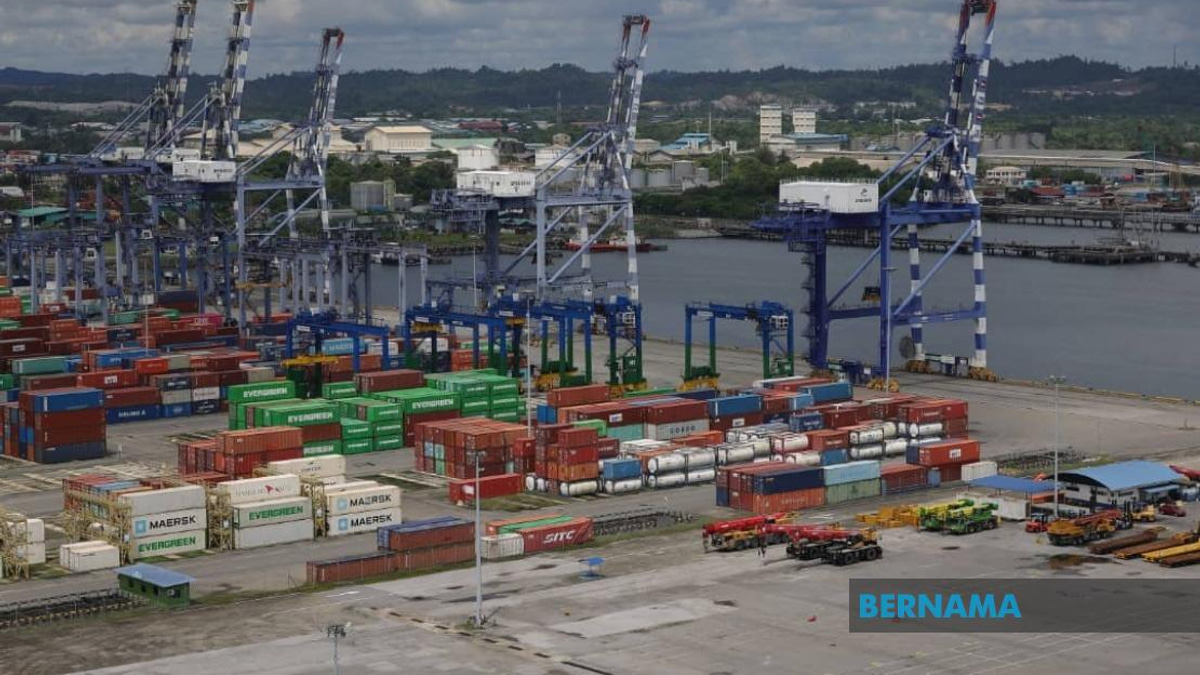
The Regent's articulation of fiscal imbalance reflects longstanding tensions within Malaysia's federal revenue system, where economically productive regions like Johor function as net contributors to the national treasury while receiving proportionally modest allocations for local development. This structural asymmetry has generated periodic friction between state governments and federal authorities, particularly when state administrations face electoral pressure to deliver visible development outcomes with constrained fiscal resources. Johor's position as a major port economy and manufacturing hub amplifies these tensions, as the state's prosperity contributes substantially to national revenues that are then redistributed according to constitutional formulas that may not prioritize growth states.
Hassan's invocation of constitutional provisions can be interpreted as affirming that current allocation mechanisms, however controversial, remain legally binding and procedurally justified. Yet his emphasis on available recourse through the National Finance Council simultaneously acknowledges that states possess legitimate channels for fiscal negotiation. The National Finance Council has historically served as a forum where state chief ministers negotiate with federal officials regarding budget allocations, though its effectiveness in reallocating resources remains contested. The institution's consultative mandate does not necessarily translate into binding authority to compel changes in distribution patterns.
The timing of Hassan's statement—preceding Johor's July 11 state election—carries political significance. By clarifying the constitutional constraints on federal allocation decisions, he implicitly rebuts suggestions that political factors should influence the distribution quantum. Simultaneously, his acknowledgment of the National Finance Council mechanism signals that incoming state leadership possesses legitimate avenues to advocate for enhanced allocations, framing potential demands as constitutional rather than partisan assertions. This rhetorical positioning attempts to depoliticize what remains fundamentally a contested question of fiscal fairness.
The fundamental tension underlying this exchange reflects a broader challenge confronting federations worldwide: balancing constitutional rigidity with fiscal fairness when economic circumstances change. The Tenth Schedule's allocation formulas were established at independence and have undergone limited substantive revision despite dramatic shifts in Malaysia's economic geography, interstate wealth distribution, and service delivery costs. Whether the constitutional framework adequately serves contemporary fiscal needs—and whether the National Finance Council possesses sufficient agency to update allocations without formal constitutional amendment—remains an open question as states increasingly challenge federal distribution decisions.
For Malaysian policymakers and observers, this exchange illustrates the constraints and opportunities embedded within the federal constitutional order. States cannot unilaterally rewrite allocation formulas, yet neither are they entirely dependent on federal discretion; the National Finance Council theoretically provides a deliberative space for negotiating fiscal arrangements. The question for Johor's incoming administration involves whether and how aggressively to utilize this mechanism to advance its fiscal interests—a challenge that extends to other states navigating similar imbalances between their economic contributions and federal returns.