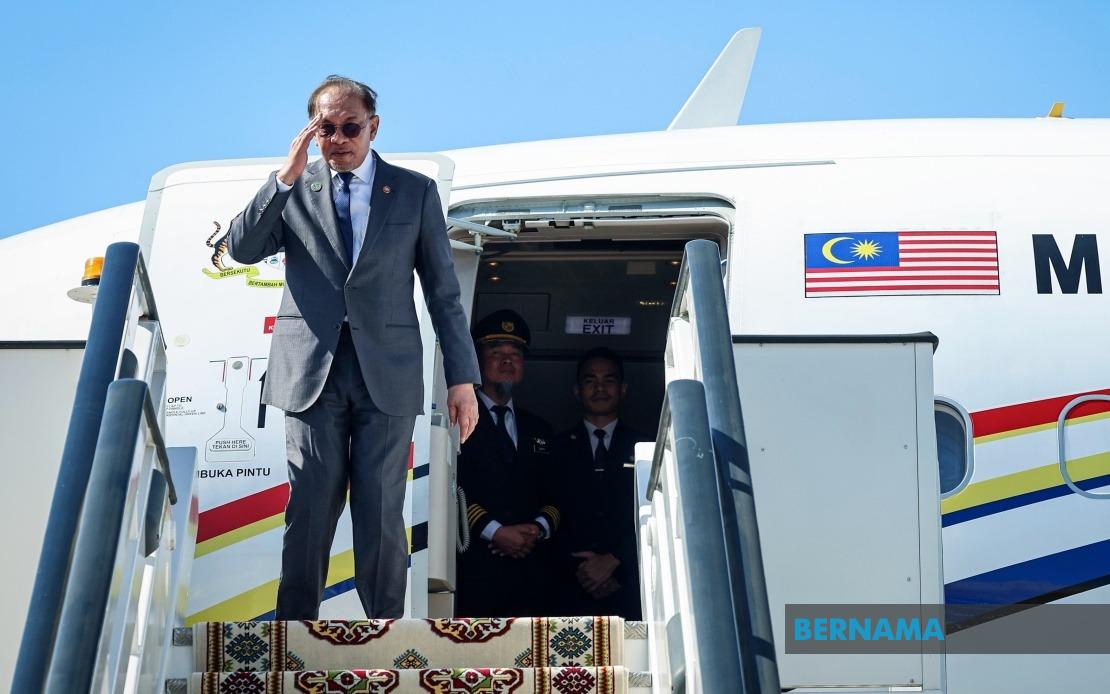
Prime Minister Datuk Seri Anwar Ibrahim touched down in Penang on June 20 for a tightly scheduled one-day working visit, immediately after concluding his first-ever official trip to Turkmenistan since taking office. The rapid transit between nations underscores the demanding diplomatic calendar facing Malaysia's dual-hatted premier, who holds the additional portfolio of Finance Minister alongside his role leading the government. This back-to-back international engagement reflects the government's strategy to balance regional diplomacy with domestic economic imperatives, particularly in Penang, a state that has emerged as a critical pillar of Malaysia's industrial and manufacturing strategy.
The Prime Minister's Penang itinerary commenced with the formal opening of MKS Instruments Malaysia Sdn Bhd at Bandar Cassia Technology Park in Batu Kawan at 11 am. This facility represents another investment in Penang's burgeoning semiconductor and precision instrument sector, reinforcing the state's position as a preferred destination for high-value manufacturing operations. The technology park continues to attract foreign direct investment, particularly from companies seeking to establish or expand their presence in Southeast Asia while benefiting from Malaysia's skilled workforce, established supply chains, and proximity to regional markets. The opening signals confidence among international investors in Penang's continued development as a knowledge-intensive industrial hub.
Following the MKS Instruments ceremony, Anwar proceeded to Bandar Setia Fontaines in Kepala Batas for the groundbreaking of Setia Fontaines Industrial Park at 1 pm. This ambitious project reflects developer Setia's long-term commitment to diversifying Penang's economic base beyond traditional sectors. The industrial park is positioned as a catalyst for attracting manufacturing and light industrial operations to the Northern Corridor, an economic zone that has gradually gained momentum as companies seek alternatives to congested areas in Selangor and Kuala Lumpur. The development strategy emphasizes clustering complementary industries together, creating economies of agglomeration that benefit participating businesses through shared services, logistics infrastructure, and a concentrated talent pool.
During the Setia Fontaines groundbreaking ceremony, the developer announced two additional strategic collaborations within the broader township development. These partnerships, though not detailed in available reports, likely encompass infrastructure development, anchor tenant commitments, or enterprise service providers that will support the industrial park's operational ecosystem. Such collaborative arrangements have become increasingly common in Malaysia's industrial park developments, as developers recognize that investors require not merely physical space but comprehensive support systems encompassing utilities, maintenance services, workforce training partnerships, and digital infrastructure. The announcement of simultaneous partnerships suggests a coordinated effort to attract multiple complementary industries.
The Prime Minister's presence at these Penang events demonstrates the government's active engagement in state-level economic development initiatives. Rather than relying solely on investors to identify opportunities, senior leadership involvement signals governmental backing and facilitates regulatory coordination when needed. This hands-on approach can accelerate investment decisions, as foreign and domestic firms often perceive direct government participation as reducing bureaucratic friction and demonstrating sustained commitment to supporting their operations. For Penang, which has long competed with other Malaysian states for investor attention, such high-level endorsement carries considerable weight.
Anwar proceeded to the HAWANA 2026 Grand Finale at the PICCA Convention Centre at Butterworth Arena at 3 pm, an event anticipated to attract approximately 1,000 media practitioners from Malaysia and international locations. HAWANA, organized by the Communications Ministry with the Malaysian National News Agency (Bernama) as the implementing agency, serves as Malaysia's premier recognition platform for journalists and media professionals. The event underscores the government's recognition of media's essential role in shaping public discourse and maintaining democratic institutions. By personally attending and presenting awards, the Prime Minister acknowledged journalism's contribution to national development and public accountability.
At the HAWANA ceremony, Anwar presented the HAWANA Award and Special HAWANA Award to individuals recognized for substantial contributions to journalism and advancement of public thought. These distinctions represent Malaysia's highest recognition for media professionals, honoring those who have demonstrated exceptional dedication to investigative reporting, editorial leadership, or innovative media practices. The awards ceremony celebrates excellence in journalism during a period when media industries globally face significant disruption from digital technologies, changing business models, and shifting audience preferences. By highlighting journalistic achievement, the government reinforces the importance of professional standards and ethical reporting practices.
The Prime Minister also distributed contributions from Tabung Kasih@HAWANA to media practitioners experiencing financial hardship. This welfare initiative reflects recognition that journalism, while essential to society, often provides modest financial compensation, particularly in smaller markets or for freelance contributors. The welfare fund addresses economic vulnerabilities within the profession, providing safety nets for practitioners facing health crises, unemployment, or other personal difficulties. Such support mechanisms help retain talent within the journalism sector and demonstrate societal appreciation for media professionals' sacrifices.
Anwar's Turkmenistan visit, which commenced on June 18, marked his inaugural trip to that Central Asian nation since assuming office as Malaysia's 10th Prime Minister in November 2022. He traveled at the invitation of President Serdar Berdimuhamedov, suggesting efforts to deepen bilateral relations and explore potential areas of cooperation. The visit occurred following Anwar's participation in the 35th ASEAN-Russia Commemorative Summit in Kazan, Russia, accompanied by Investment, Trade and Industry Minister Datuk Seri Johari Abdul Ghani and Economy Minister Akmal Nasrullah Mohd Nasir. This sequence of Central Asian engagements reflects Malaysia's broader strategy to strengthen ties with nations outside traditional Southeast Asian circles, particularly in energy-rich regions offering potential investment and partnership opportunities.
The Turkmenistan visit carries strategic significance for Malaysia's diversification efforts. Central Asian nations possess substantial hydrocarbon reserves, mineral wealth, and emerging manufacturing sectors that could benefit from Malaysian expertise in specific industries. Conversely, Malaysia's position as a stable Southeast Asian economy with established financial markets and industrial capabilities offers attractive partnership prospects. High-level diplomatic engagement typically precedes concrete commercial arrangements, suggesting that Malaysian businesses may pursue expansion opportunities in Turkmenistan or joint ventures combining Malaysian capabilities with local resources and market access.
Following his Penang commitments, Anwar was scheduled to attend the Himpunan Pertubuhan Lima Generasi (PLG) Malaysia dinner in Negeri Sembilan that evening. This engagement indicates continued political outreach activities beyond the day's official economic and cultural events. The five-generation organizations movement appears designed to build grassroots political support across generational cohorts, from senior citizens through young professionals and teenagers. Such dinner events provide platforms for leadership engagement with diverse demographic constituencies and facilitate dialogue between government and civil society stakeholders.
The compressed timeline spanning Turkmenistan, Penang, and Negeri Sembilan within 24 hours reflects the intensity characterizing the Prime Minister's schedule. Managing dual responsibilities as premier and finance minister requires exceptional organizational capacity and stamina. The itinerary balances international diplomacy with domestic economic promotion and political cultivation, demonstrating how modern government leaders must simultaneously address geopolitical positioning, economic development, and political organization. For Malaysia, particularly Penang, the Prime Minister's active engagement in flagship economic projects signals ongoing governmental commitment to sustained industrialization and regional development within the broader context of ASEAN integration and global trade relationships.