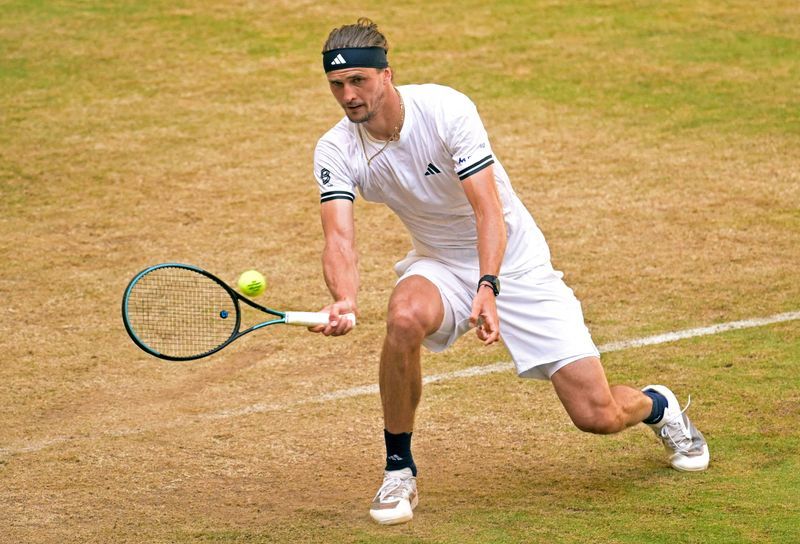
Alexander Zverev attributed his Halle Open semi-final defeat to Taylor Fritz on Saturday to a critical malfunction in his glucose monitoring device, which the German tennis star relies upon to manage his Type 1 diabetes during competition. The world number three lost 6-7(4) 6-4 7-5 in a match that stretched beyond two hours and 39 minutes, but pointed to equipment failure rather than his opponent's superior play as the primary factor affecting his performance during the opening stages of the encounter.
Zverev, who has managed his condition since childhood diagnosis at age four, explained that the sensor provided dangerously inaccurate readings that triggered an inappropriate insulin response. The malfunction indicated glucose levels that were substantially higher than reality, prompting him to administer significantly more insulin than his body actually required. This miscalculation created a dangerous metabolic imbalance during play, leaving the German competitor struggling with the physiological consequences of over-medication.
The champion of Roland Garros described the impact with stark clarity, noting that during merely the first 45 minutes of the match, he consumed approximately 350 grams of sugar in a desperate attempt to counteract the insulin overdose. Such emergency glucose consumption represents an extraordinary quantity for even a short period and underscores the severity of the sensor's error. Zverev characterised his physical state during this critical window as "absolutely terrible," indicating he was fighting both his opponent and the consequences of medical equipment failure simultaneously.
Despite these extraordinary circumstances undermining his performance, Zverev demonstrated sportsmanship by acknowledging Fritz's legitimate superiority on the day. The American entered the semi-final carrying momentum from six consecutive victories against the German across their recent head-to-head meetings, a statistical advantage that reflected his growing competitiveness at the highest echelons of professional tennis. Zverev conceded that Fritz's tennis on Saturday merited recognition and that his opponent earned the victory through superior execution rather than capitalising on his opponent's medical distress.
For context, Zverev has managed Type 1 diabetes throughout his professional career using Medtronic continuous glucose monitoring technology, which has become integral to his ability to compete at elite levels. The system represents a significant technological advancement for diabetic athletes, enabling real-time metabolic monitoring without interrupting play. The sensor had provided reliable service over approximately nine years of use, making this incident particularly anomalous and concerning from a reliability perspective.
What distinguishes this incident is its unprecedented nature within Zverev's extensive experience with the technology. The German athlete emphasised that in the nearly nine years since adopting these monitoring devices around 2016 or 2017, he had never encountered such a substantial measurement error. This history of dependable performance made the malfunction all the more jarring and potentially distressing, as Zverev had developed confidence in the equipment's accuracy during critical professional moments. The scale of the error—registering high values when actual levels were dangerously low—represented a complete inversion of expected readings that could have created serious health complications.
The timing of this technical failure carries significance given Zverev's preparation for the major championships ahead. Wimbledon, scheduled to commence June 29 and conclude July 12, represents one of the year's four Grand Slam tournaments and traditionally occupies a prominent position in professional players' calendars. However, Zverev expressed confidence that the isolated equipment malfunction would not extend into his preparation for that championship, suggesting he views the Halle incident as a singular aberration rather than an indication of systemic problems with his diabetes management apparatus.
The broader implications touch upon athlete health and equipment reliability in professional sports. As more competitors manage chronic conditions through technological solutions, the potential for device malfunction introduces an additional variable affecting competitive outcomes. Zverev's willingness to publicly discuss his diabetes management reflects growing normalisation of chronic illness in elite athletics, yet simultaneously highlights vulnerabilities when medical equipment fails. His transparency about the incident may encourage manufacturers and professional sports organisations to examine safeguards against similar failures.
For Southeast Asian readers, Zverev's experience resonates within the context of diabetes management and sports participation. Malaysia, like many regional nations, faces rising incidence of Type 1 diabetes among young people, and Zverev's career demonstrates that such conditions need not preclude achievement at the highest competitive levels when properly managed. His reliance on advanced monitoring technology illustrates the crucial role that medical innovation plays in enabling athletes with chronic illnesses to participate fully in professional sport.
The loss to Fritz, while disappointing, arrives at a juncture where Zverev can reset before the grass-court season's final major event. His acknowledgment of Fritz's merit and his decisive action in managing the medical emergency—consuming sugar to counteract the insulin overdose—demonstrated both competitive professionalism and practical health awareness. The incident ultimately underscores the complex interplay between athletic performance, medical management, and equipment reliability that characterises contemporary professional tennis at its highest echelons.
%22%2F%3E%3C%2Fpattern%3E%3C%2Fdefs%3E%3Crect%20width%3D%22100%25%22%20height%3D%22100%25%22%20fill%3D%22url(%23ph16uycg)%22%2F%3E%3Crect%20width%3D%22100%25%22%20height%3D%22100%25%22%20fill%3D%22url(%23ph16uycp)%22%2F%3E%3Ctext%20x%3D%2250%25%22%20y%3D%2250%25%22%20text-anchor%3D%22middle%22%20dominant-baseline%3D%22central%22%20fill%3D%22rgba(255%2C255%2C255%2C0.95)%22%20font-family%3D%22Georgia%2C%20'Times%20New%20Roman'%2C%20serif%22%20font-weight%3D%22700%22%20font-size%3D%22320%22%20letter-spacing%3D%22-0.02em%22%3EIran%3C%2Ftext%3E%3C%2Fsvg%3E)