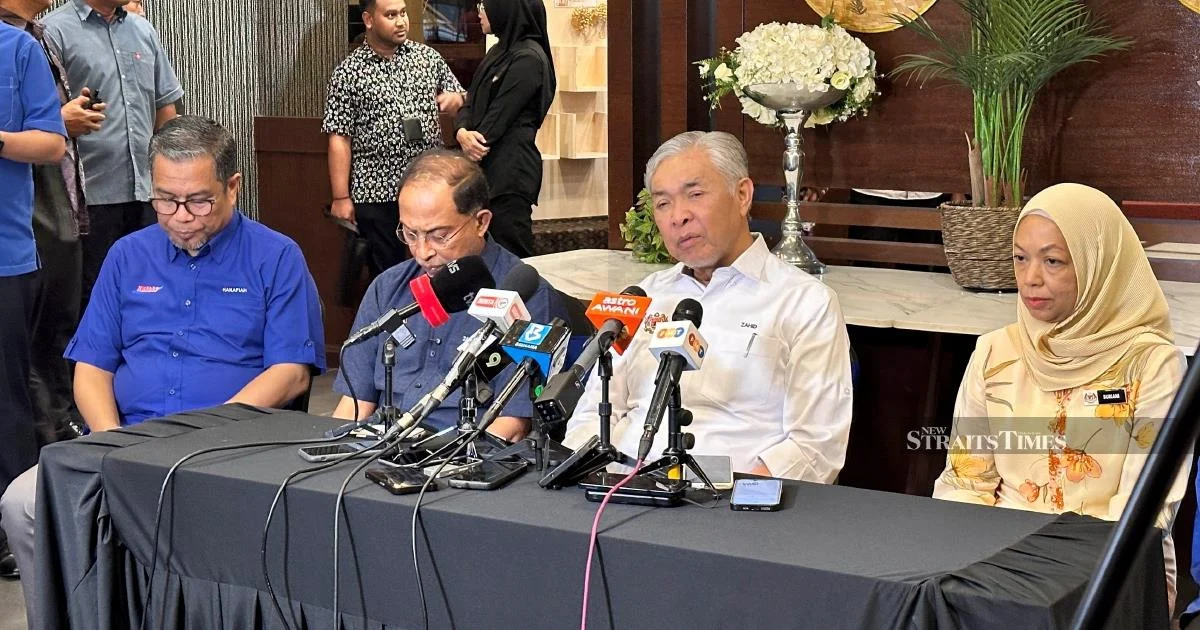
In remarks made during a campaign event in Kluang, Barisan Nasional chairman Datuk Seri Dr Ahmad Zahid Hamidi has effectively cautioned his coalition partners against sustained references to the family of former Prime Minister Datuk Seri Najib Tun Razak in the Johor state election contest. The intervention underscores growing tension within the unity government over how much political capital the controversial former leadership should occupy in party messaging during a critical electoral period.
The BN chairman's comments appear directed at one or more of the coalition's constituent parties that have incorporated imagery or references to Datin Seri Rosmah Mansor into their campaign activities across Johor. Rather than explicitly naming the offending party or parties, Zahid's remarks served as a pointed signal that such an approach risks undermining the broader coalition narrative and distracts from contemporary policy platforms. His emphasis on moving forward reflects a strategic calculation that dwelling on associations with the Najib era—which ended amid substantial legal jeopardy for key figures—may alienate swing voters and complicate the BN's efforts to consolidate support.
The Johor state election represents a significant test for the unity government framework that has governed Malaysia since November 2022. Within this coalition structure, the Malaysian United Indigenous Party (Bersatu), the Malaysian Chinese Association (MCA), and other components operate alongside the United Malays National Organisation (Umno), which forms the backbone of Barisan Nasional. Tensions over campaign strategy, candidate selection, and messaging—particularly regarding controversial historical episodes—periodically surface as parties balance internal political demands with broader coalition cohesion. The Rosmah reference issue exemplifies how unresolved grievances and divergent strategic priorities can complicate unified electoral operations.
Rosmah Mansor's public prominence had declined substantially following the collapse of Najib's administration and the subsequent legal proceedings that ensnared members of the former ruling circle. However, she retains significant symbolic weight within certain Umno-affiliated constituencies, particularly among grassroots members who view the Najib era favourably despite the corruption scandals that dominated his final years in office. Her appearance or invocation in campaign materials inevitably generates controversy and media scrutiny, potentially overshadowing substantive policy discussions that the BN wishes to emphasise.
Zahid's intervention demonstrates the careful political choreography required to manage a multi-party coalition where member organisations sometimes pursue independent agendas. By articulating this concern in a public setting rather than through private coordination, the BN chairman signalled that the issue had reached a level of visibility requiring direct correction. Such public admonishment, while diplomatically phrased, carries implicit consequences for parties that ignore the guidance, potentially affecting candidate nomination considerations or campaign resource allocation in future contests.
The timing of these remarks carries particular significance as Johor prepares for elections that will determine the state government's composition for the next five years. The state has historically served as a Umno stronghold and remains strategically important for maintaining BN's dominance within Malaysia's coalition system. Any loss of momentum or credibility in Johor could have cascading effects on the unity government's broader political standing nationally, making disciplined campaign messaging essential.
For Malaysian voters, particularly those in Johor, Zahid's comments signal that the BN intends to contest the election principally on contemporary governance platforms rather than historical grievances or personality cults centred on previous administrations. This rhetorical shift, if reinforced through consistent campaign conduct by coalition members, could foster space for substantive debate about education, infrastructure investment, economic opportunity, and social services that directly affect household welfare.
The episode also illustrates broader challenges facing Malaysian political parties in managing generational transitions and historical reckoning. While supporters of the Najib administration within Umno continue advocating for rehabilitation of his image and policies, the wider electorate has signalled limited appetite for such revisionism. By restricting Rosmah references, coalition strategists apparently believe they can consolidate support among persuadable voters who reject the corruption narrative associated with the previous regime while retaining sufficient backing from Najib loyalists who remain engaged in grassroots politics.
Regionally, Malaysia's experience managing coalition dynamics and campaign discipline offers instructive examples for other Southeast Asian democracies where multi-party governing arrangements must navigate competing member interests during electoral contests. The ability to enforce party discipline and strategic coherence without fragmenting the coalition entirely represents a persistent challenge for shared governance frameworks across the region.
Moving forward, monitoring whether Zahid's directive actually prevents further Rosmah references in Johor campaigning will provide insight into the functional cohesion within the unity government and the BN's capacity for strategic message discipline. Should the issue persist despite his public correction, it would suggest deeper fissures within the coalition that extend beyond campaign messaging into fundamental questions about the past's political role and the future's strategic direction.

