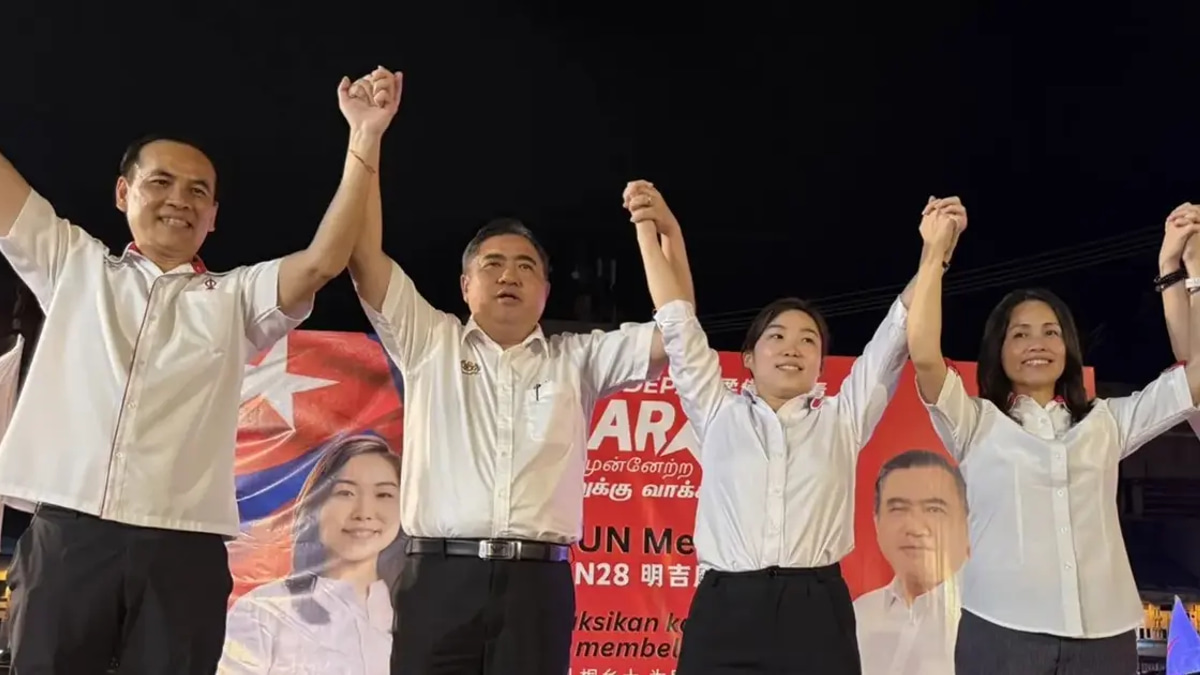
The Malaysian electorate appears to be gravitating towards political leaders who project steadiness and restraint rather than those who deploy incendiary language and sweeping promises, according to observations from Shahril Hamdan, who previously served as Umno's information chief. This assessment reflects a notable recalibration in what resonates with voters at a time when the nation continues to navigate economic uncertainty and political fragmentation across multiple levels of governance.
Shahril's commentary touches on a fundamental tension in contemporary Malaysian politics: the traditional appeal of charismatic, forceful rhetoric versus an apparent hunger for competent administration and predictable governance. Over the past decade, Malaysian voters have witnessed cycles of political upheaval driven partly by fiery campaigns and ambitious policy pronouncements. The observation that this approach may be losing currency suggests a possible maturing of voter preferences, at least among significant segments of the electorate concerned with institutional stability and tangible outcomes rather than rousing speeches.
The reference to leaders like Samsuri—presumably those known for composed and pragmatic approaches—underscores what political analysts across Southeast Asia have noted as a broader regional trend. In several neighbouring democracies, voters have shown growing scepticism towards populist messaging and theatrical political performances. This shift often emerges following periods of instability or when governance failures expose the gap between campaign rhetoric and administrative reality. Malaysian voters, having experienced multiple political transitions and policy reversals, may be applying similar lessons about the limitations of promises disconnected from implementable plans.
During election cycles, the contrast between different leadership styles becomes particularly acute. Fiery politicians often dominate media cycles and social media discourse through provocative statements, while more measured figures may struggle to break through the noise. Yet election results—particularly in recent local and state contests—have sometimes defied predictions based on social media engagement or traditional media coverage, suggesting that voting decisions rest on factors beyond rhetorical intensity. Shahril's observation aligns with this pattern: voters making actual decisions at the ballot box may prioritise different qualities than those they discuss online or in casual conversation.
The scepticism towards grand promises has a distinctly practical foundation in Malaysian experience. When large-scale policy commitments fail to materialise or prove economically unfeasible, trust in political institutions erodes. Voters who have seen infrastructure projects delayed, subsidies unexpectedly reduced, or promised investments evaporate develop more cautious expectations. This creates an opening for leaders who campaign on realistic, incremental improvements rather than transformational pledges—a reversal of the dynamics that dominated Malaysian politics during the reformasi era and subsequent cycles.
Economic pressures add another layer to this shift. Rising living costs, stagnant wages in certain sectors, and concerns about future job prospects make voters acutely sensitive to economic credibility. A leader projecting calm competence may be seen as more likely to navigate complex fiscal challenges than one whose rhetoric prioritises mobilisation over measurable policy. This calculation becomes particularly important when voters feel that their household finances are at stake, shifting focus away from symbolic political battles towards bread-and-butter governance.
The observation also carries implications for how different political parties strategise going forward. The Barisan Nasional, under which Umno operates, has traditionally relied on competence-based messaging, emphasising administrative track records and institutional stability. A voter realignment towards this messaging could theoretically benefit parties associated with established governance structures, though much depends on whether voters perceive such claims as credible given recent controversies and governance challenges. Conversely, opposition coalitions may need to sharpen their messaging to address economic anxieties directly rather than relying on aspirational rhetoric alone.
Regional considerations also matter. In the ASEAN context, political stability attracts investment and supports economic growth—factors that touch Malaysian voters' lives through job creation and economic opportunities. Neighbouring countries that have prioritised institutional predictability over political theatre have sometimes achieved better economic outcomes, a comparison not lost on voters assessing competing visions for Malaysia's future. Shahril's comments may thus reflect a growing voter awareness that leadership style directly affects economic prospects and institutional effectiveness.
The generational element deserves attention as well. Younger voters who came of age during periods of political instability may have different baseline expectations than their elders. If they have experienced policy reversals or administrative dysfunction firsthand, they may be particularly drawn to leaders promising steady, competent management over those offering transformational visions. This could reshape campaign strategies across major parties, forcing a shift away from the revolutionary rhetoric that energised certain cohorts during previous electoral cycles.
However, this trend should not be overstated. Significant portions of the Malaysian electorate remain responsive to passionate advocacy and will likely continue gravitating towards leaders who articulate their aspirations forcefully. The shift Shahril describes likely represents changes in the margins rather than a wholesale transformation of voter behaviour. Still, even marginal shifts can determine outcomes in competitive electoral contests, particularly in swing constituencies where turnout and persuasion determine results.
Looking ahead, political strategists will need to navigate this apparent preference for stability without appearing stale or disconnected from voter concerns. The challenge lies in communicating competent governance in ways that nonetheless inspire confidence and mobilise supporters. Leaders who can combine steadiness with forward momentum—who offer both credibility and vision—may find themselves best positioned in an electorate apparently tired of false choices between fiery rhetoric and substantive policy, seeking instead leaders who deliver both clarity of purpose and realistic implementation.

%22%2F%3E%3C%2Fpattern%3E%3C%2Fdefs%3E%3Crect%20width%3D%22100%25%22%20height%3D%22100%25%22%20fill%3D%22url(%23ph3j096g)%22%2F%3E%3Crect%20width%3D%22100%25%22%20height%3D%22100%25%22%20fill%3D%22url(%23ph3j096p)%22%2F%3E%3Ctext%20x%3D%2250%25%22%20y%3D%2250%25%22%20text-anchor%3D%22middle%22%20dominant-baseline%3D%22central%22%20fill%3D%22rgba(255%2C255%2C255%2C0.95)%22%20font-family%3D%22Georgia%2C%20'Times%20New%20Roman'%2C%20serif%22%20font-weight%3D%22700%22%20font-size%3D%22320%22%20letter-spacing%3D%22-0.02em%22%3EGRS%3C%2Ftext%3E%3C%2Fsvg%3E)