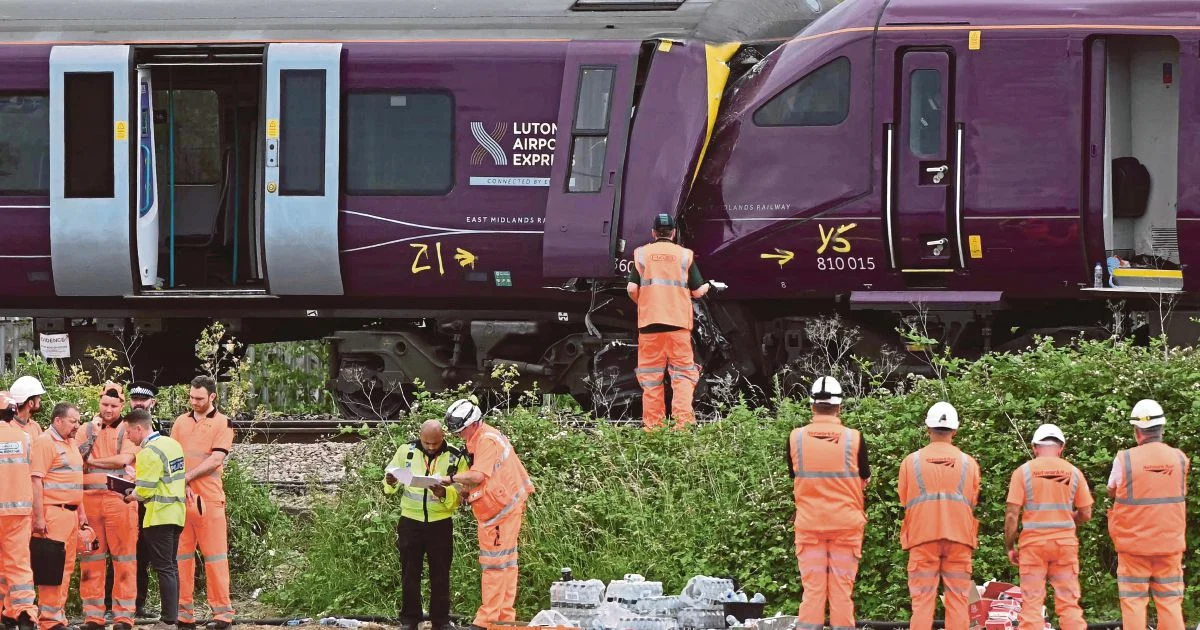
A collision between two trains in the Bedford area, north of London, has resulted in at least one fatality and left dozens injured, with emergency services continuing rescue and assessment operations on Saturday. The incident claimed the life of a driver, while 28 passengers and staff members were taken to hospital for treatment of injuries sustained in the impact. Among those hospitalised, nine individuals are receiving critical care in what authorities are treating as a major incident response.
The Rail Accident Investigation Branch and other UK safety authorities have begun detailed examinations into the collision's cause, focusing on signal systems, track conditions, weather factors, and driver actions leading up to the crash. Investigators will scrutinise communications logs, data from train control systems, and maintenance records to establish the sequence of events. The Bedford incident adds to ongoing concerns about rail safety in the United Kingdom, particularly given recent high-profile accidents and near-misses on busy commuter routes.
Emergency responders from local fire, ambulance, and police services mobilised rapidly to the scene, establishing triage stations and coordinating patient transfers to multiple hospitals across the region. The response highlighted both the effectiveness of established emergency protocols and the strain placed on National Health Service facilities managing mass casualty incidents. Hospital authorities activated major incident plans to accommodate the influx of casualties, with some patients requiring immediate surgical intervention for severe trauma.
The collision raises significant questions about modern rail infrastructure and oversight in the United Kingdom. While British railways operate within a heavily regulated framework with multiple safety layers, individual incidents demonstrate persistent vulnerabilities in the system. Investigators will examine whether automated protection systems functioned correctly and whether human factors contributed to the accident. Their findings will likely inform recommendations affecting rail operations across the country and potentially influence European safety standards.
For Malaysian readers familiar with Kuala Lumpur's Rapid Rail system and other regional rail networks, the incident underscores universal challenges in maintaining rail safety as networks age and passenger volumes increase. Southeast Asian rail authorities often look to European models for best practices, making the outcome of UK investigations relevant to transport safety discussions in Malaysia and throughout ASEAN. The incident serves as a reminder that even highly developed nations with sophisticated rail infrastructure continue grappling with safety management.
The broader implications extend to insurance, rail operator accountability, and public confidence in train travel. Following major incidents, railways typically face heightened scrutiny from regulators and the public, leading to temporary reductions in ridership as passengers reassess safety perceptions. This can impact rail operators' financial performance and investment plans, as companies incur costs from investigations, potential compensation claims, and remedial safety measures. The Bedford collision will likely trigger similar ripple effects across UK rail operators.
Local communities affected by the incident face substantial disruption as investigation teams secure and examine the collision site. Rail services in the Bedford area will require extended suspension for debris clearance, track assessment, and repair work. Commuters will be redirected to alternative routes and bus replacement services, highlighting the interconnected nature of modern transport networks and how single incidents cascade through broader mobility systems. Regional economic activity dependent on reliable rail connectivity faces temporary headwinds.
The investigation's timeline remains uncertain, though complex train accidents typically require weeks or months for comprehensive examination. Initial findings may emerge within days, but final reports determining root causes often take considerably longer. During this period, rail operators and regulators will implement interim safety measures to prevent recurrence, which may include altered signalling procedures, speed restrictions, or enhanced driver briefings on specific route sections.
The incident serves as a sobering reminder of rail transport's inherent risks despite technological safeguards. While statistics demonstrate that rail remains among the safest transport modes, fatal accidents capture public attention and trigger widespread examination of safety culture and regulatory effectiveness. Stakeholders including rail unions, operator management, and government authorities will face pressure to explain what happened and articulate confidence-restoring measures.
Investigators will ultimately seek to answer whether the collision resulted from human error, mechanical failure, environmental factors, or systemic oversight gaps. Each category demands different remedial responses. Equipment failure necessitates engineering redesigns; human error may require training modifications or procedural changes; environmental factors might require infrastructure adaptation; systemic gaps demand regulatory strengthening. The investigation's conclusions will shape rail safety policy and practice well beyond this single incident, influencing how the UK and other nations approach rail oversight and passenger protection.
%22%2F%3E%3C%2Fpattern%3E%3C%2Fdefs%3E%3Crect%20width%3D%22100%25%22%20height%3D%22100%25%22%20fill%3D%22url(%23ph4sxcmg)%22%2F%3E%3Crect%20width%3D%22100%25%22%20height%3D%22100%25%22%20fill%3D%22url(%23ph4sxcmp)%22%2F%3E%3Ctext%20x%3D%2250%25%22%20y%3D%2250%25%22%20text-anchor%3D%22middle%22%20dominant-baseline%3D%22central%22%20fill%3D%22rgba(255%2C255%2C255%2C0.95)%22%20font-family%3D%22Georgia%2C%20'Times%20New%20Roman'%2C%20serif%22%20font-weight%3D%22700%22%20font-size%3D%22320%22%20letter-spacing%3D%22-0.02em%22%3EMOH%3C%2Ftext%3E%3C%2Fsvg%3E)
%22%2F%3E%3C%2Fpattern%3E%3C%2Fdefs%3E%3Crect%20width%3D%22100%25%22%20height%3D%22100%25%22%20fill%3D%22url(%23phl2t5g)%22%2F%3E%3Crect%20width%3D%22100%25%22%20height%3D%22100%25%22%20fill%3D%22url(%23phl2t5p)%22%2F%3E%3Ctext%20x%3D%2250%25%22%20y%3D%2250%25%22%20text-anchor%3D%22middle%22%20dominant-baseline%3D%22central%22%20fill%3D%22rgba(255%2C255%2C255%2C0.95)%22%20font-family%3D%22Georgia%2C%20'Times%20New%20Roman'%2C%20serif%22%20font-weight%3D%22700%22%20font-size%3D%22272%22%20letter-spacing%3D%22-0.02em%22%3ETrump%3C%2Ftext%3E%3C%2Fsvg%3E)