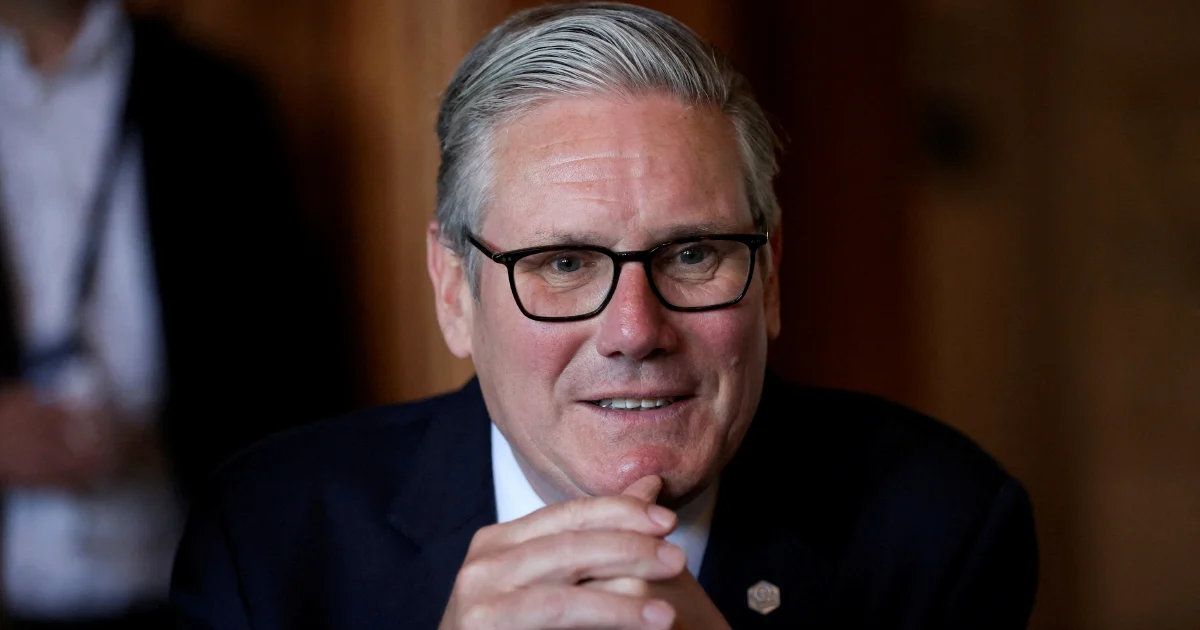
Political uncertainty has engulfed Britain's government as speculation swirled on Sunday about the future of Prime Minister Keir Starmer. The Observer newspaper published claims that Starmer was preparing to step down and would announce both his resignation and a timeline for transitioning power. However, officials close to the Prime Minister moved quickly to dismiss these reports, asserting that he remained fully engaged with his duties and showed no intention of departing from Number 10.
The conflicting narratives underscore the volatile nature of contemporary British politics, where leadership stability has become increasingly elusive. Since Labour's landslide election victory in July 2024, Starmer's administration has faced mounting challenges ranging from economic headwinds to internal party tensions. The emergence of resignation rumours, even if denied, signals the mounting pressure bearing down on the Prime Minister's office and reflects broader concerns about his government's direction.
This episode carries particular resonance for Malaysian observers tracking international political developments. Britain's frequent government upheaval contrasts sharply with the more stable institutional frameworks found in Malaysia and other Commonwealth nations. The rapid turnover of British leadership in recent years—five prime ministers in the past decade—illustrates how electoral mandates, however substantial, offer no guarantee of political longevity. Such instability can complicate bilateral relations and international coordination on matters ranging from trade to defence.
Government sources were emphatic in their pushback against the Observer's claims, emphasising Starmer's determination to remain at the helm and continue implementing Labour's policy agenda. This defensive posture suggests officials believed the resignation narrative posed a genuine threat to confidence in the administration. The speed with which Number 10 deployed its communications machinery to rebut the story indicates the seriousness with which the government treated the potential reputational damage.
The timing of such speculation raises questions about the state of morale within Labour ranks and the broader Westminster establishment. When credible media outlets begin reporting on potential resignations, even speculatively, it typically reflects underlying discontent or informal soundings among senior figures. The fact that the Observer felt sufficiently confident to publish such a story suggests its journalists had spoken with sources claiming direct knowledge of the Prime Minister's thinking.
For Malaysia and Southeast Asia, the broader lesson concerns the fragility of political positions even in established democracies. While Malaysian politics has its own complexities, including coalition arrangements and factional competition, British politics operates within a system that frequently produces leadership crises with little institutional stabilisation. The revolving door of Number 10 residents has made long-term policy planning problematic and complicated Britain's international standing.
Domestic pressures within Starmer's government have been mounting steadily. Labour backbench MPs have grown restless over various policy decisions, while external factors including economic slowdown concerns and international security challenges have conspired to create a difficult governing environment. These pressures, though standard in political life, accumulate over time and can suddenly manifest as resignation speculation when confidence erodes sufficiently.
The government's denial of the resignation claims carries standard rhetorical elements used when leaders face credibility challenges. Officials emphasised Starmer's focus on governmental responsibilities, a formulation designed to project stability and purposefulness. Such statements, while often effective in the short term, cannot entirely dispel questions once they have been raised in major media outlets. The psychological impact of resignation speculation, even when officially denied, can subtly shift perceptions among MPs, media commentators, and the general public.
Britain's political system lacks the kind of constitutional certainties that might protect a Prime Minister once serious resignation speculation emerges. Unlike some Commonwealth jurisdictions, where established protocols govern leadership transitions, British politics operates through convention and precedent. This flexibility has historically served the system well, but in periods of instability it can paradoxically increase uncertainty. The absence of clear rules governing transitions can mean that rumours take on greater significance than they might in more formally structured systems.
Looking ahead, the immediate question concerns whether these resignation claims represent serious insider knowledge or merely speculative journalism. The government's forceful response suggests officials took the threat seriously enough to mobilise rapid communications responses. Whether such denials prove sufficient to quash further speculation will depend on how events unfold in coming days and whether additional corroborating information emerges from Westminster sources.
For international observers including those in Southeast Asia monitoring British politics, this episode reinforces concerns about Westminster's recent instability. Effective government requires sustained political capital and public confidence, commodities that become increasingly scarce when leadership questions dominate headlines. The precise outcome of this particular controversy remains to be seen, but it reflects deeper patterns of governance challenges that have characterised British politics throughout the recent period.
%22%2F%3E%3C%2Fpattern%3E%3C%2Fdefs%3E%3Crect%20width%3D%22100%25%22%20height%3D%22100%25%22%20fill%3D%22url(%23ph4sxcmg)%22%2F%3E%3Crect%20width%3D%22100%25%22%20height%3D%22100%25%22%20fill%3D%22url(%23ph4sxcmp)%22%2F%3E%3Ctext%20x%3D%2250%25%22%20y%3D%2250%25%22%20text-anchor%3D%22middle%22%20dominant-baseline%3D%22central%22%20fill%3D%22rgba(255%2C255%2C255%2C0.95)%22%20font-family%3D%22Georgia%2C%20'Times%20New%20Roman'%2C%20serif%22%20font-weight%3D%22700%22%20font-size%3D%22320%22%20letter-spacing%3D%22-0.02em%22%3EMOH%3C%2Ftext%3E%3C%2Fsvg%3E)
%22%2F%3E%3C%2Fpattern%3E%3C%2Fdefs%3E%3Crect%20width%3D%22100%25%22%20height%3D%22100%25%22%20fill%3D%22url(%23phl2t5g)%22%2F%3E%3Crect%20width%3D%22100%25%22%20height%3D%22100%25%22%20fill%3D%22url(%23phl2t5p)%22%2F%3E%3Ctext%20x%3D%2250%25%22%20y%3D%2250%25%22%20text-anchor%3D%22middle%22%20dominant-baseline%3D%22central%22%20fill%3D%22rgba(255%2C255%2C255%2C0.95)%22%20font-family%3D%22Georgia%2C%20'Times%20New%20Roman'%2C%20serif%22%20font-weight%3D%22700%22%20font-size%3D%22272%22%20letter-spacing%3D%22-0.02em%22%3ETrump%3C%2Ftext%3E%3C%2Fsvg%3E)