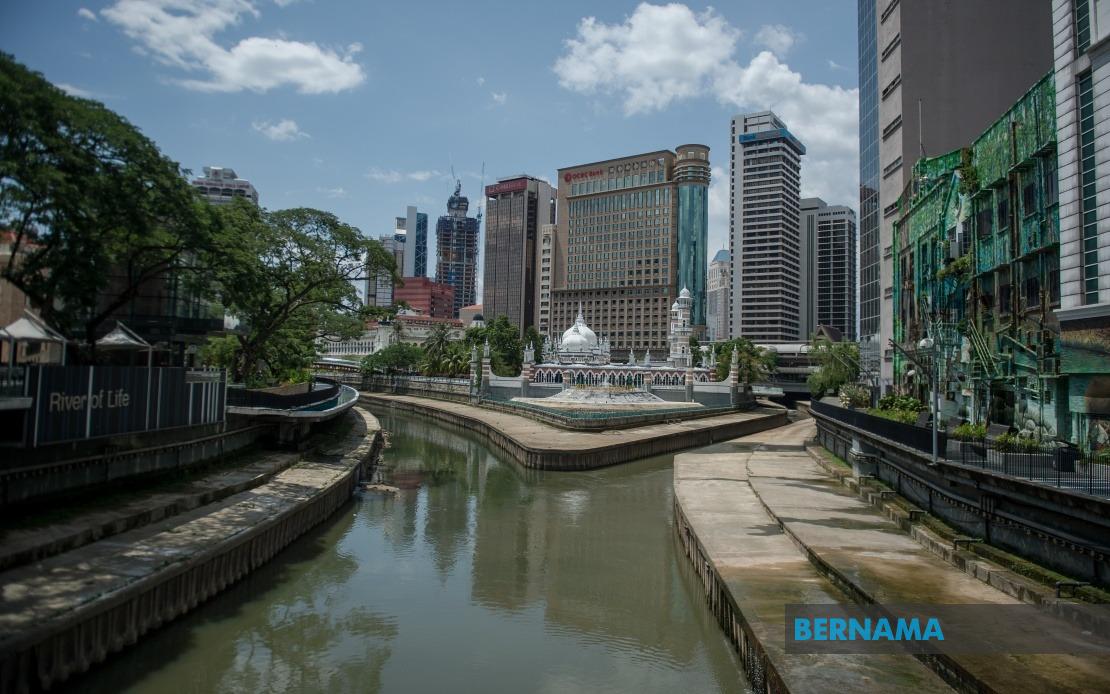
Selangor's efforts to mitigate river flooding have yielded substantial progress, with Sungai Klang's capacity jumping dramatically from less than five percent to 22 percent, marking a significant milestone in flood management for the state's most critical waterway. The achievement comes as part of an ambitious long-term infrastructure initiative designed to address the recurrent inundation problems that have plagued residential and commercial zones throughout the Klang Valley, particularly following devastating floods that struck the region in 2021.
The expansion in river capacity represents the tangible outcome of intensive dredging and riverbank rehabilitation works now in their third year of execution. Landasan Lumayan Sdn Bhd, the entity overseeing these operations, has mobilised substantial resources to expand the river's dimensions and improve its water-conveyance characteristics. Since 2017, the project team has extracted approximately 1.2 million cubic metres of accumulated sediment and riverbed material, fundamentally altering the geometry of the waterway to accommodate larger volumes during heavy rainfall events. This removal of silted material has been particularly critical in vulnerable zones such as Taman Sri Muda, where overflow conditions previously triggered widespread property damage and displacement.
The 56-kilometre river improvement scheme now stands at 68 percent completion, positioning it for substantial advancement over the coming months. Syaiful Azmen Nordin, the managing director of Landasan Lumayan Sdn Bhd, indicated during briefings in Shah Alam that the initiative targets a final capacity increase to 40 percent upon project conclusion towards the end of next year. This phased approach allows for systematic assessment of effectiveness and integration with complementary drainage infrastructure already operational throughout the metropolitan area. The federal government has committed to undertaking improvements on the stretch extending from Shah Alam to Mid Valley, ensuring continuity of capacity enhancement across the entire system.
Beyond physical excavation and widening, the initiative has incorporated systematic riverine sanitation to restore hydrological efficiency. Annual waste removal programmes have drawn more than 98,000 tonnes of discarded material from the watercourse since 2017, requiring an investment of RM19.6 million in cleaning operations and public awareness initiatives. This dual approach—combining infrastructure expansion with environmental remediation—has produced measurable improvements in water quality metrics. Classifications have shifted from Class 5, the lowest rating indicating severely impaired conditions, to Classes 3 and 4, reflecting restoration of aquatic health and reduced contamination levels.
The success in reducing annual waste accumulation demonstrates the interdependence of physical works and behavioural change. Quantities of discarded material entering the river system have declined from approximately 16,000 tonnes annually to between 5,000 and 6,000 tonnes, a reduction exceeding two-thirds that underscores improved community stewardship and regulatory enforcement. These outcomes suggest that sustained public engagement campaigns have achieved meaningful traction in shifting attitudes toward riverine ecosystems. For urban planners and environmental managers across Southeast Asia, Selangor's experience illustrates how technological interventions become substantially more effective when paired with grassroots participation and education.
Recent flooding incidents in Selangor warrant clarification within this context of river-capacity improvements. Syaiful Azmen differentiated between overflow flooding originating from Sungai Klang proper and inundation resulting from inadequate internal drainage infrastructure within residential and commercial precincts. The distinction proves crucial for understanding the layered complexity of urban flood management. While expanding the river's capacity addresses one critical vulnerability, localised flooding often stems from insufficient stormwater collection networks, blocked culverts, and overwhelmed internal drainage systems that cannot effectively evacuate rainfall before saturation occurs. This recognition has informed complementary initiatives addressing drainage deficiencies in critical areas.
The project's progression reflects Selangor's sustained commitment to addressing flood vulnerability through evidence-based engineering. The state has recognised that single interventions prove insufficient for managing the intersection of climate variability, urban intensification, and legacy infrastructure limitations. By simultaneously expanding river capacity, removing accumulated sediment, and improving water quality, authorities have adopted a comprehensive framework that acknowledges multiple causative factors. The emphasis on measurable progress—such as the 22 percent capacity increase and waste reduction metrics—provides accountability mechanisms and allows policymakers to adjust strategies based on demonstrated outcomes.
For Malaysian readers monitoring these developments, the implications extend beyond Selangor's administrative boundaries. The Klang Valley represents Malaysia's most economically significant metropolitan region, hosting critical financial institutions, manufacturing facilities, and transport infrastructure. Flood disruption in this zone generates cascading economic consequences affecting the broader national economy. Sustained reduction in inundation frequency and severity therefore serves economic stabilisation objectives alongside public safety goals. Insurance markets, property valuations, and investment decisions increasingly incorporate flood risk assessments, making verifiable capacity improvements valuable signals to financial stakeholders and international investors evaluating Malaysia's infrastructure resilience.
The integration of scientific measurement and public communication represents another noteworthy dimension of Selangor's approach. By publicly disseminating specific metrics—the percentage capacity increase, waste tonnages removed, water quality classifications—authorities have established transparent performance standards against which future progress can be evaluated. This transparency contrasts with historical approaches where flood management efforts proceeded with minimal public visibility or accountability reporting. The establishment of clear targets, such as the eventual 40 percent capacity goal, provides measurable benchmarks against which subsequent administrations can be evaluated, creating institutional continuity across political cycles.
Looking forward, the project's completion trajectory coinciding with the federal government's complementary works on the Shah Alam to Mid Valley section suggests a coordinated approach to systematic upgrading. This coordination across institutional and jurisdictional boundaries represents a meaningful achievement in an environment where overlapping governance structures sometimes impede integrated planning. The phased completion schedule allows for operational experience with initial segments to inform methodology refinements on subsequent sections, incorporating learning-by-doing principles that often enhance large-scale infrastructure effectiveness.
The broader context of climate adaptation cannot be overlooked in assessing these initiatives. Malaysia's position in equatorial and tropical zones exposes it to intensifying precipitation patterns and increasingly extreme weather events. Flood mitigation investments in critical economic zones therefore constitute essential components of national climate resilience strategies. Selangor's experience with large-scale river improvement and drainage enhancement provides replicable models for other Malaysian states confronting similar challenges. The documentation of outcomes—both engineering metrics and cost-benefit analyses—enables other jurisdictions to adapt successful approaches to their distinctive geographical and infrastructural circumstances.
As the project advances toward completion, sustained attention to maintenance protocols will prove essential for preserving the substantial investments already deployed. Dredged channels can re-silt if sediment input remains uncontrolled; riverbanks require ongoing monitoring for erosion and stability; waste management systems must function continuously to prevent reaccumulation of debris. The transition from construction and improvement phases to long-term operational management presents distinct challenges requiring sustained funding, technical expertise, and institutional coordination. For stakeholders across Malaysia's urban landscape, the Sungai Klang experience underscores that flood risk reduction constitutes not a destination but an ongoing process requiring perpetual vigilance and adaptive management.

