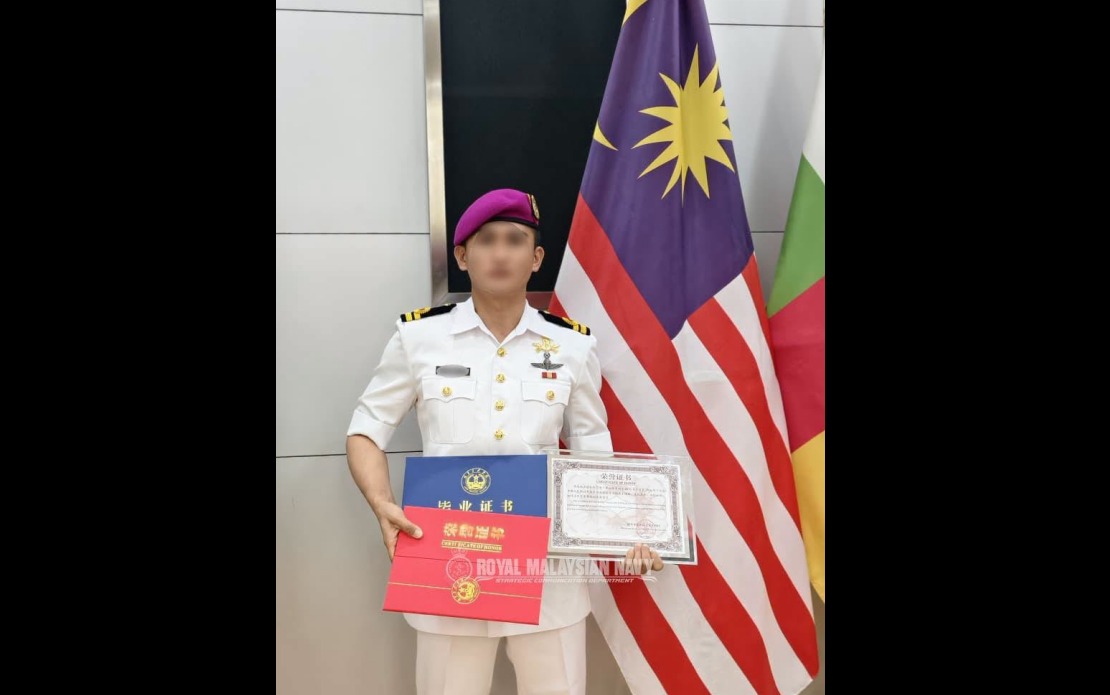
The Sultan of Selangor, Sultan Sharafuddin Idris Shah, has publicly acknowledged the outstanding performance of a Royal Malaysian Navy commando who distinguished himself at an elite international military training programme in China. Speaking in his capacity as Captain-in-Chief of the Royal Malaysian Navy (RMN), the Sultan extended his congratulations to the PASKAL officer for securing the Excellent Student Award during the demanding Sniper Infantry Course conducted at the PLA Infantry Academy's Shijiazhuang Campus in Hebei Province.
The five-month course, which ran from March 1 to July 31, represented a rigorous testing ground where the Malaysian serviceman emerged as the standout performer among a highly competitive cohort. His achievement becomes particularly significant when considering the international scope of the programme—the officer prevailed against 130 other participants representing more than two dozen nations, each presumably selected for demonstrated excellence within their respective military establishments. This competitive environment underscores the calibre of training the RMN has access to through regional and international military partnerships.
Beyond the primary Excellent Student Award, the PASKAL member garnered additional recognition that testifies to his comprehensive mastery of the curriculum. He received a Certificate of Honors recognising him as an Excellent Cadre, alongside Silver Badge Medals awarded on the basis of his performance across the course assessments. The layered recognition system suggests that the training institution assessed competency across multiple dimensions—likely including technical marksmanship, tactical application, physical conditioning, and situational decision-making under pressure.
Sultan Sharafuddin's decision to formally acknowledge this achievement through an official statement reflects the significance Malaysia places on military excellence and international cooperation in defence matters. The statement framed the accomplishment not merely as an individual success but as a source of collective national pride, suggesting that the achievement carries broader implications for Malaysia's standing within the international military community and the regional security architecture.
The Sultan emphasised that the officer's performance would serve as motivation and exemplar for other members of PASKAL and the broader RMN personnel. This pedagogical dimension is worth examining—in military organisations, peer examples of excellence often drive institutional culture more effectively than directives. A fellow Malaysian commando achieving top international recognition against global competition provides tangible proof that rigorous training and discipline can produce world-class outcomes, potentially elevating aspirations and performance standards throughout the special operations community.
PASKAL, the RMN's special forces unit, represents the apex of Malaysian naval capability for operations requiring exceptional skill, precision, and tactical sophistication. Sniper training sits at the intersection of technical mastery and psychological discipline, demanding capabilities far beyond standard infantry proficiency. The selection of a PASKAL member for this specific advanced course reflects deliberate institutional investment in maintaining cutting-edge capability within Malaysia's military special operations establishment, ensuring the unit remains contemporary with international best practices.
The choice of a Chinese military academy for advanced sniper instruction also illuminates Malaysia's evolving defence partnerships. The People's Liberation Army's Infantry Academy represents one of Asia's premier military training institutions, with the Shijiazhuang campus specifically renowned for advanced infantry and commando training. Malaysia's participation in such programmes alongside forces from numerous other countries indicates both the internationalised nature of contemporary military training and Malaysia's pragmatic approach to sourcing expertise irrespective of geopolitical alignment.
RMN Chief Admiral Tan Sri Dr Zulhelmy Ithnain received separate commendation from the Sultan for overseeing an organisation that produces personnel capable of such high-level international performance. This acknowledges the leadership dimension essential to fostering an institutional culture where personnel pursue excellence and are equipped to compete at global standards. Military leadership effectiveness is partly measured by the readiness of personnel to undertake demanding training and the institutional systems supporting that development.
For Malaysian defence observers, this achievement offers several takeaways regarding RMN capabilities and strategic positioning. It demonstrates that Malaysia maintains access to advanced military training at world-class facilities, that the institution possesses personnel of sufficient calibre to succeed in highly competitive international environments, and that there exists sustained commitment to continuous professional development within the special operations community. Each element contributes to overall maritime security capacity within a region increasingly focused on naval deterrence and professional military capability.
The broader context of international military cooperation also merits consideration. That Malaysia's PASKAL personnel trained alongside counterparts from over 24 nations suggests a level of international confidence and interoperability building that strengthens the region's collective security arrangements. Shared training experiences create professional networks, mutual understanding of operational methodologies, and informal channels of military-to-military communication that often prove invaluable during regional security challenges or coordinated operations.
The achievement also reflects investment in specialised maritime capabilities at a time when Southeast Asian security concerns increasingly centre on maritime domain awareness, counter-terrorism operations in territorial waters, and protection of vital sea lanes. PASKAL's specialised sniper capabilities, honed through international training, directly support these operational requirements, whether deployed for hostage rescue operations, maritime counter-terrorism, or protection of offshore infrastructure.
Sultan Sharafuddin's public commendation serves multiple functions beyond simple acknowledgment—it signals institutional recognition of excellence, reinforces the importance of professional military development, and demonstrates leadership engagement with defence matters. For the individual officer concerned, the recognition from the RMN's constitutional commander-in-chief represents the highest domestic validation possible, whereas for the military institution, it provides external affirmation of its quality and capability.

