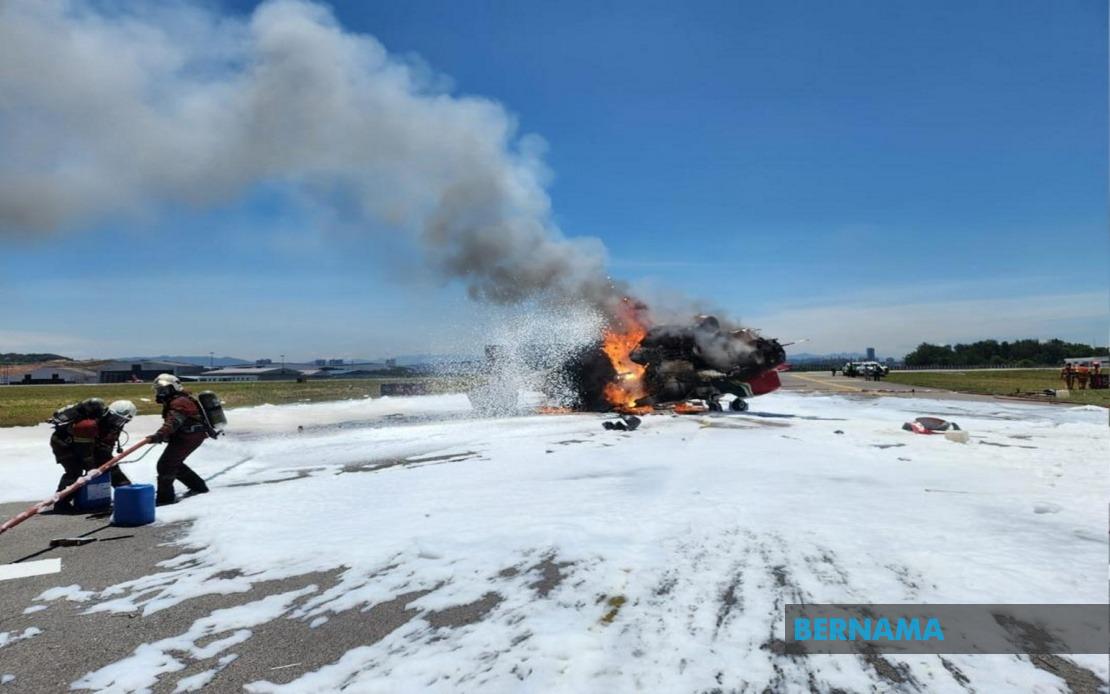
Sultan Abdul Aziz Shah Airport in Subang has successfully resumed runway operations after a brief but significant disruption caused by a helicopter fire during routine maintenance work. The Malaysian Civil Aviation Authority (CAAM) announced that air traffic was cleared to resume at 2.57 pm, restoring normal flight operations at the facility that serves the Klang Valley region.
The incident unfolded earlier on August 15 when a Kamov KaV-32S helicopter, registered to a Ukraine-based company, caught fire while undergoing an engine run-up test at Taxiway Victor. The explosion occurred at 12.28 pm as four Ukrainian crew members—comprising the pilot, co-pilot, and two additional personnel—were conducting routine maintenance procedures as part of the aircraft's scheduled servicing. One crew member sustained minor injuries from debris scattered by the blast, though the situation could have proven far more serious given the aircraft's location within an active airport environment.
CAAM Chief Executive Officer Capt Datuk Norazman Mahmud confirmed the closure was a necessary precautionary measure to ensure passenger safety while emergency services addressed the situation. Ground engine run-up tests, while routine in helicopter maintenance, involve activating engines at various power levels to verify system performance—a procedure that carries inherent risks, particularly when conducted on aging or complex machinery. The Kamov KaV-32S is a heavy-lift helicopter primarily used for specialized operations including search and rescue, making its presence at the airport understandable, though the maintenance incident highlights potential hazards even within established safety protocols.
The runway closure, while temporary, created noticeable ripple effects across the airport's operations schedule. Eight inbound flights were diverted to alternative airports during the approximate two-and-a-half-hour suspension, while three outbound services experienced scheduling delays. For passengers arriving into the Klang Valley region, diversions to airports such as Kuala Lumpur International Airport would have extended journey times and inconvenience, underscoring how concentrated Malaysia's aviation infrastructure remains around the Subang and KL International facilities.
CAAM immediately advised all passengers to liaise directly with their respective airlines for real-time updates, recognizing that flight information systems would require time to reflect revised scheduling. The airport's information display boards subsequently showed adjusted times for multiple services, enabling travelers and ground staff to coordinate their movements accordingly. This communication protocol reflects established practices for managing aviation incidents without causing unnecessary panic or confusion across the terminal.
Sultan Abdul Aziz Shah Airport, historically significant as Malaysia's original major commercial aviation hub before the opening of Kuala Lumpur International Airport, continues to serve as a vital secondary facility handling regional and general aviation traffic. The incident at Subang demonstrates both the regulatory vigilance maintained by Malaysian aviation authorities and the ongoing importance of rigorous safety procedures, even for routine maintenance activities. CAAM's swift response in temporarily closing operations and subsequent reopening showcases the coordination required between airport management, civil aviation regulators, and emergency response teams.
The involvement of a Ukrainian-registered aircraft conducting maintenance at the facility reflects Malaysia's position within global aviation networks, where foreign-registered helicopters and fixed-wing aircraft regularly visit domestic airports for servicing and operational purposes. This internationalization of aviation maintenance introduces diverse maintenance protocols and equipment designs that must comply with Malaysian regulations regardless of the aircraft's origin. The incident raises questions about standardization and oversight of maintenance procedures, particularly for specialized heavy-lift aircraft operated by international companies.
While the injury toll remained minimal, the potential consequences of such incidents warrant ongoing scrutiny. Ground-based accidents at airports involving aircraft undergoing maintenance can jeopardize not only the crew directly involved but also airport personnel, service vehicles, and nearby infrastructure. The rapid containment and emergency response demonstrated at Sultan Abdul Aziz Shah Airport reflects training and preparedness investments that Malaysian authorities have prioritized, ensuring that when incidents occur, their impact remains limited.
For the aviation sector in Malaysia, incidents such as this serve as operational reminders of the importance of adherence to safety protocols, maintenance certification, and equipment condition monitoring. Airlines and maintenance contractors operating at domestic facilities must maintain vigilance in implementing international standards while respecting local regulatory frameworks. The successful resolution of the Subang incident, with minimal injuries and prompt runway restoration, underscores the resilience and operational competency of Malaysia's aviation infrastructure despite its aging facilities at certain locations.

