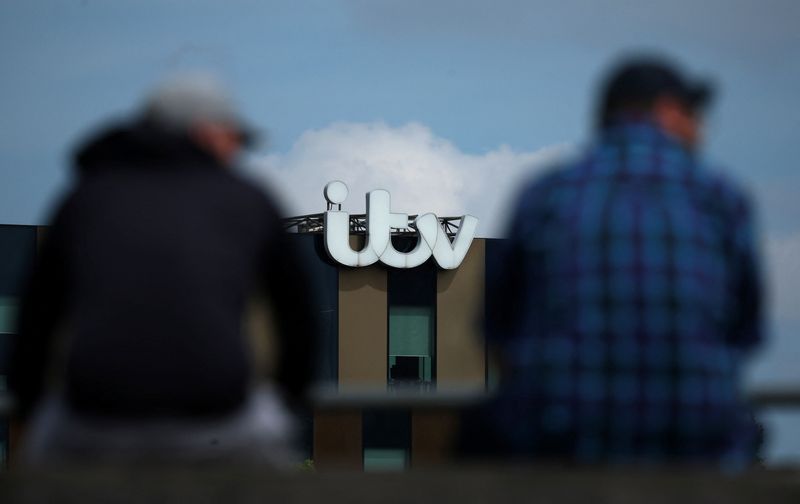
Sky, owned by American cable giant Comcast, has announced its acquisition of ITV's television channels and streaming platform in a deal valued at £1.6 billion, equivalent to approximately $2.13 billion. The transaction, confirmed on Monday, represents a landmark moment in British broadcasting history, bringing together two of the United Kingdom's most established media companies. Sky Chief Executive Dana Strong characterised the acquisition as a defining turning point, signalling the profound implications for the industry and the competitive dynamics of British media moving forward.
The merger reflects the dramatic transformation gripping traditional television globally. For decades, such a combination would have faced insurmountable regulatory obstacles, viewed as an unacceptable concentration of market power. However, the relentless rise of streaming platforms including Netflix, Amazon Prime Video, and Disney+, alongside the explosive growth of YouTube, has fundamentally altered the competitive landscape. Younger audiences, particularly those aged 16 to 24, have migrated en masse away from traditional television, compelling legacy broadcasters to seek scale and resources to remain viable competitors. This shift has redrawn the boundaries of what regulators might consider acceptable in the media sector, as the threat from international streaming giants increasingly overshadows concerns about domestic consolidation.
The combined entity will command an extraordinary position within British television, controlling more than 70 percent of the UK's television advertising market, according to analysts tracking the transaction. This dominance encompasses not only ITV's own advertising inventory but also third-party contracts, including ad sales for Paramount-owned Channel 5. Such concentration presents obvious regulatory challenges, and Sky may be compelled to divest certain advertising contracts to obtain approval from competition authorities. The merged company will operate across more than 20 million British households, creating a behemoth capable of competing with international streaming services that have far greater financial resources and subscriber bases.
Government approach to media consolidation has shifted noticeably under the current administration. Culture Secretary Lisa Nandy recently signalled her willingness to intervene in major media transactions, publicly stating she could involve herself in the proposed Paramount-Warner merger. Simultaneously, the government in 2025 has instructed regulators to prioritise conditions fostering growth and investment, a directive that may ease the path for transactions that would previously have encountered serious opposition. This recalibration reflects recognition that British media companies require greater scale to survive in an increasingly globalised marketplace dominated by technology giants and international streamers.
Sky itself carries significant heritage in British media, having been founded by Rupert Murdoch in 1989 and remaining synonymous with the Murdoch family for decades until its sale to Comcast in 2018. The American telecommunications company's decision to acquire ITV's broadcasting operations signals confidence that bundling traditional television assets with streaming distribution can create a sustainable competitor in an industry undergoing radical restructuring. Comcast itself announced plans in June to separate its media holdings, including NBCUniversal and Sky, from its cable operations, reflecting intense pressure from streaming rivals reshaping corporate priorities across the sector.
ITV has endured considerable challenges in recent years, struggling against a deteriorating advertising market and shifting consumer preferences. The company's share price has declined 36 percent over the preceding five years, reflecting investor concerns about the viability of traditional commercial broadcasting. Monday's announcement saw ITV shares rise 0.5 percent to 82 pence, suggesting markets view the transaction as a preferable outcome to remaining independent. The acquisition provides ITV with capital injection and operational integration that the company would struggle to achieve alone.
The transaction structure reveals the complexity of untangling two large media operations. ITV will receive £1.2 billion in immediate cash payment, with an additional earn-out arrangement potentially delivering up to £200 million contingent on advertising performance during the 2027 financial year. Critically, ITV Studios, the company's production arm responsible for generating acclaimed programming including Love Island and Coronation Street, will continue operating as a standalone business. This arrangement preserves what many analysts consider ITV's most valuable asset—its capacity to create content for the merged Sky-ITV entity, rival broadcasters, and streaming platforms globally. The acquisition of Love Productions, creator of The Great British Bake Off, will augment ITV's production capabilities within the remaining production business.
The merged company has committed to substantial investment in British content, pledging a minimum expenditure of £2.1 billion across the financial years 2028 through 2032. Strong emphasised that ITV will retain its status as a public service broadcaster central to British cultural life, language designed to address regulatory and political concerns about the preservation of public interest obligations. The combination aims to deliver what Sky describes as outstanding British programming, leveraging the combined resources of both organisations to produce content competitive with international streaming services that increasingly dominate entertainment consumption.
For Malaysia and Southeast Asia, this transaction demonstrates the accelerating consolidation occurring within mature television markets as traditional broadcasters confront existential challenges from streaming competition. The deal illustrates how regulatory frameworks are gradually adapting to permit greater domestic consolidation, accepting concentrated market power as the necessary price for maintaining viable competitors against global technology giants. Regional media companies across Southeast Asia will monitor this transaction's regulatory approval closely, seeking signals about whether similar combinations might become permissible in their own jurisdictions. The Sky-ITV merger suggests a future where traditional television operators must achieve substantial scale through consolidation or risk irrelevance, a dynamic that will increasingly shape strategic calculations across Asian media markets experiencing similar audience migration toward streaming platforms and digital content distribution.

