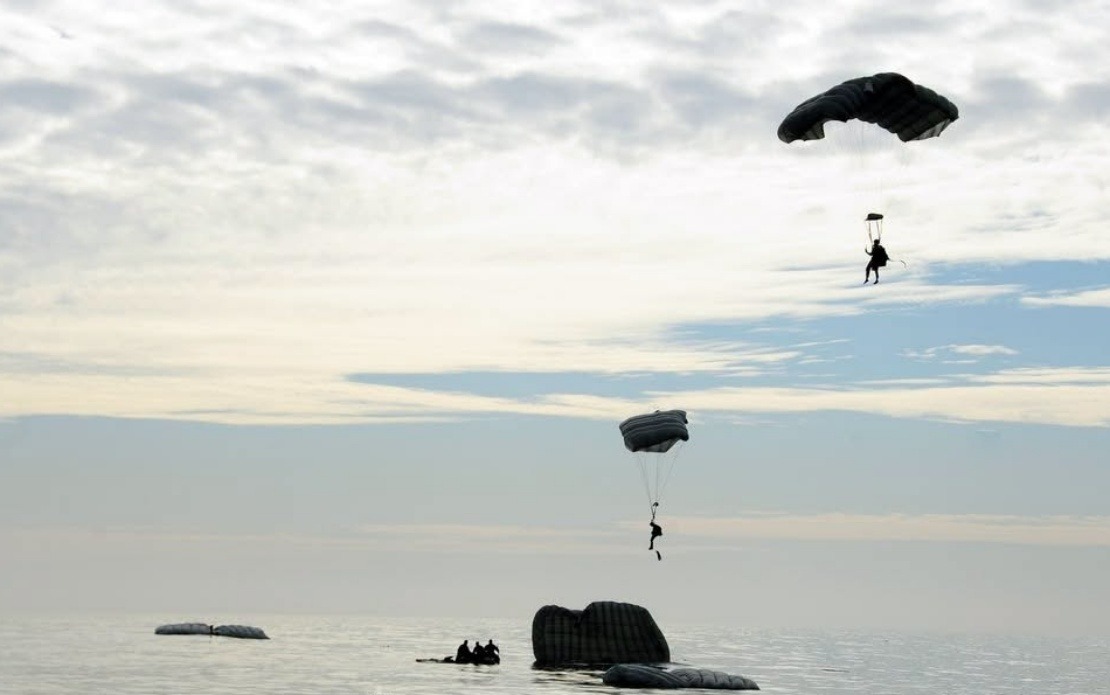
The Royal Malaysian Navy has confirmed that all six members of its elite Naval Special Warfare Forces recovered safely on Tuesday after an unexpected drift incident during a parachute training operation in the South China Sea. The personnel had been conducting a free-fall parachuting exercise when rapid shifts in atmospheric conditions significantly reduced visibility, leading them to deviate from their intended touchdown location. A Malaysian Navy vessel located and retrieved the six members from the water, bringing the concerning situation to a successful conclusion with no reported injuries or complications.
Military authorities highlighted that the incident underscores the unpredictable nature of advanced tactical training, where environmental factors can rapidly shift mission parameters. The South China Sea region is known for sudden weather volatility, particularly during monsoon transitions, and personnel operating in such conditions must maintain heightened situational awareness. That all six members were recovered promptly reflects the Navy's robust protocols for monitoring exercises in open waters and maintaining rapid-response capabilities.
The RMN's statement reframed the episode as a valuable validation of PASKAL's training methodology rather than a failure or setback. Military officials stressed that the unit's emphasis on continuous, realistic preparation has equipped operators with the mental fortitude and practical skills needed to manage unforeseen complications. Survival in hostile or degraded conditions ranks among the most critical competencies for special operations forces, where missions often occur in remote, challenging environments with minimal external support.
PASKAL, Malaysia's premier special operations maritime unit, maintains one of the region's most demanding training regimens. The force is tasked with securing Malaysia's vast maritime territory, countering terrorism, and conducting reconnaissance missions across disputed waters and exclusive economic zones. Members undergo grueling selection and continuation training that tests physical endurance, technical proficiency, and psychological resilience. Incidents such as this, when managed correctly, provide real-world validation of preparation standards and identify potential gaps in protocols or equipment performance.
The Navy emphasized that weathering such challenges forms an integral component of the operational readiness framework. Personnel are trained to remain calm when separated from primary teams, to employ survival equipment effectively, and to signal for rescue using established protocols. The rapid response and successful recovery suggest that supporting elements monitoring the exercise responded according to established procedures and that communication systems functioned effectively even during adverse conditions.
From a strategic perspective, incidents involving special forces training carry significance for broader maritime security considerations in Southeast Asia. Malaysia maintains responsibility for patrolling and defending waters spanning the South China Sea, Straits of Malacca, and surrounding zones. Ensuring that elite units remain combat-effective while managing safety risks requires careful balancing of training intensity with personnel welfare. The Navy's statement indicated this equilibrium remains central to their operational doctrine.
The incident also reflects wider regional challenges regarding training in contested waters. Several Southeast Asian nations conduct military exercises in zones overlapping with competing territorial claims or where weather patterns present inherent dangers. Malaysia, like neighbouring countries, must invest substantially in rescue capabilities, communication systems, and contingency planning to support personnel operating in these environments. The successful resolution of this incident demonstrates competency in at least one critical dimension of that infrastructure.
PASKAL's motto, "Sentiasa yang Terbaik" (Always the Best), encapsulates an ethos demanding continuous improvement and uncompromising standards. The Navy's framing of this incident as consistent with that philosophy suggests institutional confidence in the unit's training culture and personnel calibre. Military organizations often use such framing to reassure both personnel and the public that setbacks, when managed effectively, strengthen rather than undermine operational capability.
Looking forward, the episode will likely generate internal reviews and potential refinements to parachute exercise protocols. Meteorological forecasting, visibility thresholds for launching operations, and recovery positioning might all receive scrutiny. Such iterative improvements represent how professional militaries transform incidents into enhanced safety and operational procedures. The South China Sea's unpredictable conditions mean that Malaysian special forces must continuously adapt their approaches to manage environmental variables while maintaining training effectiveness.
The broader narrative here extends beyond immediate personnel recovery to encompass Malaysia's commitment to maintaining a capable maritime security posture. As great power competition intensifies in Southeast Asian waters and transnational maritime threats persist, units such as PASKAL occupy essential roles. Public confidence in their readiness, combined with rigorous training that acknowledges and mitigates real-world risks, remains foundational to national security strategy. This incident, despite its unplanned nature, ultimately reinforced rather than compromised that confidence.

