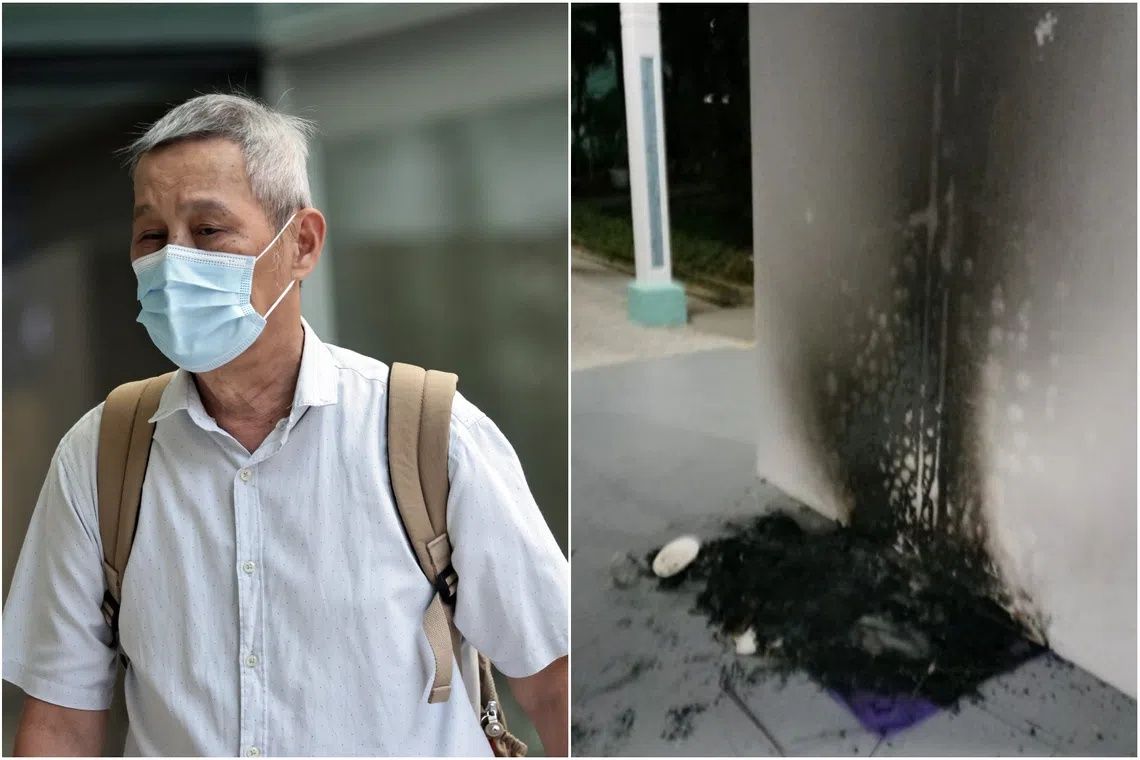
A dispute over community cat shelters has resulted in jail time for a Bukit Batok resident who repeatedly set fire to the cardboard structures in frustration. Koh Teng Boo, 68, was sentenced on Tuesday to three months' imprisonment after pleading guilty to committing mischief by fire, a case that underscores the tensions that can emerge in densely populated neighbourhoods where different residents hold sharply conflicting views about animal welfare practices.
The cardboard cat houses, which had been constructed to provide shelter and sustenance for stray cats in the area, appeared around a pavilion and void deck near Koh's residence at Bukit Batok East Avenue 4 in September 2025. The structures were provisioned with food and water to support the community cats. However, Koh viewed their presence as problematic, believing they created hygiene issues and attracted unwanted pests and birds to the neighbourhood. He initially approached his Member of Parliament with his concerns rather than taking direct action against the shelters.
When Koh observed that no visible steps had been taken to address his grievances following his parliamentary representations, his frustration escalated into criminal conduct. In October 2025, he threw three cat houses into an incense burner bin and ignited them, deliberately destroying property intended to benefit stray animals. The incident did not deter the continued placement of similar structures, and authorities noted that additional cat houses appeared around his block shortly after this initial fire.
Despite the earlier incident, Koh returned to his MP in mid-November with renewed complaints, emphasizing that while he held no personal animosity toward cats themselves, the practice of maintaining permanent feeding stations struck him as unhygienic and unsustainable. He pointed to evidence that residents were discarding litter into the cat houses, further compounding his concerns about sanitation and neighbourhood cleanliness. These rational-sounding objections masked an increasingly volatile disposition.
On the night of November 19, after consuming alcohol, Koh again walked past the cat shelters on his way home. Rather than lodge another complaint or seek further intervention through official channels, he produced a lighter and deliberately set fire to one of the cardboard structures, then departed the scene without ensuring the fire was properly extinguished. The investigation could not establish when or how this particular blaze was eventually put out. Undeterred and seemingly more emboldened, Koh struck again the following morning, igniting a second cat house. This time, two nearby pedestrians noticed the flames and managed to extinguish the fire, preventing further escalation.
The rapid response of these unnamed members of the public likely prevented the incident from becoming more serious. Koh was arrested later that day following his second arson attack. The Deputy Public Prosecutor, Stephen Yeo, presented evidence showing that the Jurong-Clementi-Bukit Batok Town Council incurred S$913 in repairs to the flooring and walls adjacent to the burnt cat houses. In a mitigating gesture, Koh made full restitution to the town council, which may have influenced the sentencing decision.
The three-month jail term handed down on Tuesday sits well below the statutory maximum for mischief by fire, which carries a potential prison sentence of up to seven years and financial penalties. The comparatively lenient outcome likely reflects Koh's guilty plea, his age, his apparent lack of prior serious criminal history, and his swift financial compensation to repair the damage. However, the custodial sentence still represents a significant consequence for actions driven by what Koh framed as legitimate neighbourhood concerns.
This case reveals how disputes over community practices—particularly those involving animal welfare—can fester when communication channels between residents and authorities appear ineffective. Koh's repeated attempts to address his concerns through his elected representative were not visibly acted upon, at least from his perspective, which may have contributed to his sense of grievance and powerlessness. Rather than continuing to pursue formal complaints or seeking compromise with cat welfare advocates, he opted for destruction.
For Malaysian readers observing this precedent, the case offers instructive insights into how Singapore's courts treat deliberate property damage motivated by neighbourhood friction. The sentence demonstrates that even ostensibly minor acts of vandalism or arson, when carried out repeatedly and with clear intent, carry serious legal consequences. The incident also illustrates the broader challenge facing urban societies throughout Southeast Asia: balancing competing community interests when residents hold fundamentally different values about how shared spaces should be managed and what activities they should accommodate.
The case highlights the importance of meaningful dialogue between residents with conflicting concerns and the authorities responsible for public spaces. Had Koh's complaints been formally investigated and addressed—whether through relocation of the cat houses, improved hygiene protocols, or clear communication about the welfare benefits of the programme—the destructive escalation might have been prevented. Conversely, those managing community cat welfare initiatives in residential areas should consider proactive engagement with sceptical neighbours, as the absence of visible responsiveness to legitimate concerns can fuel resentment.
Beyond the immediate dispute, this episode reflects broader questions about urban coexistence. As housing density increases across Southeast Asian cities, residents must learn to negotiate differences about how shared communal areas are used. The Bukit Batok incident serves as a cautionary tale about what happens when grievances accumulate, communication breaks down, and individuals resort to unilateral action rather than seeking collaborative solutions.

