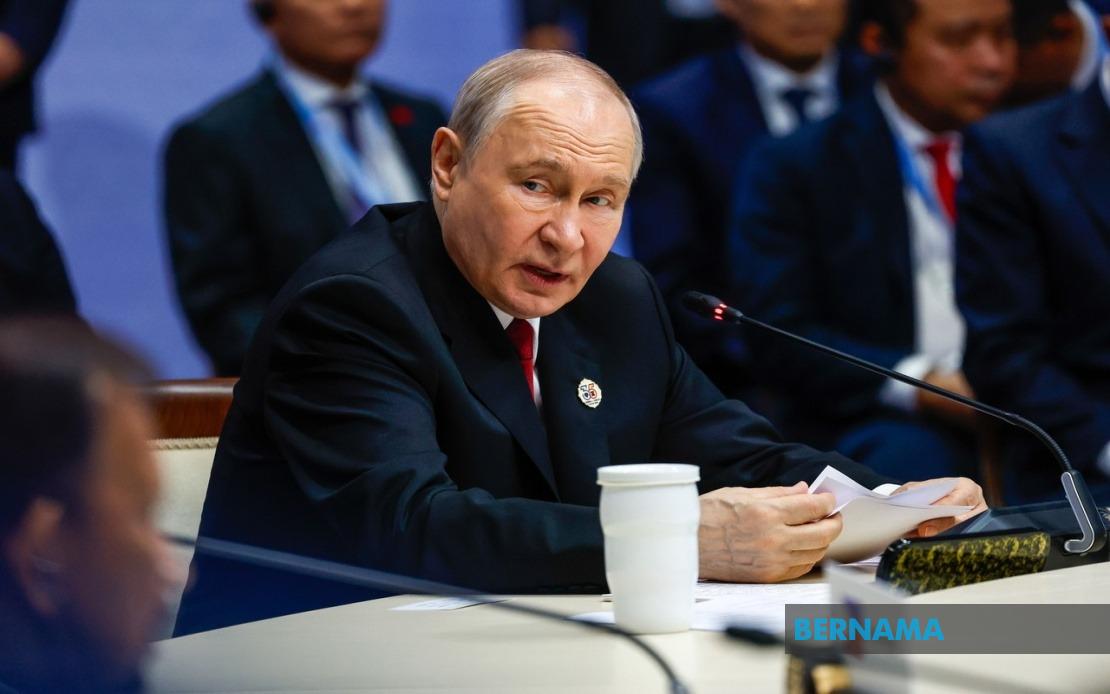
Russia and ASEAN have consolidated their relationship into a comprehensive strategic partnership over three and a half decades, according to remarks by Russian President Vladimir Putin at a commemorative summit held in Kazan on June 18. Speaking at the opening of the two-day gathering, Putin underscored how the bilateral ties now serve as a stabilizing influence across the Asia-Pacific region during a period of mounting geopolitical volatility. The summit itself represents a milestone moment for the two parties, who officially established formal relations in 1991 in Kuala Lumpur and have since deepened their engagement through successive frameworks of cooperation.
The evolution of Russia-ASEAN ties has followed a measured trajectory of institutional deepening. Following Moscow's initial recognition of ASEAN as a diplomatic entity in 1991, the relationship progressed to a full Dialogue Partner status in 1996, a designation that positioned Russia among the major external powers engaged with Southeast Asia. The most significant upgrade came in 2018 when the two sides formalized their connection as a Strategic Partnership, a move that acknowledged their shared interests across multiple domains and reflected mutual determination to expand cooperation in political, security, economic and cultural spheres. This progression demonstrates how both Russia and ASEAN have viewed their relationship as progressively more consequential to their respective strategic outlooks.
Putin emphasized that the partnership rests upon foundational principles of international law and reciprocal benefit, a framework he characterized as distinguishing Russia's approach to ASEAN engagement. The legal architecture supporting this relationship encompasses extensive contractual agreements and a sophisticated web of joint mechanisms spanning numerous sectors. From a Malaysian perspective, this institutional depth is particularly significant given Malaysia's role as a founder member of ASEAN and its consistent advocacy for Southeast Asian centrality in regional affairs. The breadth of cooperation Putin outlined—encompassing security coordination, commercial ties, investment flows, energy partnerships, agricultural collaboration, digital innovation, scientific research, tourism development, and cultural exchanges—suggests a relationship that transcends the traditional security-focused partnerships that often characterize great power engagement with Southeast Asia.
The timing of this commemorative summit carries particular weight given contemporary regional dynamics. Russia has long sought to position itself as an important Asia-Pacific stakeholder, viewing ASEAN nations as crucial partners in its broader strategic reorientation toward the eastern hemisphere. Simultaneously, ASEAN member states recognize Russia's substantial capabilities in energy production, technological advancement, agricultural exports, and higher education provision. For Southeast Asian nations like Malaysia, which depend heavily on diversified energy sources and international partnerships, Russia's role as a significant energy supplier and technology partner remains relevant despite recent geopolitical tensions affecting international relations more broadly.
The summit agenda reflects concerns shared by both Russia and ASEAN regarding contemporary international challenges. Both sides identified the need to exchange perspectives on pressing regional and global issues while also conducting a comprehensive review of their cooperative achievements over the previous 35 years. Looking forward, the partnership appears positioned to expand cooperation in trade and investment frameworks, food and energy security—matters of acute importance to Southeast Asian nations dependent on stable commodity markets and energy supplies. Digital transformation initiatives represent another growth area, particularly significant for ASEAN's ongoing efforts to enhance its digital economy and technological capabilities, a priority enshrined in various regional development strategies.
Education and scientific collaboration have emerged as increasingly important pillars of the Russia-ASEAN relationship, areas where Russian institutions have long maintained strong reputations, particularly in engineering, mathematics, and natural sciences. The emphasis on people-to-people exchanges acknowledges that sustainable partnerships must build understanding and connections at multiple societal levels beyond governmental and commercial interactions. For Malaysia specifically, where educational mobility and knowledge exchange form part of broader foreign policy objectives, these dimensions of the partnership offer tangible benefits to students and researchers seeking international exposure and expertise development.
The geopolitical context surrounding the summit cannot be overlooked. Russia operates within a significantly constrained international environment following its invasion of Ukraine, making its engagement with ASEAN particularly strategic. ASEAN's commitment to non-alignment and its diplomatic principle of engaging with multiple external partners means that Southeast Asian nations maintain relationships with Russia despite Western sanctions and diplomatic pressure. This positioning allows ASEAN to preserve its strategic autonomy while maintaining dialogue channels with major powers. For Malaysia, which has sought to balance relationships between Western powers and Russia, the continuation of substantive partnership frameworks reflects this careful diplomatic balancing act.
Energy security cooperation deserves particular attention given Malaysia's regional role as an energy-conscious nation and Southeast Asia's broader vulnerability to energy market disruptions. Russia's substantial natural gas and petroleum resources have made it a traditional energy supplier to various Asian markets, though sanctions regimes have complicated these relationships. ASEAN nations collectively represent a significant consumer market, and maintaining stable energy partnerships remains crucial for regional economic stability. The explicit focus on food and energy security in the summit discussions suggests both parties recognize these domains as fundamental to their respective prosperity and stability.
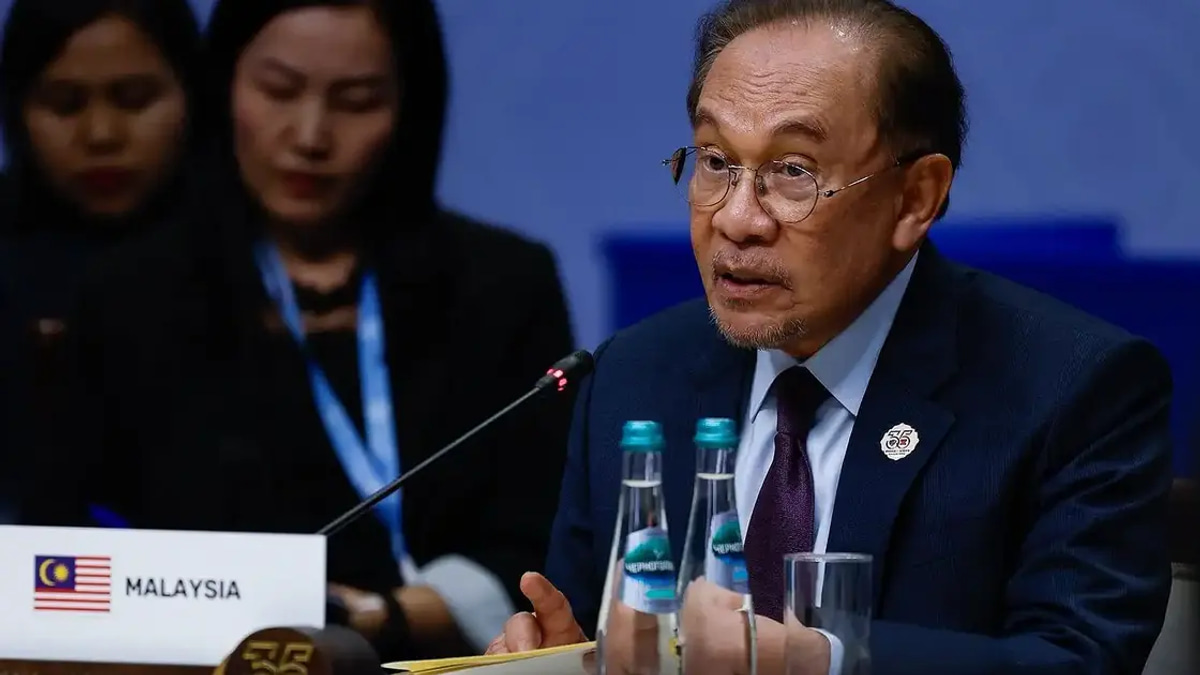
The participation of Philippine President Ferdinand Marcos Jr., the current ASEAN Chair, alongside Prime Minister Datuk Seri Anwar Ibrahim and other ASEAN counterparts, underscored the collective nature of the engagement. This high-level representation indicates that ASEAN as an institution, rather than individual member states, views the Russian relationship as sufficiently important to warrant summit-level attention. The presence of multiple national leaders also signals that ASEAN members maintain distinct but complementary approaches to Russia engagement, with no unified position compelling divergent national interests.
The strategic partnership's role as a "stabilizing factor" in the Asia-Pacific, as Putin characterized it, warrants careful consideration. In an environment where major power competition has intensified and regional tensions have risen across multiple fronts—from maritime disputes to great power rivalry—ASEAN's maintenance of engagement with Russia demonstrates the organization's continued commitment to inclusive regional architecture. This approach contrasts with more confrontational frameworks and reflects ASEAN's persistent belief that dialogue and engagement, even with powers whose actions may be controversial, serve regional stability better than isolation and containment.
Looking forward, the Russia-ASEAN partnership faces both opportunities and constraints. The relationship's future trajectory will depend partly on broader international developments, including potential evolution in Russia's international position and ASEAN's capacity to maintain its collective diplomatic independence. For Malaysia and other ASEAN members, preserving substantive partnerships with diverse external powers while maintaining principled positions on international law and regional peace remains a delicate but essential endeavor. The commemorative summit's focus on reviewing past achievements while discussing future directions suggests both Russia and ASEAN remain committed to deepening their strategic engagement, even as they navigate a complex and often turbulent international environment.