%22%2F%3E%3C%2Fpattern%3E%3C%2Fdefs%3E%3Crect%20width%3D%22100%25%22%20height%3D%22100%25%22%20fill%3D%22url(%23phuqo8g)%22%2F%3E%3Crect%20width%3D%22100%25%22%20height%3D%22100%25%22%20fill%3D%22url(%23phuqo8p)%22%2F%3E%3Ctext%20x%3D%2250%25%22%20y%3D%2250%25%22%20text-anchor%3D%22middle%22%20dominant-baseline%3D%22central%22%20fill%3D%22rgba(255%2C255%2C255%2C0.95)%22%20font-family%3D%22Georgia%2C%20'Times%20New%20Roman'%2C%20serif%22%20font-weight%3D%22700%22%20font-size%3D%22320%22%20letter-spacing%3D%22-0.02em%22%3EPM%3C%2Ftext%3E%3C%2Fsvg%3E)
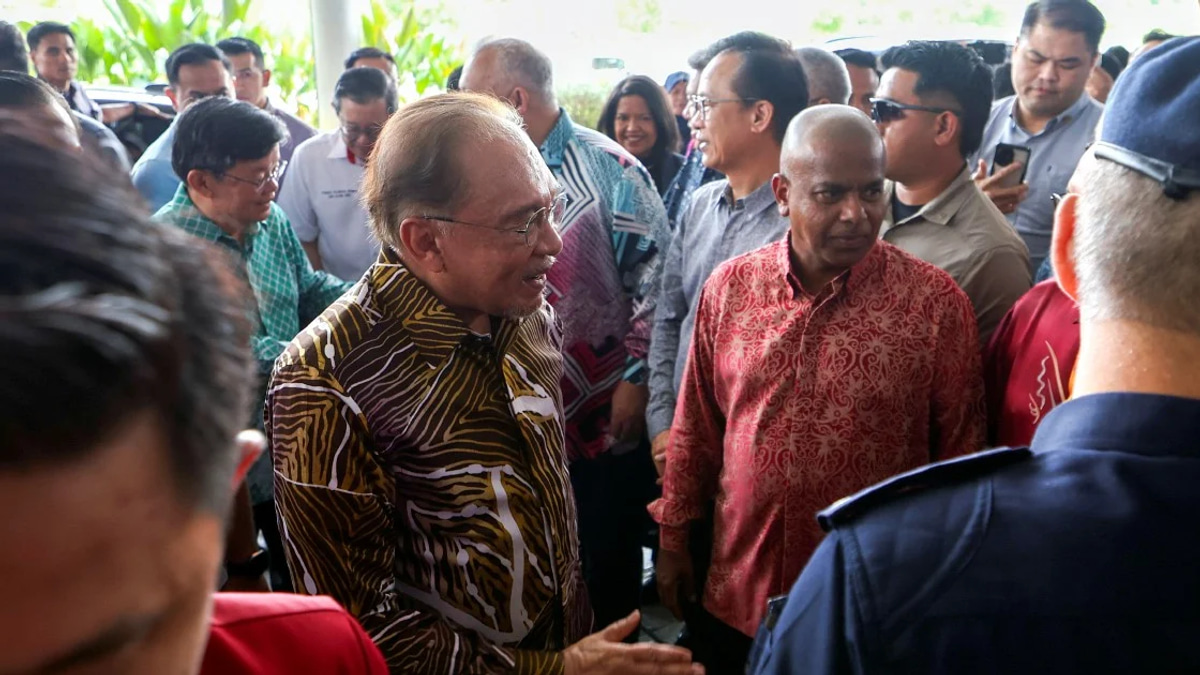
Prime Minister Datuk Seri Anwar Ibrahim has acknowledged the vital contributions of Malaysia's media landscape during a significant gathering in Butterworth, where he emphasised the essential role that journalistic integrity plays in sustaining public trust. His remarks, delivered at the HAWANA 2026 National Journalists' Day main event held at the PICCA Convention Centre @ Butterworth Arena, underscored the government's recognition of media practitioners as custodians of democratic values in an increasingly complex information ecosystem.
The Prime Minister's address highlighted the mounting pressures confronting modern newsrooms, particularly as artificial intelligence and digital technologies reshape how stories are gathered, reported and disseminated. These transformative tools present both opportunities and risks, creating new imperatives for journalists to maintain professional standards while adapting to technological change. Anwar acknowledged that the contemporary media environment demands heightened vigilance, as the rapid pace of innovation can outstrip ethical frameworks if left unchecked by responsible industry practices.
Central to Anwar's message was the distinction between factual accuracy and ethical validity. He articulated a nuanced position arguing that truth extends beyond mere factual reporting—it encompasses the principles, values and intentions that guide editorial decisions. In an era where information proliferates through multiple channels often without gatekeeping mechanisms, this philosophical distinction becomes critically important. The Prime Minister stressed that whether content serves the public interest or undermines it depends fundamentally on the ethical scaffolding supporting the journalism itself, not simply on whether individual facts can be verified.
The delicate balance between press freedom and responsibility emerged as a central theme in Anwar's remarks. He acknowledged that democratic societies must protect journalists' right to report and comment freely, yet cautioned that unbridled expression without ethical guardrails risks destabilising institutions and eroding social cohesion. This formulation reflects growing global concerns about how misinformation, disinformation and polarising narratives can weaponise unrestricted speech to undermine democratic processes and civic trust. For Malaysian audiences, this framing carries particular resonance given the nation's experience with divisive online discourse and its multicultural context requiring careful, responsible communication.
Anwar positioned responsible media as essential infrastructure for informed democratic participation. As citizens navigate complex policy landscapes encompassing economic restructuring, digital transformation, energy transition and artificial intelligence adoption, they require credible information sources to evaluate government initiatives and understand policy implications. Media practitioners functioning under ethical standards thus serve a quasi-institutional function, enabling public judgment on matters affecting national development. This perspective elevates journalism from mere entertainment or profit-generating enterprise to a foundational democratic institution deserving protection and support.
The HAWANA 2026 event brought together more than one thousand media professionals from Malaysia, Timor-Leste, Cambodia and Laos, framing media integrity as a regional concern transcending national boundaries. This international dimension suggests growing recognition across Southeast Asia that journalistic standards and information credibility have become shared challenges requiring collaborative responses. The participation of delegations from neighbouring nations indicates a burgeoning regional dialogue about journalistic best practices and ethical frameworks appropriate to diverse Asian contexts.
During the ceremony, Anwar witnessed the formalisation of a Memorandum of Understanding between Malaysia's national news agency Bernama and Timor-Leste's TATOLI, institutionalising cooperation between regional news organisations. Such partnerships can strengthen professional networks, facilitate knowledge exchange about emerging challenges like AI-generated content and misinformation, and establish shared editorial principles promoting credible reporting across Southeast Asia. For Malaysian journalists, such regional connections expand their professional communities and create channels for learning from peers grappling with similar technological and political pressures.
The Prime Minister recognised distinguished contributions to Malaysia's media industry by presenting the HAWANA Award to former broadcasting director-general Datuk Suhaimi Sulaiman and the HAWANA 2026 Special Award to the late Azlan Idris, former Bernama Radio chief. These accolades acknowledged decades of professional service building the institutional foundations upon which contemporary Malaysian journalism rests. By honouring established figures alongside current practitioners, the ceremony acknowledged that media integrity depends on sustained institutional commitment across generations of professionals.
Beyond ceremonial recognition, the event included tangible support through the Tabung Kasih@HAWANA, which distributed contributions to three media industry practitioners facing health challenges. This welfare mechanism reflects the profession's understanding that financial precarity and personal hardship can compromise journalistic independence and wellbeing. By providing support to struggling colleagues, the industry reinforces solidarity and acknowledges that maintaining ethical standards requires a sustainable working environment and fair compensation for journalists.
The HAWANA-DBP Pantun Festival component, won by TV3 with Bernama finishing runner-up, injected cultural elements into the professional gathering, celebrating the intersection of journalism and Malaysian literary traditions. This recognition of vernacular cultural expression alongside contemporary news work acknowledges that media integrity extends beyond hard news reporting to encompass thoughtful engagement with cultural and linguistic dimensions of national identity.
For Malaysian readers and the broader Southeast Asian audience, Anwar's address articulates an emerging policy consensus that media literacy, professional standards and ethical frameworks have become crucial public goods requiring government support and civil society engagement. As artificial intelligence, algorithmic content curation and digital platforms continue transforming information ecosystems, the Prime Minister's emphasis on values-based journalism provides essential ballast against technological determinism. The address suggests Malaysia's leadership recognises that economic and technological progress without corresponding attention to ethical and institutional integrity creates vulnerabilities undermining long-term social stability and democratic health.