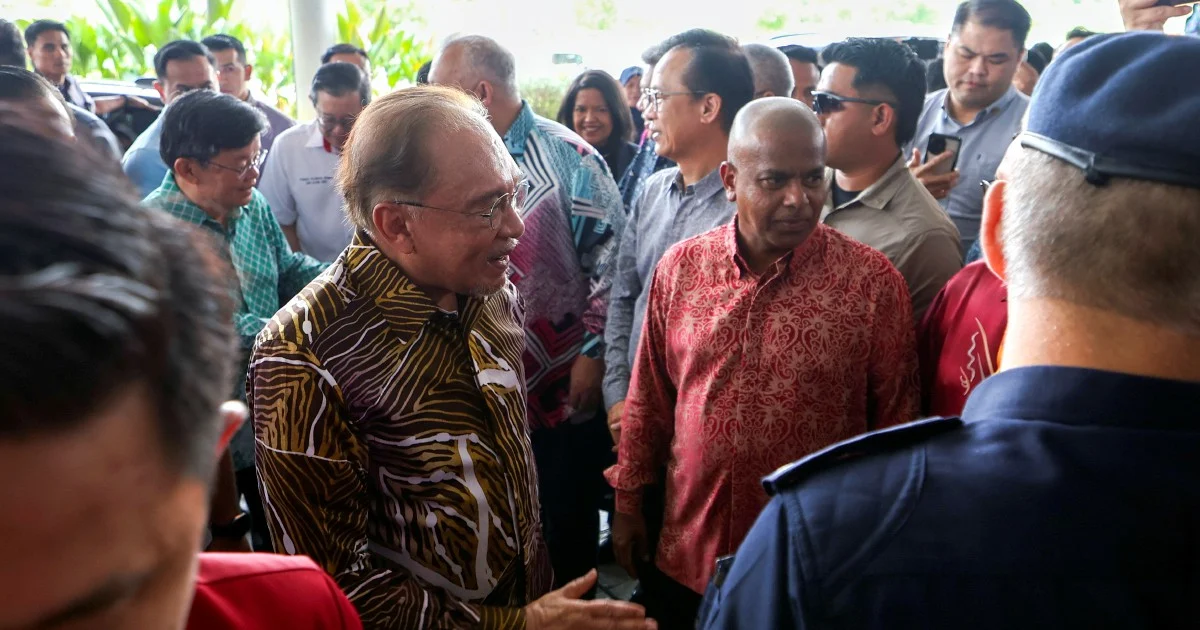
Prime Minister Datuk Seri Anwar Ibrahim has lauded Petronas' successful acquisition of two major gas fields in Turkmenistan, characterising the award as a crucial advancement for Malaysia's energy landscape. Speaking at Permatang Pauh, Anwar underscored the strategic importance of the deal in strengthening the nation's hydrocarbon reserves and securing reliable fuel supplies for decades to come. The achievement reflects Malaysia's growing technical capabilities and international standing in the competitive energy sector, where global majors vie aggressively for exploration and production rights.
The Turkmenistan venture represents a significant expansion of Petronas' upstream portfolio beyond South East Asian waters, where the company has traditionally focused its operations. Gaining access to gas fields in the resource-rich Central Asian nation diversifies Malaysia's energy sources and reduces dependency on a single geographic region. This geographic diversification is particularly valuable given the volatility of regional geopolitics, supply chain disruptions, and the increasing importance of energy independence for developing economies in the global marketplace.
For Malaysia, securing stakes in major international gas projects carries profound implications for economic stability and industrial competitiveness. Natural gas remains a cornerstone fuel for Malaysia's petrochemical complexes, power generation facilities, and liquefied natural gas export operations. Petronas' LNG terminals remain vital foreign exchange earners, and access to new gas reserves underpins the long-term viability of these facilities. The Turkmenistan fields will help sustain production volumes and maintain Malaysia's position as a significant liquefied natural gas supplier to global markets over the coming decades.
Turkmenistan itself possesses some of the world's largest proven natural gas reserves, second only to Russia and Qatar. The country has aggressively pursued partnerships with international energy firms to develop its resources and generate government revenues. By awarding major field development rights to Petronas, Turkmenistan signals confidence in the Malaysian company's technical expertise, financial stability, and capacity to execute complex development projects. This recognition enhances Petronas' international profile and demonstrates its ability to compete with Western energy giants on a global stage.
The geopolitical context underlying this deal merits careful examination. Central Asia has emerged as an increasingly important energy frontier as Western companies reassess their operations in Russia and the Middle East faces heightened uncertainties. Malaysia's positioning through Petronas in Turkmenistan reflects a deliberate strategy to secure energy partnerships beyond traditional supply routes. For South East Asia's largest oil and gas producer, investing in Central Asia hedges against regional supply constraints and positioning risks that could disrupt domestic energy availability or export revenues.
Petronas' track record in managing complex offshore operations and managing stakeholder relationships in challenging environments has established the company as a credible partner for countries seeking reliable, professionally managed energy development. The company's experience in liquefied natural gas technology, deep-water exploration, and integrated operations provides Turkmenistan with a development partner capable of maximising resource recovery whilst maintaining international standards. This expertise commands premium positioning in global energy markets.
From a domestic perspective, the Turkmenistan deal carries implications for Malaysia's energy transition strategy. Whilst global energy markets pivot towards renewable power and decarbonisation, natural gas serves as a crucial bridge fuel for stable electricity supplies and industrial processes during the transition away from coal. Securing additional gas reserves ensures Malaysia can maintain reliable baseload power generation whilst simultaneously developing renewable energy capacity and pursuing carbon reduction targets consistent with international climate commitments.
The commercial dimensions of the venture remain substantial. Development of major gas fields requires substantial capital investment, advanced technology deployment, and sophisticated project management spanning years or decades. Petronas must coordinate exploration activities, build necessary infrastructure, arrange financing, and manage commercial relationships with Turkmen authorities and international partners. The complexity of such mega-projects demands experienced operators capable of delivering results across multiple jurisdictions and regulatory environments.
For Malaysia's economy, revenues generated from Petronas' international ventures flow back to the national treasury through dividends, taxation, and royalty distributions. These funds support government spending on education, healthcare, infrastructure, and social programmes. Moreover, Petronas' international success attracts foreign investment into Malaysia's energy sector, creates skilled employment opportunities, and establishes the foundation for downstream industrial development. Energy self-sufficiency through domestic and international resource development remains a critical pillar of Malaysia's economic strategy.
The Turkmenistan investment also exemplifies Malaysia's diplomatic engagement beyond its immediate region. By securing energy partnerships in Central Asia, Malaysia deepens ties with nations along the Belt and Road Initiative corridors, strengthens bilateral relationships, and participates in economic frameworks that extend Malaysia's global influence. Energy diplomacy increasingly shapes international relations, and Petronas serves as an instrument through which Malaysia advances both economic and strategic national interests.
Looking forward, successful execution of the Turkmenistan projects will require sustained commitment from both Petronas and Malaysian authorities. Development timelines extending over multiple years necessitate maintaining stable policy environments, managing regulatory compliance, and securing necessary financing. The initiative also sets a template for future Malaysian energy ventures in other regions, particularly as global energy markets continue restructuring in response to climate change imperatives and geopolitical realignments.
Anwar's public celebration of the Turkmenistan achievement signals government prioritisation of energy security as a foundational element of Malaysia's long-term economic prosperity. The Prime Minister's intervention underscores that energy policy transcends corporate commercial decisions, touching upon national sovereignty, economic competitiveness, and strategic autonomy. As Malaysia navigates an increasingly complex global energy landscape, securing diverse, reliable supply sources through world-class companies like Petronas remains essential for protecting national interests and sustaining development gains.
%22%2F%3E%3C%2Fpattern%3E%3C%2Fdefs%3E%3Crect%20width%3D%22100%25%22%20height%3D%22100%25%22%20fill%3D%22url(%23ph3yhlsg)%22%2F%3E%3Crect%20width%3D%22100%25%22%20height%3D%22100%25%22%20fill%3D%22url(%23ph3yhlsp)%22%2F%3E%3Ctext%20x%3D%2250%25%22%20y%3D%2250%25%22%20text-anchor%3D%22middle%22%20dominant-baseline%3D%22central%22%20fill%3D%22rgba(255%2C255%2C255%2C0.95)%22%20font-family%3D%22Georgia%2C%20'Times%20New%20Roman'%2C%20serif%22%20font-weight%3D%22700%22%20font-size%3D%22194%22%20letter-spacing%3D%22-0.02em%22%3EMorocco%3C%2Ftext%3E%3C%2Fsvg%3E)
%22%2F%3E%3C%2Fpattern%3E%3C%2Fdefs%3E%3Crect%20width%3D%22100%25%22%20height%3D%22100%25%22%20fill%3D%22url(%23ph3ye13g)%22%2F%3E%3Crect%20width%3D%22100%25%22%20height%3D%22100%25%22%20fill%3D%22url(%23ph3ye13p)%22%2F%3E%3Ctext%20x%3D%2250%25%22%20y%3D%2250%25%22%20text-anchor%3D%22middle%22%20dominant-baseline%3D%22central%22%20fill%3D%22rgba(255%2C255%2C255%2C0.95)%22%20font-family%3D%22Georgia%2C%20'Times%20New%20Roman'%2C%20serif%22%20font-weight%3D%22700%22%20font-size%3D%22320%22%20letter-spacing%3D%22-0.02em%22%3EMOH%3C%2Ftext%3E%3C%2Fsvg%3E)