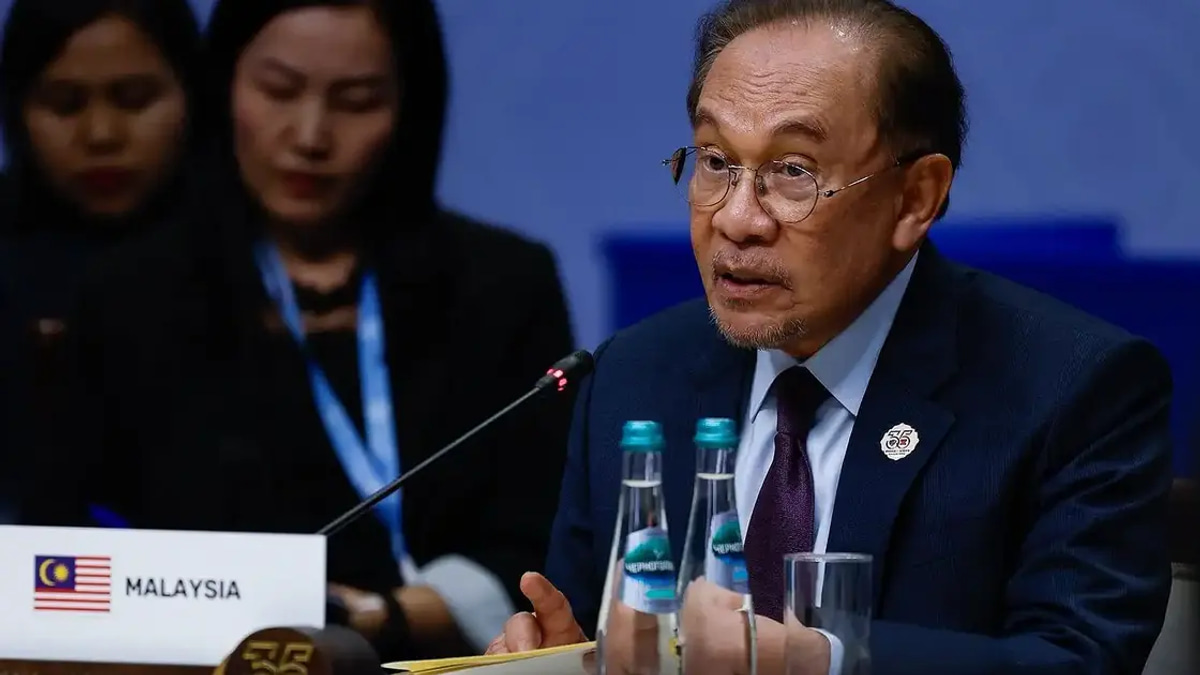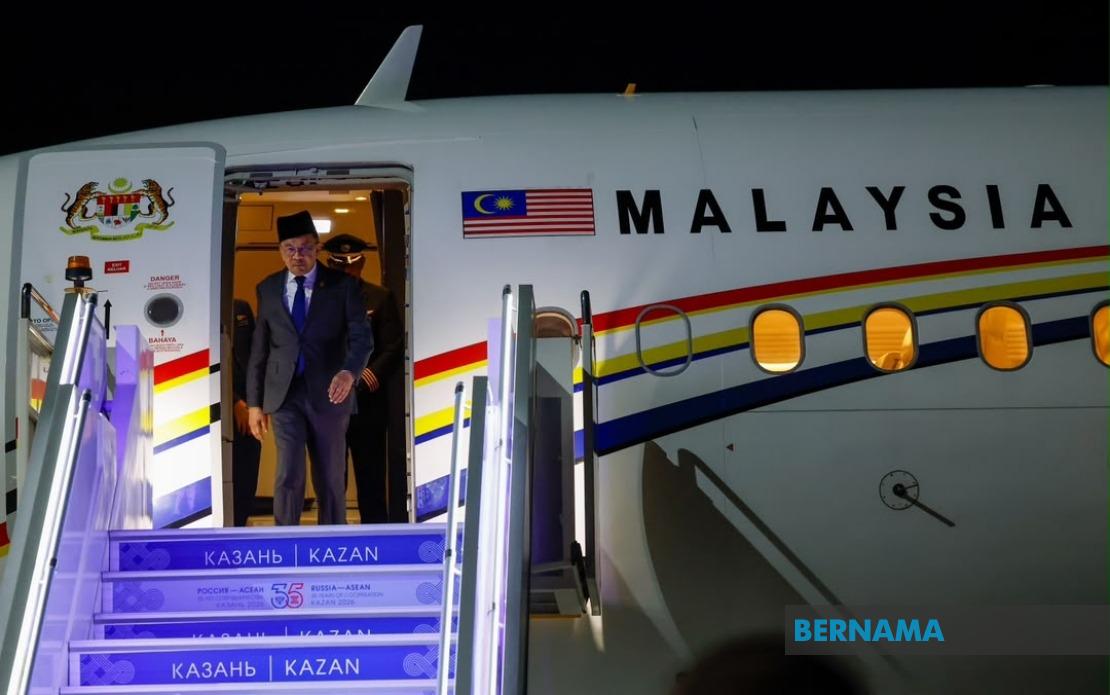
Prime Minister Datuk Seri Anwar Ibrahim touched down in Kazan on Sunday evening to begin a two-day working visit focused on deepening ties between Southeast Asia and Russia at a pivotal moment in global geopolitics. His arrival at Kazan International Airport at 10.20 pm local time signals Malaysia's continued commitment to maintaining strategic engagement with major powers whilst navigating an increasingly multipolar international landscape. The timing of the visit underscores the importance both ASEAN and Russia are placing on their partnership amid shifting global alliances and economic pressures.
The prime minister's delegation included several key figures responsible for Malaysia's economic and diplomatic portfolio. Minister of Investment, Trade and Industry Datuk Seri Johari Abdul Ghani and Minister of Economy Akmal Nasrullah Mohd Nasir accompanied him, alongside representatives from the Prime Minister's Office and the Foreign Ministry. This composition reflects the economic dimension of the visit, suggesting substantive discussions on trade, investment and commercial cooperation will feature prominently. The presence of economic ministers signals that Malaysia views the ASEAN-Russia relationship as having tangible benefits for Malaysian businesses and investors seeking opportunities in the Russian market and beyond.
Upon arrival, Anwar was received by Malaysia's Ambassador to Russia Datuk Cheong Loon Lai and a Russian delegation headed by the Minister of Digital Development of Tatarstan, Ilya Nachvin, alongside Kazan Mayor Ilsur Metshin and state protocol officials. The composition of the welcoming party demonstrates Russian recognition of the visit's significance and Tatarstan's particular interest in fostering connections with Southeast Asian nations. Kazan, as the capital of an ethnically diverse republic with significant Muslim populations, has become an increasingly important venue for dialogues between Islamic-majority nations and Russia.
The forthcoming ASEAN-Russia Commemorative Summit from June 17-18 marks a milestone moment in relations that have now spanned 35 years since their formal establishment in Kuala Lumpur in 1991. This anniversary provides both organisations with an opportunity to reflect on shared achievements whilst charting ambitious plans for future cooperation. For Malaysia, which has hosted the original signing of the bilateral relationship framework, the summit carries particular symbolic weight as a testament to ASEAN's capacity to maintain constructive engagement with diverse global partners regardless of geopolitical tensions elsewhere.
The summit is poised to produce four significant outcome documents that will shape the trajectory of ASEAN-Russia cooperation for years to come. These include the Kazan Declaration commemorating the 35-year milestone, a joint statement on energy cooperation, a cultural cooperation agreement, and a comprehensive action plan spanning 2026-2030. These documents represent more than ceremonial outputs; they establish concrete mechanisms and commitments across multiple sectors. The energy cooperation statement carries particular relevance for Malaysia and the broader region, given Southeast Asia's significant energy needs and Russia's position as a major global energy supplier.
Cooperation is expected to expand substantially across economic, security and cultural dimensions. Trade and investment frameworks will receive heightened attention, reflecting both ASEAN's desire to diversify trading partners and Russia's interest in accessing Southeast Asian markets and supply chains. The energy security agenda takes on heightened importance given global market volatility and the region's strategic dependence on reliable energy supplies. Food security discussions acknowledge shared vulnerabilities in ensuring stable agricultural trade and production, whilst digital economy collaboration recognises the importance of technological advancement in both regions.
Beyond the multilateral framework, Anwar is scheduled to hold separate discussions with Russian President Vladimir Putin and engage with other ASEAN leaders attending the summit. These bilateral meetings provide opportunities to address nation-specific concerns and advance Malaysia's particular interests within the broader regional framework. Previous bilateral interactions between Anwar and Putin have encompassed agriculture, aerospace, energy and education sectors, areas where Malaysia seeks to expand cooperation and establish new partnerships. Such personalised diplomatic engagement remains crucial for translating broad strategic frameworks into concrete commercial and institutional arrangements.
The prime minister's policy priorities during the visit will emphasise Malaysia's commitment to dialogue and peaceful resolution of international disputes, a position consistent with ASEAN's founding principles of non-interference and non-confrontation. Supporting economic resilience across the region and advancing energy and food security align with pressing regional challenges that transcend bilateral relationships. Malaysia's emphasis on people-to-people exchanges and cultural cooperation reflects understanding that sustainable international relationships must extend beyond governmental and commercial channels to encompass educational, cultural and social dimensions.
This Kazan visit represents Anwar's third engagement with Russia since assuming office in November 2022, demonstrating sustained high-level attention to the relationship. His previous travels included attendance at the Eastern Economic Forum in Vladivostok in September 2024 and an official visit to Moscow in May 2025 where substantive discussions covered trade, investment, agriculture, education, aerospace and energy cooperation. The frequency and substantive focus of these visits indicate that Malaysia views Russia as a significant partner despite existing geopolitical constraints and international tensions. The accumulation of bilateral initiatives across multiple sectors suggests a deliberate strategy to insulate economic and diplomatic relationships from broader great power tensions.
For Malaysian readers and policymakers, the summit underscores ASEAN's enduring relevance as a platform for dialogue and cooperation during uncertain global circumstances. Malaysia's active participation reflects its conviction that regional stability depends on maintaining channels of communication with all major powers, including those with whom Western nations maintain contentious relationships. The visit also demonstrates how ASEAN's neutrality and centrality doctrine provides small to medium-sized nations with diplomatic leverage and flexibility in an increasingly polarised international system. By attending multilateral forums and maintaining bilateral engagement with diverse partners, Malaysia sustains its strategic autonomy whilst contributing to regional stability and prosperity.