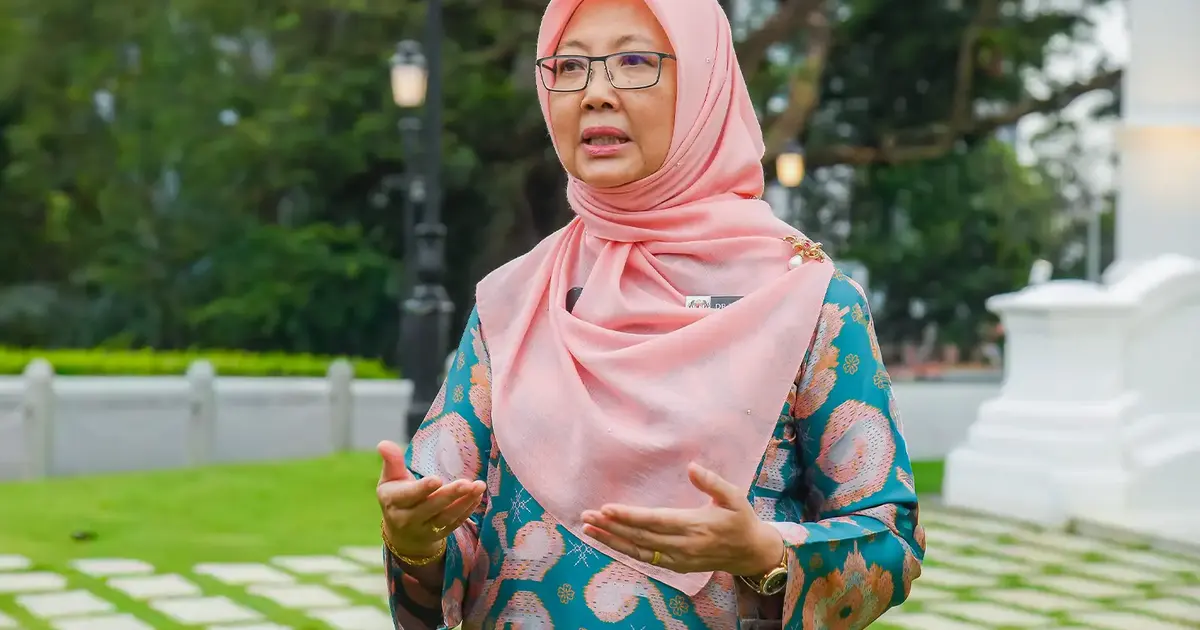
PKR vice-president Zaliha Harun has expressed bewilderment at Johor Barisan Nasional chairman Onn Hafiz Ghazi's insistence that Pakatan Harapan publicly identify a designated leader ahead of anticipated state elections, particularly when no assurance exists that such a figure would ultimately be appointed menteri besar. The contradiction implicit in Onn Hafiz's position has left opposition strategists questioning the underlying motivation for the demand, which appears to place the coalition in a potentially vulnerable negotiating position before polls have even been called.
The controversy reflects the complex and often opaque dynamics governing state-level politics in Malaysia, where the appointment of chief ministers frequently involves behind-the-scenes negotiations, coalition arithmetic, and post-election bargaining rather than pre-election declarations. By publicly naming a candidate without certainty of assuming office, opposition parties risk either embarrassment if their designated figure fails to secure the position following elections, or internal dissatisfaction from party members who may feel sidelined in the decision-making process. This political calculus helps explain Zaliha's evident frustration with what she perceives as an unreasonable precondition.
Onn Hafiz, as the sitting chairman of the Johor BN coalition and a prominent figure in the state's political landscape, occupies a position of considerable influence within state governance. His call for transparency regarding the opposition's leadership intentions may be framed publicly as a matter of democratic principle, yet opposition strategists interpret it differently. They view such demands as tactical manoeuvres designed to constrain opposition flexibility while simultaneously allowing the governing coalition to maintain strategic ambiguity about its own leadership succession plans and coalition partnerships.
For Pakatan Harapan, the stakes are particularly high in Johor given the state's significance within Malaysia's broader political architecture. As a long-standing Barisan Nasional stronghold and one of the most economically developed states in the peninsula, Johor has traditionally been considered essential to any federal-level power shift. Recent electoral history has shown the opposition making inroads in the state, yet governance remains firmly in BN hands, making any assertion of leadership credibility crucial to mounting a credible challenge in future contests.
The timing of Onn Hafiz's demand carries additional weight given that no official election date has been announced. State elections in Malaysia can be called at any point within the five-year constitutional window, leaving parties in constant preparatory mode. By raising the question now, Onn Hafiz may be attempting to influence the narrative ahead of potential polling, forcing the opposition to either compromise its strategic positioning or appear evasive to voters.
Zaliha's response highlights a fundamental asymmetry in Malaysian electoral politics: governing coalitions enjoy the privilege of ambiguity and internal negotiation extending right up to swearing-in ceremonies, while opposition parties face mounting pressure for transparency and pre-election commitments. This imbalance reflects the structural advantages accumulated by long-serving governments, which can afford to postpone critical decisions because their re-election seems assured, whereas challengers must project coherence and readiness from the outset to convince voters they deserve a change.
The Johor situation also underscores broader tensions within PH itself. The coalition comprises distinct parties with different priorities and regional power bases, meaning agreement on state-level leadership is rarely straightforward. PKR, DAP, and Amanah must balance factional interests, demographic representation, and electoral viability when considering leadership arrangements. Premature public commitment to a specific candidate could fracture these delicate internal coalitions before elections are even called, a risk that Zaliha's cautious response implicitly acknowledges.
From a voter's perspective, the demand for transparency is superficially appealing. Knowing who will lead a government before casting ballots provides clarity and accountability. Yet the Malaysian political system, with its emphasis on constitutional monarchy and prime ministerial/menteri besar discretion in coalition formation, has never strictly adhered to such pre-election clarity. Flexibility in post-election negotiations has historically allowed coalition-building and prevented political deadlock, though it has also enabled horse-trading and backroom deals that test democratic principles.
The opposition's dilemma reflects a broader challenge facing PH as it attempts to position itself as a credible alternative government while navigating the existing constitutional and political frameworks. Any commitment to a specific menteri besar candidate must be weighed against the possibility of unforeseen developments—electoral outcomes that demand compromise candidates, health issues affecting chosen leaders, or coalition dynamics that necessitate different arrangements than anticipated. Zaliha's perplexity thus extends beyond mere tactical confusion; it represents a substantive disagreement about how democratic accountability should function within Malaysia's particular constitutional context.
Moving forward, this exchange between Johor's political leadership is likely to intensify as the state edges closer to elections. The opposition will need to balance pressures for transparency with strategic flexibility, while the government will continue leveraging its incumbent advantages to set terms of engagement. For Malaysian voters and political observers, the unresolved tension between democratic accountability and constitutional practice remains a defining feature of how leadership selection actually functions at state and federal levels, beneath the surface of public rhetoric.