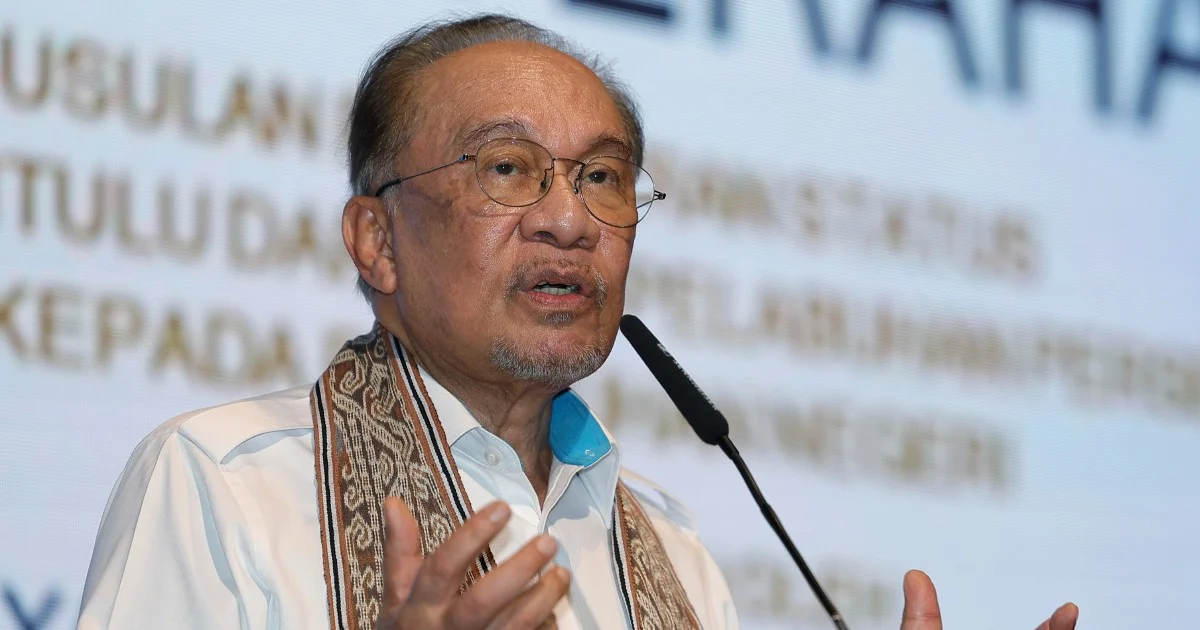
Prime Minister Datuk Seri Anwar Ibrahim has indicated that discussions between Petronas and Petros are progressing in a constructive manner, offering a glimmer of hope in negotiations that have carried significant implications for Malaysia's energy sector. The remarks, made while the Premier was in Kuching, suggest that both parties are moving toward common ground on matters that have long been contentious between the national and state-level petroleum interests.
The talks between Petronas, the Malaysian state-owned oil and gas corporation, and Petros, Sarawak's energy company, have been closely watched by industry observers and policymakers across Southeast Asia. These negotiations touch upon fundamental questions about resource allocation, revenue sharing, and the balance of power between federal and state authorities in Malaysia's petroleum governance structure. The significance of these discussions extends beyond commercial considerations, reaching into constitutional frameworks and federalism principles that define Malaysia's system of government.
Sarawak's role in Malaysia's energy landscape cannot be overstated. The state is home to substantial offshore hydrocarbon reserves and has long sought greater autonomy and financial benefit from its natural resources. Tensions between the state government and federal authorities over petroleum arrangements have persisted for decades, with Sarawak consistently arguing that it should receive larger revenues or exercise greater control over its offshore zones. Petros was established partly as a mechanism through which Sarawak could assert its interests more effectively in petroleum matters.
The establishment of a negotiating framework between these two entities represents a formal attempt to reconcile competing interests that have historically proven difficult to harmonise. Previous attempts to resolve resource disputes between federal and state governments have often stalled due to fundamental disagreements over constitutional interpretation and equitable benefit distribution. The fact that both Petronas and Petros are now engaged in structured dialogue, with apparent momentum toward resolution, suggests a shift in the political environment.
Anwar's characterisation of the talks as showing positive progress carries weight given his position as Prime Minister and his known commitment to pursuing structural reforms within Malaysia's governance and economic systems. His comments indicate that the federal government views progress on this file as important to broader economic objectives and national stability. The timing of such announcements also reflects a broader effort to demonstrate that the administration is capable of managing complex interstate negotiations effectively.
For Malaysian businesses and investors, clarity on the Petronas-Petros relationship carries direct consequences. The petroleum sector remains a cornerstone of the national economy, generating substantial government revenue and supporting downstream industries. Uncertainty about regulatory frameworks and resource access can deter investment and complicate long-term planning. Companies operating in Malaysia's oil and gas sector require stable, predictable arrangements with clear lines of authority and responsibility.
Regionally, Malaysia's handling of its internal petroleum governance questions carries implications for how other Southeast Asian nations perceive federal-state resource management. Countries such as Indonesia and the Philippines, which similarly grapple with balancing central authority against regional petroleum interests, may observe these negotiations with interest. Successful resolution of Petronas-Petros tensions could provide a template for other jurisdictions wrestling with comparable federalism and resource management challenges.
The specific contours of any eventual agreement between Petronas and Petros remain to be seen. Possible arrangements could involve revenue-sharing formulae, joint venture structures, regulatory clarity, or some combination thereof. The details will matter enormously to both parties and to stakeholders throughout Malaysia's energy sector. However, Anwar's public indication that momentum is positive suggests that negotiators have moved beyond impasse into genuine problem-solving mode.
Investors monitoring Malaysia's energy sector will likely interpret these signals favourably, as extended uncertainty about federal-state petroleum arrangements creates drag on market confidence. Major international energy companies with operations in Malaysian waters depend on clear, stable regulatory environments. If the Petronas-Petros talks yield a sustainable framework acceptable to both parties, it could remove a significant source of policy ambiguity that has constrained investor activity.
The negotiations also carry implications for Malaysia's energy transition strategy. As the nation grapples with balancing its historical dependence on hydrocarbon revenues against emerging climate imperatives and global energy market shifts, having a unified federal-state approach to petroleum governance becomes increasingly valuable. Petros and Petronas operating under agreed frameworks rather than in tension could better coordinate responses to longer-term sectoral challenges.
Anwar's remarks should be understood within the broader context of his administration's reform agenda. The government has signalled willingness to tackle difficult structural issues that previous administrations deferred or mishandled. Successfully navigating the Petronas-Petros relationship would demonstrate the government's capacity to broker compromises on complex federalism questions, building momentum for other pending negotiations between federal and state authorities.
While concrete details remain limited, the Prime Minister's assessment that these talks are advancing positively provides stakeholders with reason for cautious optimism. Whether positive progress translates into a binding, workable agreement will determine whether this negotiation proves to be a genuine turning point in Malaysian petroleum governance or merely another temporary improvement before old tensions resurface.
%22%2F%3E%3C%2Fpattern%3E%3C%2Fdefs%3E%3Crect%20width%3D%22100%25%22%20height%3D%22100%25%22%20fill%3D%22url(%23ph16uycg)%22%2F%3E%3Crect%20width%3D%22100%25%22%20height%3D%22100%25%22%20fill%3D%22url(%23ph16uycp)%22%2F%3E%3Ctext%20x%3D%2250%25%22%20y%3D%2250%25%22%20text-anchor%3D%22middle%22%20dominant-baseline%3D%22central%22%20fill%3D%22rgba(255%2C255%2C255%2C0.95)%22%20font-family%3D%22Georgia%2C%20'Times%20New%20Roman'%2C%20serif%22%20font-weight%3D%22700%22%20font-size%3D%22320%22%20letter-spacing%3D%22-0.02em%22%3EIran%3C%2Ftext%3E%3C%2Fsvg%3E)